Beyond Botox: Treating Dynamic and Static Lines Together After 45

There's a moment many patients describe, usually sometime in their mid-to-late forties, when they look in the mirror and realize their neuromodulator isn't doing what it used to. The forehead is smoother, yes. But the lines around the mouth haven't budged. The creasing along the cheeks looks the same whether they're smiling or perfectly still. And the texture that's settled across the mid-face over the years — that quiet accumulation of sun exposure, collagen loss, and time — doesn't respond to relaxing a muscle, because a muscle isn't causing it.
This is the moment when understanding the difference between dynamic and static wrinkles stops being an academic distinction and starts being genuinely useful.
Dynamic vs. Static Wrinkles: Why the Difference Matters After 45
Dynamic wrinkles are caused by repeated muscle movement. Every time you squint, smile, furrow your brow, or raise your eyebrows, the overlying skin folds. Over years, those folds deepen. Neuromodulators — Botox, Dysport, Daxxify, Xeomin — work by reducing the strength of these muscular contractions, which softens the line at the surface. When started early enough, they can prevent these lines from deepening. When used consistently over time, they remain effective for the areas they target.
Static wrinkles are different. They're present at rest — visible even when your face is completely relaxed — and they're not primarily driven by muscle movement. They form through a combination of collagen and elastin degradation, volume loss, repeated skin folding that has now become structural, UV damage, and the gradual thinning of the dermis itself. A neuromodulator won't touch them, because there's no muscular contraction to interrupt. This is why, after 45, patients who have been consistent with their Botox appointments often find that certain lines — particularly nasolabial folds, marionette lines, perioral lines, and horizontal creasing across the cheeks — persist or deepen regardless.
What makes this more complicated is that many lines after 45 are neither purely dynamic nor purely static. They begin as dynamic wrinkles and, over years of repeated movement, become partially etched into the skin as static lines. The fold exists whether the muscle fires or not. Treating only the dynamic component — the movement — leaves the static component completely unaddressed.
What "Treating Both" Actually Looks Like
An effective treatment plan for someone over 45 acknowledges both components simultaneously. At Tysons Elite Esthetics, this is where the conversation typically begins: not with "which product," but with an honest assessment of what's driving the lines you're concerned about and what combination of approaches will actually address the full picture.
For dynamic lines — crow's feet, forehead creases, the glabellar complex — neuromodulators remain the right primary tool. The question after 45 is often about which neuromodulator, at what dose, and how frequently. Patients who feel their results are wearing off faster than they used to may benefit from a clinical conversation about product selection and dosing consistency. Our guide on neuromodulator longevity addresses this directly.
For static lines and the structural changes that underlie them, the approach expands considerably:
- Dermal fillers address volume loss and can physically soften deep static lines, particularly in the nasolabial fold, marionette, and perioral regions. Understanding when filler — rather than Botox — is the right tool for smile lines is a distinction that changes outcomes meaningfully.
- Biostimulators like Sculptra and Radiesse work differently from traditional hyaluronic acid fillers. Rather than adding immediate volume, they stimulate your own collagen production over months — rebuilding some of the structural scaffolding that has thinned over time. For patients with broader skin laxity or significant collagen loss, biostimulators often outperform filler-only approaches.
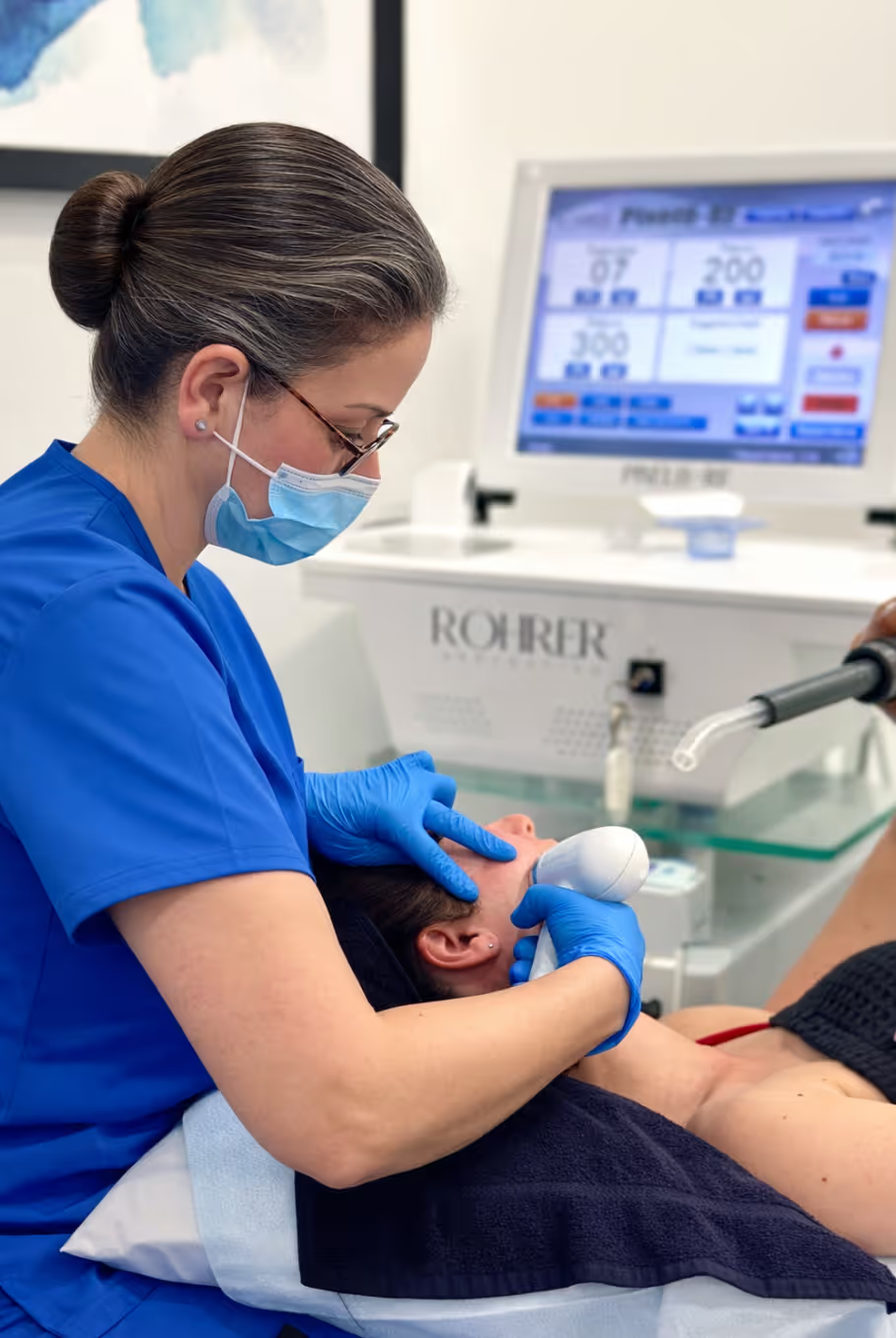
- RF microneedling (we use Pixel8-RF at our Tysons practice) delivers controlled radiofrequency energy into the deeper layers of the dermis, triggering collagen and elastin remodeling. This addresses texture, skin laxity, and the quality of the skin itself — not just individual lines.
- Resurfacing treatments including CoolPeel fractional laser and medical-grade peels can smooth surface texture, reduce fine static lines, and improve the overall quality of the skin's outer layers.
- Topical support matters more than most patients realize. A clinique wrinkle correcting serum, used consistently, can support the results of in-office treatments by maintaining skin barrier integrity, promoting cellular turnover, and delivering active ingredients that influence collagen synthesis at the surface level. A wrinkle correcting serum is not a replacement for clinical treatment — but it is a meaningful adjunct. The difference between patients who maintain their results well and those who don't often comes down to what they're doing at home between appointments.
The Clinical Reality of Combination Treatment
The reason combination treatment works better than any single modality isn't theoretical — it's anatomical. The face ages at multiple depths simultaneously. The muscle layer changes. The fat compartments beneath the skin deflate and shift. The collagen matrix within the dermis degrades. The skin's surface thins and loses elasticity. No single tool addresses all of these changes, which is why a plan built around one product or one category of treatment almost always reaches a ceiling.
This is particularly true after 45, when the cumulative effects of sun exposure and collagen loss begin to accelerate. Patients who have maintained good skin health in their thirties and early forties — consistent neuromodulators, medical-grade skincare, periodic resurfacing — often find that their treatments remain more effective and require less aggressive correction. Those who are beginning a more comprehensive approach later are not starting too late, but they benefit from a broader strategy from the outset. Waiting longer does compound the treatment complexity, but it doesn't foreclose meaningful results.
At Tysons Elite Esthetics, our team brings more than 70 combined years of medical aesthetics experience to these conversations. We've seen what works over time, and we understand that the most effective plans are built around the individual — their skin, their goals, their timeline, and what they're genuinely willing to maintain. Patients who come to us often say they appreciate that we don't apply a one-size-fits-all approach, and that every recommendation feels considered and specific to them rather than pulled from a menu.
A Note on Realistic Expectations
Treating dynamic and static lines together does not mean erasing every line on the face. After 45, the goal for most patients isn't the absence of all visible movement or expression — it's skin that looks rested, healthy, and consistent with how they feel. The natural look that patients describe wanting actually requires more clinical precision, not less. It means using the right tools for the right problems, at the right doses, layered thoughtfully over time.
If you've been managing wrinkles with a neuromodulator alone and you're noticing lines that don't respond — or if you've never had a comprehensive consultation that looked at your face as a whole rather than isolated concerns — that conversation is where meaningful change usually begins.
Start your transformation
Schedule your consultation with our knowledgeable and friendly team.