Combining Botox and Filler in One Appointment: What Tysons Professionals Should Know About Full-Face Rejuvenation Without Surgery

Most professionals in the Tysons-McLean corridor are not looking for one thing. They are looking for a result. And results, at this stage of life, rarely come from a single treatment. The lines around your eyes may respond well to a neuromodulator. The temples that have gradually hollowed, the midface that has lost its lift, the jawline that has softened — those require volume. Addressing both in one appointment is not a shortcut. When planned correctly, it is simply good clinical thinking.
Spring is an ideal time to consider a combined injectable appointment. The season shifts naturally toward lighter coverage, warmer light, and more social visibility. If you have been putting this off through winter, late April is a sound moment to act with enough runway before summer events and travel begin.
Why Neuromodulators and Fillers Are Often Planned Together
Botox and dermal fillers work through entirely different mechanisms. Understanding the distinction helps you have a more informed conversation with your injector.
- Neuromodulators such as Botox, Xeomin, and Daxxify relax the muscles responsible for dynamic expression lines. Forehead lines, crow's feet, and frown lines between the brows are the most common targets. They do not add volume. They reduce movement.
- Dermal fillers such as Revanesse Versa and Revance RHA restore or reposition volume. They address areas where tissue has been lost, descended, or deflated over time. Cheeks, temples, the tear trough, jawline, and lips are common candidates.
When these treatments are combined thoughtfully, they can address the face as a whole rather than in isolated fragments. Many clients experience a more balanced, cohesive outcome when both categories are considered in a single session.
What a Full-Face Injectable Assessment Actually Involves
A combined injectable appointment at this level is not about applying a standard menu. It begins with a careful clinical assessment of your facial architecture, skin quality, and the specific changes that concern you most.
An experienced injector will evaluate:
- Muscle activity patterns. Which muscles are overactive and contributing to lines? Where is relaxation appropriate and where would it flatten natural expression?
- Volume distribution. Where has volume been lost versus where has it descended? These are different problems requiring different approaches. Midface volume loss and hollow temples are among the most common concerns in clients over 40.
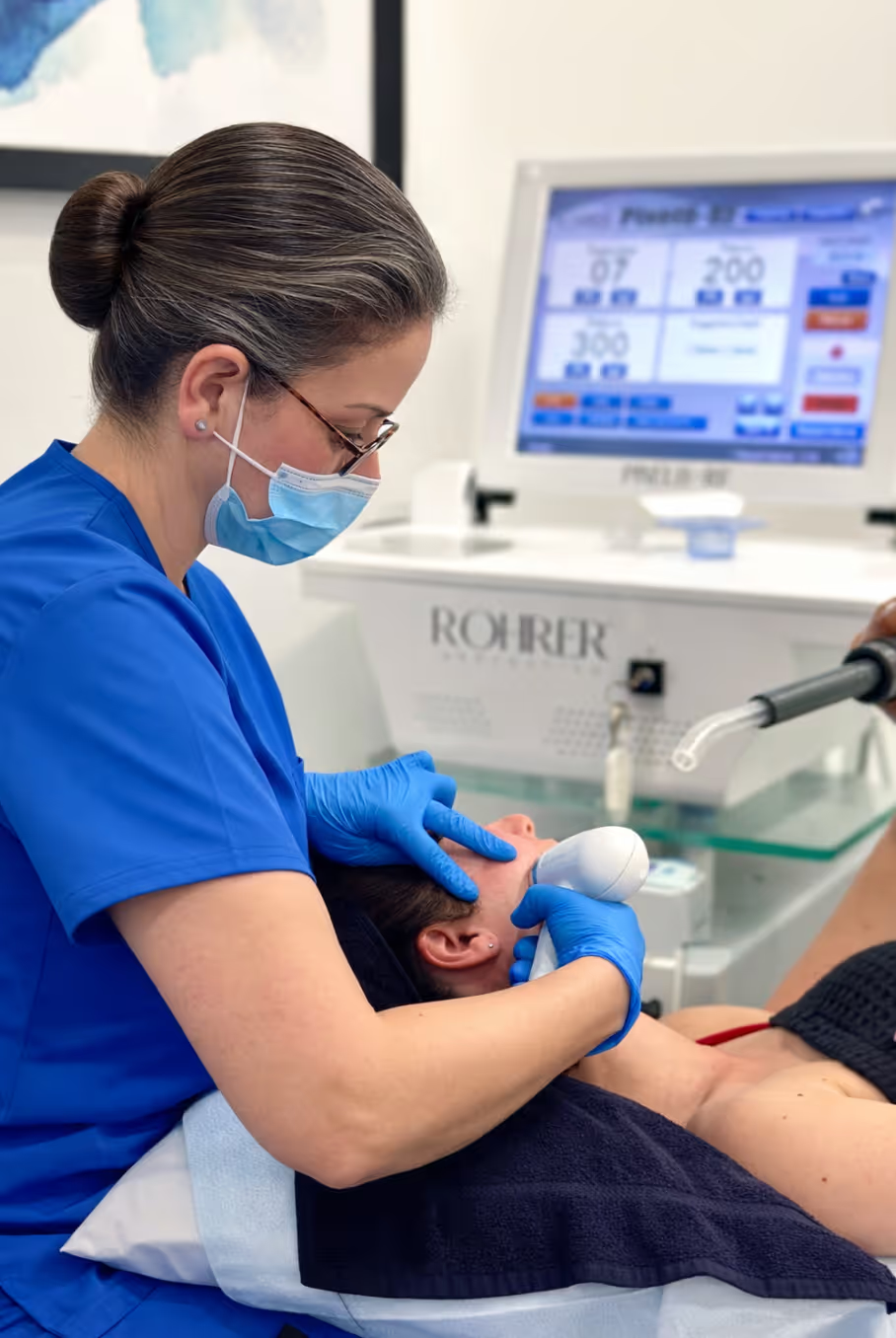
- Skin quality and laxity. Fillers placed in significantly lax skin may not produce the expected lift. In some cases, skin tightening treatments such as Pixel8-RF radiofrequency microneedling may be worth discussing as part of a broader plan.
- Proportional balance. The goal is not to correct one feature in isolation but to restore a sense of harmony across the face. Experienced injectors plan with the whole face in view.
Practical Considerations: Timing, Sequence, and Recovery
Combining treatments in one appointment is generally well-tolerated when the plan is structured with care. There are, however, practical points worth knowing before you schedule.
- Appointment length. A full-face combination session requires more time than a single area treatment. Expect a longer consultation and a more thorough pre-treatment assessment.
- Sequence matters. Neuromodulators are typically placed before fillers in the same session. The clinical rationale involves allowing the injector to assess baseline muscle activity before introducing volume changes.
- Swelling and bruising. Both are possible, particularly with fillers in areas with greater vascular density such as the lips and tear trough. Most clients find these manageable and resolve within a few days to a week.
- Result timeline. Neuromodulators take approximately two weeks to reach full effect. Filler results are visible sooner, though mild swelling may temporarily affect the appearance of placement. Final results from a combined session are typically best assessed at the two-week mark.
- Reversibility. Hyaluronic acid fillers such as Revanesse Versa and Revance RHA can be dissolved with hyaluronidase if needed. This is a meaningful consideration for clients new to filler treatment.
The Tysons Elite Approach to Combination Injectable Treatment
Tysons Elite Esthetics was built around the understanding that the most discerning clients are not looking for volume for its own sake. They are looking for the version of their face that reflects how they actually feel. That distinction requires clinical precision and a certain restraint that is not universal across practices.
Every injectable treatment at Tysons Elite is performed under the medical direction of Dr. Navin Singh, a triple board-certified plastic surgeon and Johns Hopkins School of Medicine graduate who has served on the faculty of both Johns Hopkins and the University of Maryland. His surgical background informs how injectables are planned and placed — with an anatomical understanding that goes beyond surface-level cosmetic work.
Our clinical team holds the highest licensure available in the Commonwealth of Virginia. Consultations are private, unhurried, and oriented around your specific anatomy rather than a treatment template. The spring season is an appropriate time to reassess your baseline and consider whether a coordinated approach to neuromodulators and fillers serves your goals better than addressing concerns individually.
If you are ready to understand what a full-face injectable plan might look like for you, we invite you to schedule a private consultation at our practice at 7777 Leesburg Pike in Falls Church, convenient to Tysons Corner, McLean, Great Falls, and Vienna.
Start your transformation
Schedule your consultation with our knowledgeable and friendly team.