Neuromodulator Longevity: Why Your Botox Stops Working Sooner and How to Make Results Last Longer in Tysons Corner

You have been doing this long enough to notice the pattern. Your Botox used to last four months. Now it feels like three, sometimes less. You are not imagining it, and you are not simply building a tolerance in the way people describe becoming immune to a medication. What is actually happening is more nuanced — and understanding it is the first step toward doing something about it.
For the discerning professionals of Tysons, McLean, and Great Falls who rely on neuromodulator treatments to maintain a polished, rested appearance, longevity is not a minor convenience issue. It is a clinical concern worth a thoughtful conversation.
Why Neuromodulator Results Wear Off: The Clinical Explanation
Botulinum toxin works by temporarily blocking neuromuscular transmission at targeted injection sites. Over time, the body metabolizes the protein and nerve signals gradually resume. Several factors influence how quickly that process unfolds.
- Muscle mass and activity level: Highly active facial muscles, particularly in the glabellar region and around the eyes, metabolize neuromodulator more quickly. Clients who are very expressive or who chew frequently, such as those with bruxism, may notice shorter duration in corresponding areas.
- Cardiovascular fitness and metabolism: Regular high-intensity exercise elevates metabolic rate systemically. Many clinicians observe that very active clients, particularly those with strong cardiovascular conditioning, experience faster breakdown of the toxin protein.
- Immune response and antibody formation: A small subset of long-term Botox users develop neutralizing antibodies to onabotulinumtoxinA, the specific protein in Botox. This is more common with frequent, high-dose treatments. It is one reason rotating to a different neuromodulator formulation is sometimes clinically appropriate.
- Injection technique and dosing: Underdosing, shallow placement, or imprecise targeting can create the perception of shorter duration when the issue is actually insufficient initial effect. Anatomical precision matters significantly here.
- Treatment interval compression: Treating too frequently before the prior cycle has fully resolved can disrupt the muscle retraining effect that makes results feel longer over time.
Strategies That May Help Extend Neuromodulator Duration
There is no single variable that guarantees longer results. But several well-supported approaches may help clients extend the effective window of their treatments.
- Consistent treatment intervals: Clients who maintain regular appointments, typically every three to four months, often report progressively longer results over time. Repeated relaxation of the target muscle gradually reduces its overall mass and activity, which can mean the muscle requires less product to achieve the same effect.
- Considering alternative neuromodulator formulations: If antibody development is suspected, switching to a different toxin serotype or formulation may restore responsiveness. Daxxify, which uses a peptide exchange carrier rather than human serum albumin, and Xeomin, a "naked" toxin formulation with no accessory proteins, are both meaningful clinical options in this context. A broader discussion of how Daxxify differs from conventional neuromodulators is available here.
- Optimizing zinc levels: Some research suggests that zinc plays a role in botulinum toxin activity. While this is not a mainstream protocol, some clinicians recommend zinc supplementation prior to treatment for clients who are consistently rapid metabolizers.
- Avoiding heat and intense exercise immediately post-treatment: Elevated blood flow in the hours following injection may accelerate initial diffusion and potentially affect duration. Most clinical guidance recommends avoiding strenuous activity and excessive heat for 24 hours post-treatment.
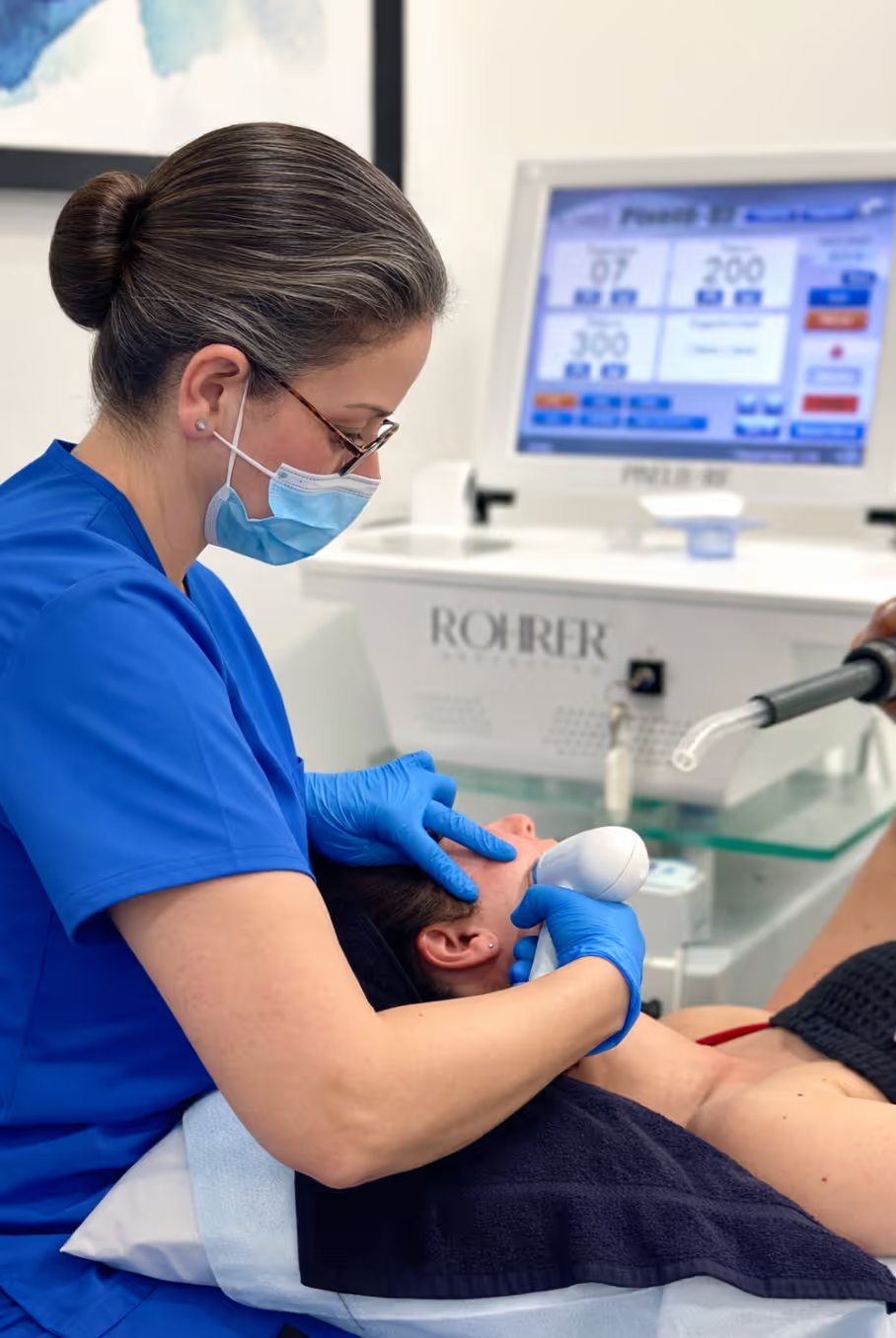
- Addressing the underlying tissue environment: Treatments that improve skin quality, collagen density, and tissue structure, such as Pixel8-RF radiofrequency microneedling, may complement neuromodulator results by improving the surrounding tissue architecture, even if they do not directly affect toxin metabolism.
When the Issue Is Dosing, Not Duration
It is worth distinguishing between results that genuinely wear off faster and results that were never fully achieved in the first place. A treatment that produces incomplete relaxation from the outset will appear to fade sooner, because the movement threshold was never fully crossed.
This is a function of anatomy, technique, and clinical judgment, not simply the product itself. The glabellar complex, the frontalis, and the periorbital muscles each have distinct fiber arrangements that require precise anatomical targeting. A provider who applies a standard template rather than reading the individual client's musculature will consistently produce shorter-appearing results.
If you have been told that Botox "just doesn't work as well" for you, the more precise question may be whether the dosing and placement were calibrated to your specific anatomy.
Why the Clinical Foundation at Tysons Elite Matters
Tysons Elite Esthetics is medically directed by Dr. Navin Singh, a triple board-certified plastic surgeon and Johns Hopkins-trained physician with faculty experience at both Johns Hopkins and the University of Maryland. His surgical-level understanding of facial anatomy informs how every injectable treatment is approached at this practice, from initial assessment through placement and dosing decisions.
When a client presents with concerns about fading results, the conversation at Tysons Elite begins with a clinical evaluation, not a sales conversation. The goal is to understand whether the issue is metabolic, anatomical, or product-related, and to build a treatment strategy accordingly. That may mean reassessing dosing, rotating formulations, adjusting intervals, or exploring whether combination approaches better support the client's long-term goals.
The team also includes Medical Estheticians holding the highest level of licensure in Virginia and a Registered Nurse, all working within a structure built on surgical-level oversight and the Glow Refined principle: results that are precise, lasting, and discreet.
If your current results are not holding as long as they should, a private consultation is a practical first step. Request yours at tysonseliteesthetics.com or visit us at 7777 Leesburg Pike, serving clients from Tysons Corner, McLean, Great Falls, Vienna, and the broader Northern Virginia corridor.
Start your transformation
Schedule your consultation with our knowledgeable and friendly team.