Exosome Therapy for Skin Rejuvenation: What Tysons Professionals Should Know About This Next-Generation Regenerative Treatment

Spring is a natural inflection point for the skin. After months of dry indoor air, cold wind, and compromised barrier function, many professionals in the Tysons-McLean corridor arrive in April looking for something more substantive than a brightening facial. They want their skin to actually repair itself. Exosome therapy, one of the more clinically compelling advances in regenerative aesthetics, works precisely at that level.
This is not a trend. It is a category of treatment rooted in cell biology, and understanding how it works helps explain why it is generating meaningful interest among patients who have already explored injectables, lasers, and microneedling, and are asking what comes next.
What Exosomes Are and How They Work
Exosomes are extracellular vesicles, tiny structures naturally secreted by cells, that carry signaling molecules including growth factors, peptides, and messenger RNA. Their primary biological function is intercellular communication: they instruct surrounding cells to repair, regenerate, or modulate their behavior.
In an aesthetic context, topically or intradermally applied exosomes can deliver these signaling cues to skin cells that have become less responsive with age. The goal is not to fill or freeze anything. It is to encourage the skin's own regenerative machinery to function more effectively.
- Growth factors: May support collagen and elastin synthesis at the cellular level
- Anti-inflammatory signals: Can help calm reactive or compromised skin
- Regenerative cues: May encourage healthier cell turnover and tissue remodeling
The result, for many clients, is skin that looks more vital and recovered rather than treated. Fine texture improvements, improved firmness, and a more even tone are among the outcomes clients most commonly report.
How Exosome Therapy Is Delivered
Exosomes are most effective when they can penetrate beyond the skin's surface barrier. For this reason, they are typically used in conjunction with a delivery mechanism that creates microchannels or opens the skin temporarily to allow deeper absorption.
Common delivery approaches include:
- Post-microneedling application: Exosome serums applied immediately after microneedling can reach the dermis while channels are open
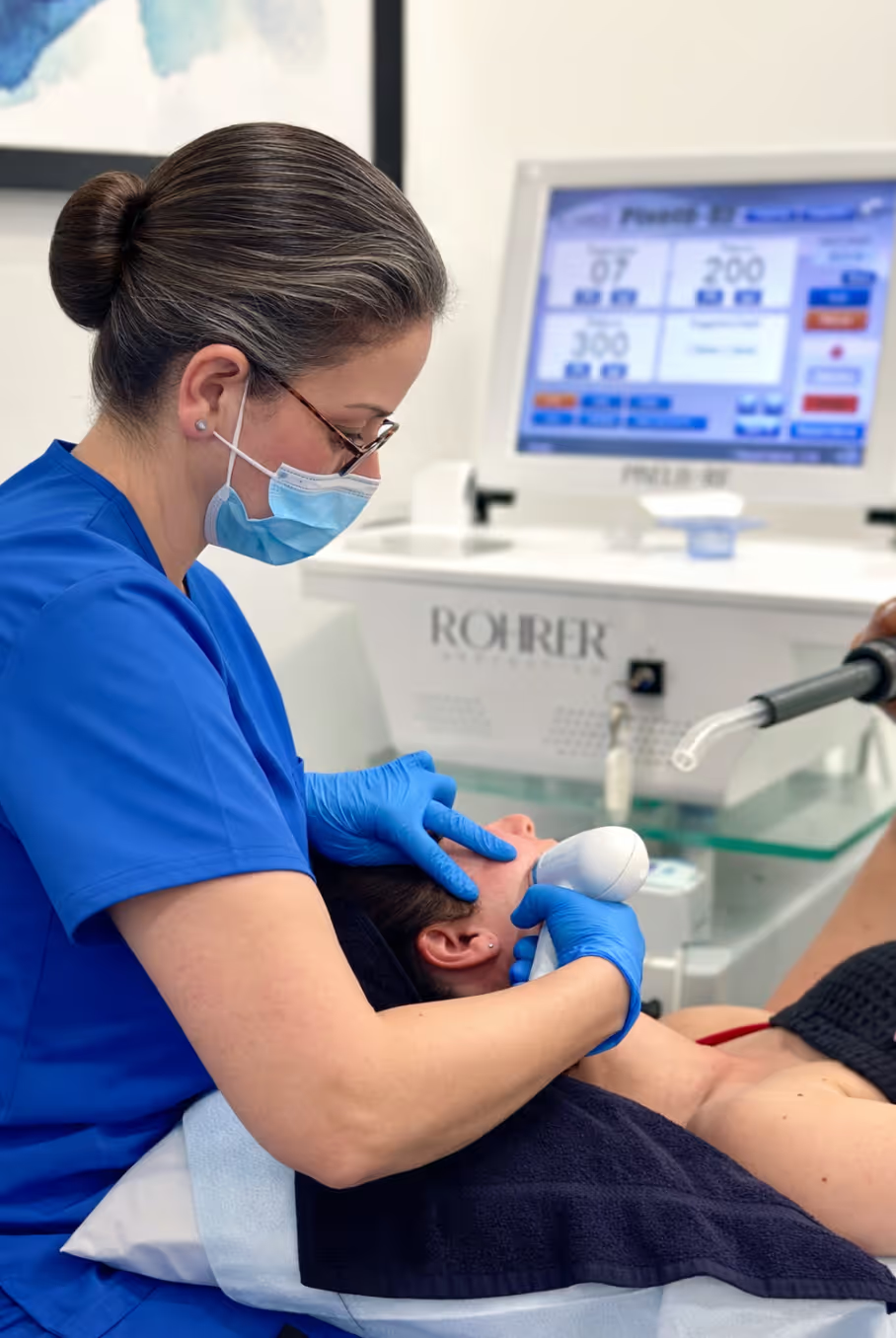
- Post-laser application: Following treatments such as Pixel8-RF radiofrequency microneedling or ablative laser resurfacing, exosomes may support healing and enhance regenerative outcomes
- Standalone topical protocols: In some formulations, exosome serums are used as part of a structured treatment protocol with or without adjunct modalities
The pairing of exosomes with energy-based treatments is particularly compelling. When the skin is in an active repair state, introducing precise regenerative signals may amplify and extend the remodeling response. It is, in essence, speaking to the skin at the moment it is most ready to listen.
Who Is a Strong Candidate for Exosome Therapy
Exosome therapy is not positioned as a replacement for established treatments. It is most useful as an adjunct or enhancement, and it tends to resonate with a particular kind of patient.
Clients who may benefit include:
- Professionals in their 40s and 50s seeking to support collagen production through biological rather than purely mechanical means
- Those recovering from laser or energy-based procedures who want to optimize the healing window
- Clients with sensitive or reactive skin who have not tolerated more aggressive resurfacing protocols
- Patients who have plateau-ed on conventional treatments and are looking for a complementary approach
- Anyone interested in the broader category of regenerative skin treatments, including PRP and PRF therapies
It is worth noting that exosome therapy is an evolving field. Research is active and growing, and while early clinical data and patient outcomes are promising, the evidence base is still developing. A consultation with a medically directed practice is essential to determine whether exosome therapy is appropriate for a given patient's skin condition and goals.
Exosome Therapy in the Context of a Comprehensive Rejuvenation Strategy
For patients already engaged in a thoughtful aesthetic plan, exosomes may represent a meaningful addition rather than a standalone solution. They are often most relevant when layered into a protocol that already includes structural work.
Consider how exosomes might complement:
- CO2 laser resurfacing for clients addressing sun damage accumulated over the spring and summer months
- Biostimulator treatments such as Sculptra or Radiesse for patients addressing deeper volume and collagen loss
- Polynucleotide injections, another emerging regenerative category focused on tissue repair and skin quality
- Skin remodeling treatments for patients prioritizing natural-looking hydration and firmness
The common thread is biology rather than mechanics. These treatments all work with the skin's own systems rather than imposing external structure. For patients who value that distinction, the conversation around exosomes is a natural one.
Why Tysons Elite Esthetics for Regenerative Treatments
At Tysons Elite Esthetics, every treatment decision begins with clinical judgment. Our medical director, Dr. Navin Singh, is a triple board-certified plastic surgeon and Johns Hopkins School of Medicine graduate whose surgical-level oversight ensures that newer treatment categories, including regenerative therapies, are evaluated with the same rigor applied to established modalities.
Our Medical Estheticians hold the highest licensure available in the Commonwealth of Virginia, with advanced training in medical-grade protocols. Our practice does not introduce treatments because they are trending. We introduce them when the evidence and clinical context support their use for the right patient.
The Glow Refined philosophy applies here as it does across every service we offer: considered, precise, and in service of outcomes that honor the skin's natural integrity rather than override it.
If you are curious about whether exosome therapy belongs in your aesthetic protocol this spring, we invite you to schedule a private consultation. Our team will assess your skin, your history, and your goals, and offer a recommendation grounded in clinical reasoning rather than novelty.
Start your transformation
Schedule your consultation with our knowledgeable and friendly team.