Glacier Water Facials: Are Hydration Boosters Worth It in Summer?

Summer in Northern Virginia is genuinely unforgiving on skin. The combination of intense heat, UV exposure, air conditioning, and humidity fluctuations creates a perfect storm for moisture loss — and no amount of drinking more water or layering on a heavier moisturizer fully compensates for it. That's where the conversation around hydration-focused treatments gets interesting, and also where it gets a little murky. "Glacier water facials" and similar hydration booster concepts have been circulating in wellness and aesthetic media, and understandably, they raise a reasonable question: is a spa-branded hydration treatment meaningfully different from what a medical aesthetics practice delivers — and is either actually worth your time in the warmer months?
Let's be honest about what most glacier water facials are. The name tends to evoke something clinical and advanced, but in practice, the category typically describes topical hydration treatments — often oxygen infusions, hyaluronic acid masks, or misting protocols using mineral-rich water — delivered in a spa setting. Results are real, but they're also temporary. The skin looks dewy and feels supple immediately after. Within 48 to 72 hours, particularly during summer heat, much of that surface hydration has dissipated. If your goal is a single-use glow before an event, that may be sufficient. If you're trying to genuinely address skin that feels chronically depleted, tight, or lackluster regardless of your skincare routine, the mechanism needs to go deeper than the epidermis.
This is where skin booster injections like Restylane Vital and Juvederm Volite represent a meaningfully different category of treatment. Rather than hydrating the surface, these injectable skin boosters deposit hyaluronic acid directly into the dermis — the structural layer where lasting moisture retention actually originates. The result isn't a temporary surface glow; it's a measurable improvement in skin quality, elasticity, and that quality of light reflection that makes skin look genuinely healthy rather than just moisturized. Treatments like these are sometimes referred to informally as a "hydration vaccine" — a phrase that captures something real about their mechanism. You're not treating the symptom (dryness); you're addressing the underlying capacity of the dermis to hold moisture over time.
Profhilo operates on a similar principle, though its mechanism is distinct. Rather than simply adding hyaluronic acid volume, Profhilo's ultra-pure HA formulation spreads through the dermis and stimulates the production of collagen and elastin — making it one of the more sophisticated options for clients whose skin feels lax and dull simultaneously, not just dry. For summer specifically, Profhilo's ability to improve skin quality without adding volume or shaping structure makes it an elegant option: you're not changing your face, you're improving the quality of what's already there.
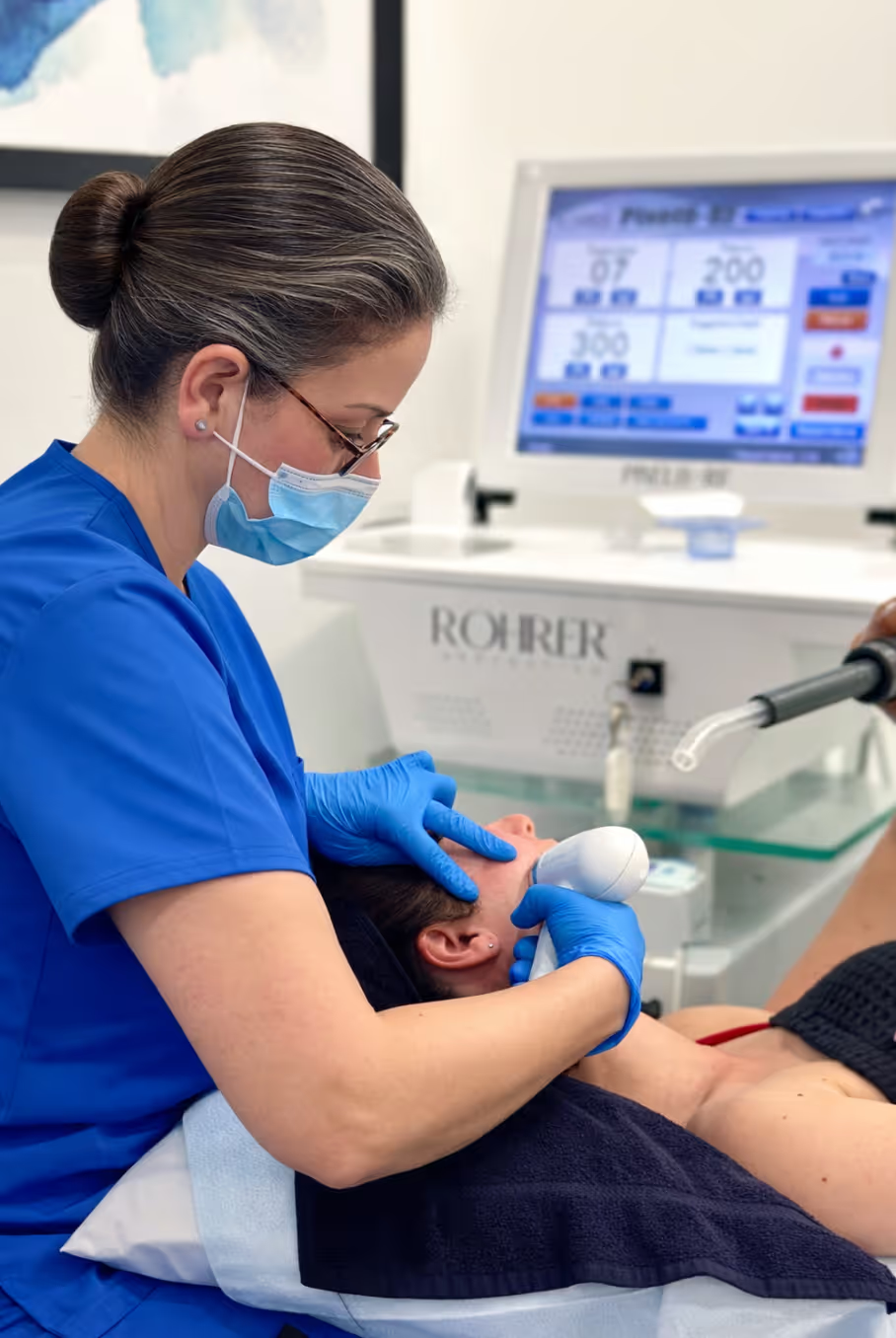
If you've been exploring the idea of boosting hydration through topical means — including the Oxifusion Facial, which uses oxygen and active ingredients to push hydration into the skin in a non-injectable format — it's worth understanding where that sits in a broader treatment hierarchy. The Oxifusion Facial delivers genuine results for clients who want visible improvement without any downtime or needles, and it holds up particularly well in summer because the infusion process works with the skin's existing barrier rather than compromising it. It's not a glacier water facial by any other name — it's a clinically designed protocol that produces consistent, reproducible results. But it's also most powerful when positioned as part of an ongoing maintenance rhythm, not a standalone solution to chronic dehydration.
The question of whether to boost hydration, and with what, really comes down to what you're trying to solve. For clients at Tysons Elite Esthetics who are managing sun exposure, travel, and the particular demands of summer on skin that's already dealing with the early signs of aging, a single modality rarely tells the whole story. The team here has a combined 70+ years of experience in medical aesthetics, and one thing that consistent expertise makes clear is that dehydrated skin and structurally aging skin are often happening simultaneously — and addressing only one while ignoring the other produces underwhelming outcomes. If the skin barrier is compromised from sun and heat, pairing a hydration-focused treatment with attention to that barrier is often the more complete answer. If volume loss is making skin look hollow and dry at once, biostimulators like Sculptra or Radiesse may address more of what's actually happening beneath the surface than any hydration treatment alone could reach.
For clients traveling through summer and concerned about maintaining results between appointments, the considerations around skin protection during and after air travel are particularly relevant — low cabin humidity is one of the most underappreciated drivers of acute skin dehydration, and it compounds whatever the summer heat is already doing. Building a treatment plan that accounts for your actual lifestyle, not just your skin type in a clinical setting, is exactly the kind of thinking that distinguishes a team you'd trust with your skin long-term from one that simply books the next available appointment.
If you're curious whether a hydration-focused treatment makes sense for your skin this summer — and which approach would actually serve your goals — the best next step is a consultation. There's no generic answer here, and the right combination of treatments depends on your skin's current condition, your summer schedule, and what you're trying to feel when you look in the mirror. That's a conversation worth having with people who have genuinely seen it all.
Start your transformation
Schedule your consultation with our knowledgeable and friendly team.