Melasma vs. Sun Spots vs. Post-Inflammatory Hyperpigmentation: What Tysons Professionals Should Know About Getting the Right Diagnosis Before Choosing a Treatment in 2025

Spring in Northern Virginia means longer days, more sun exposure, and, for many professionals in the Tysons-McLean corridor, an unwelcome reappearance of uneven skin tone. You may have noticed patches darkening along your cheekbones, a spot deepening on your forehead, or discoloration lingering months after a blemish cleared. The instinct is to treat it. The critical question is: treat what, exactly?
Melasma, sun spots, and post-inflammatory hyperpigmentation share one visible feature — darker areas on the skin — but they have entirely different causes, behaviors, and treatment responses. Choosing the wrong approach does not simply fail to help. In some cases, it makes the pigmentation worse. A precise diagnosis is not a formality. It is the foundation of effective treatment.
Understanding the Three Types of Hyperpigmentation
Each type of pigmentation has a distinct origin, pattern, and clinical profile. Knowing which you are dealing with changes everything about how it should be managed.
Melasma
- A hormonally influenced condition affecting the melanocytes, the pigment-producing cells in the skin
- Commonly triggered or worsened by sun exposure, heat, hormonal fluctuations, pregnancy, and oral contraceptives
- Appears as symmetrical, diffuse patches — most often across the cheeks, upper lip, forehead, and bridge of the nose
- Tends to be deeper in the skin (dermal melasma) or mixed, making it more resistant to surface-level treatments
- Highly prone to recurrence, even after successful reduction
- Can worsen significantly with aggressive laser treatments if not properly managed — a point that cannot be overstated
Sun Spots (Solar Lentigines)
- Caused by cumulative UV exposure over years, not hormonal activity
- Appear as well-defined, flat, discrete brown spots — typically on the face, hands, chest, and shoulders
- More common after 40 and often distributed across areas of frequent sun exposure
- Generally epidermal (surface-level), which makes them more responsive to laser and light-based treatments
- Do not typically recur in the same spots if UV protection is maintained, though new ones can develop
- Often confused with melasma when they appear in facial clusters, particularly on the cheeks
Post-Inflammatory Hyperpigmentation (PIH)
- A response to skin injury or inflammation — acne, eczema, psoriasis, a procedure, or even an aggressive at-home exfoliant
- The skin produces excess melanin as part of the healing response, leaving a dark mark where the inflammation occurred
- Can appear anywhere on the face or body, corresponding to past breakout or injury sites
- More pronounced in medium-to-deeper skin tones, where the inflammatory response tends to trigger stronger pigment production
- Generally epidermal, but deeper PIH can occur with repeated inflammation in the same area
- May fade on its own over time, but this process can take 12 to 24 months without intervention
Why Getting the Diagnosis Right Matters — Especially Before Summer
May is a particularly important moment to address this. UV intensity increases significantly through late spring and into summer, and sun exposure is the most consistent aggravating factor across all three pigmentation types. Treating proactively — before the height of summer sun — gives any intervention the best environment in which to work.
The clinical risk of misdiagnosis is real. IPL photofacial treatments, for example, are highly effective for sun spots and vascular concerns, but can trigger a significant flare in true melasma if not approached carefully. Similarly, certain chemical peels that perform well for PIH may be insufficient for the deeper dermal component of melasma. Even CoolPeel Fractional Laser Resurfacing — one of the most powerful tools available for sun damage and overall skin quality — requires careful patient selection when melasma is in the picture.
The same patch of skin can harbor more than one type of pigmentation simultaneously. This overlap is common and is one of the reasons that a thorough clinical assessment, rather than a visual guess, is essential before any treatment is selected.
Treatment Approaches by Pigmentation Type
Once the correct diagnosis is established, a range of effective options exists. At Tysons Elite Esthetics, treatment planning is individualized and never templated.
For melasma:
- Topical protocols, including prescription-grade brightening agents, are often the foundation of long-term management
- Chemical peels such as the Vi Peel Precision Plus are formulated specifically for hyperpigmentation and melasma-prone skin
- Low-fluence laser protocols may be appropriate for some cases, with careful monitoring and UV protection as non-negotiable adjuncts
- Hormonal triggers should be identified and, where possible, addressed in parallel with topical and in-office treatment
For sun spots:
- IPL photofacial remains one of the most effective and well-tolerated options for discrete solar lentigines
- Ablative laser resurfacing, including ablative skin resurfacing, can address sun spots alongside broader texture and tone concerns
- Consistent, high-SPF sun protection is essential to prevent new spots from forming and existing ones from returning
For post-inflammatory hyperpigmentation:
- Treating the underlying inflammation is always the first priority — ongoing acne or eczema must be managed before pigmentation can be effectively addressed
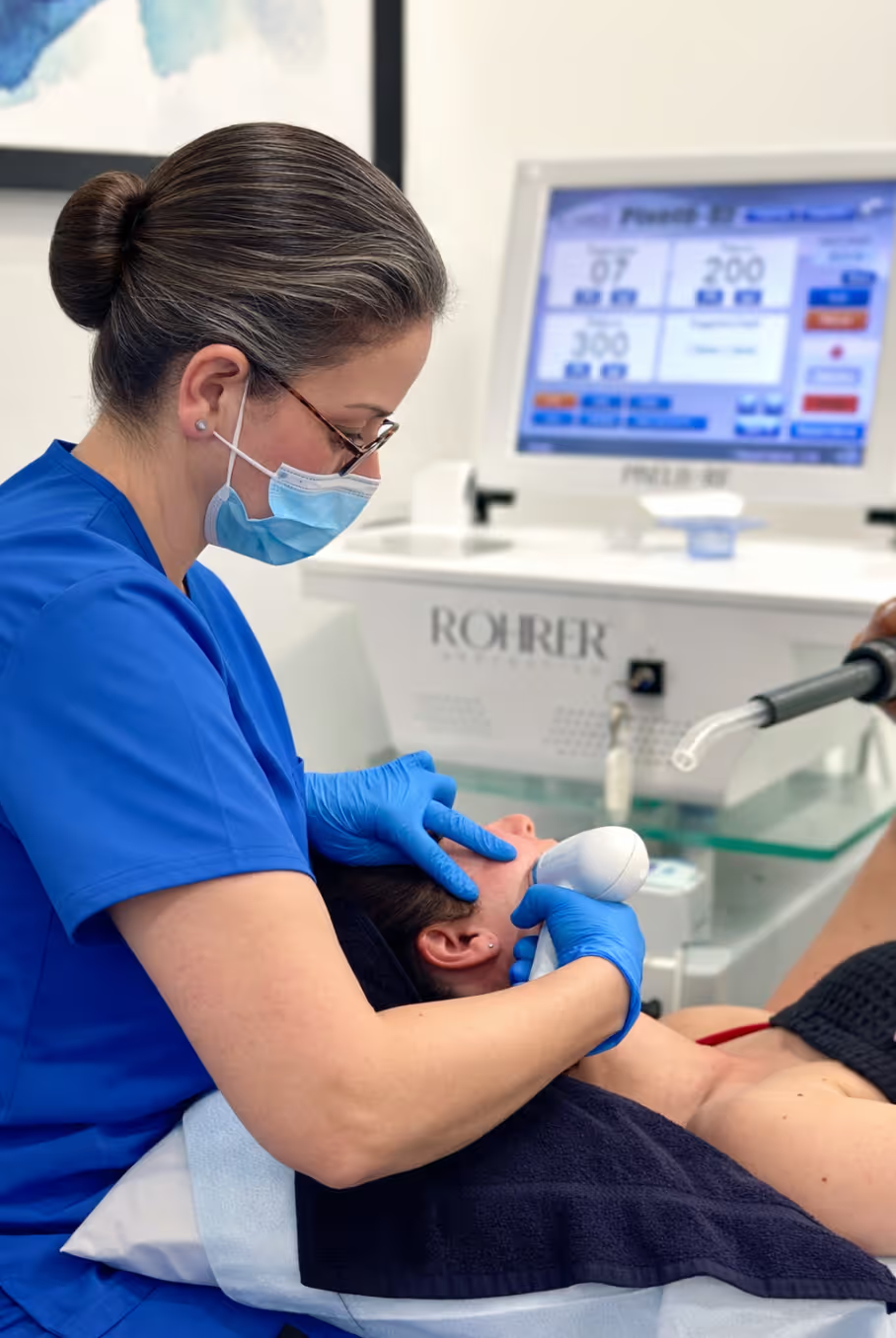
- Microneedling and Pixel8-RF radiofrequency microneedling can accelerate the fading of PIH while improving overall skin texture
- Targeted chemical peels may help lift surface pigmentation more quickly than topicals alone
- Darker skin tones require particularly careful treatment selection to avoid triggering additional PIH through the treatment itself
Why Tysons Elite Esthetics Approaches Pigmentation Differently
Tysons Elite Esthetics is not a high-volume clinic that applies a standard protocol to every concern that presents as "dark spots." The practice is medically directed by our licensed clinical team.
Our Medical Estheticians hold Virginia's Master Esthetician designation, which requires advanced clinical training beyond standard licensure. They are experienced in the nuanced assessment of hyperpigmentation across a range of skin tones and are supported by a Registered Nurse within the clinical team.
The broader context of hyperpigmentation treatment is something we address thoroughly during consultations, because the right answer is almost never a single product or a single session. It is a considered sequence of interventions, built around an accurate understanding of what is actually happening in your skin.
Founder Luise Estelle built this practice around the principle that refined results begin with precise diagnosis. That is as true for pigmentation as it is for any other aesthetic concern.
If you have been managing dark spots without a clear diagnosis, or if you have tried treatments that have not delivered, a private consultation at Tysons Elite Esthetics is a worthwhile next step. Accurate assessment is where effective treatment begins.
Start your transformation
Schedule your consultation with our knowledgeable and friendly team.