Microneedling With PRP vs. Microneedling With Exosomes: What Tysons Professionals Should Know About Choosing the Right Add-On for Skin Rejuvenation

You have already decided that microneedling is the right treatment for your skin. The question now is what to pair with it. PRP and exosomes are the two most clinically relevant add-ons available, and the choice between them is not simply a matter of which is newer or which costs more. It is a matter of understanding how each one works, what each one is best suited for, and where your skin actually is right now.
For professionals in Tysons Corner, McLean, and the broader Northern Virginia corridor who prefer to research before they commit, this is the breakdown you need.
How Microneedling Creates the Opportunity for Enhanced Results
Before comparing the two add-ons, it helps to understand why any add-on matters. Microneedling creates thousands of controlled micro-channels in the skin. These channels do two things simultaneously: they trigger the skin's natural wound-healing cascade, stimulating collagen and elastin production, and they temporarily open pathways that allow topical or injectable biologics to penetrate far deeper than they could on intact skin.
That window, typically the first several minutes after treatment, is when the quality of what you apply matters most. Applying a high-quality regenerative agent during that window can meaningfully amplify outcomes. Applying something mediocre accomplishes little beyond the baseline microneedling result itself.
Microneedling With PRP: What It Is and Who It Suits
PRP, or platelet-rich plasma, is derived from your own blood. A small sample is drawn at the time of your appointment, processed in a centrifuge to concentrate the platelets, and the resulting plasma is applied to the skin immediately following microneedling. Because PRP contains growth factors drawn directly from your own biology, it is autologous. There are no foreign proteins involved.
Key points about microneedling with PRP:
- The growth factors in PRP include PDGF, TGF-beta, VEGF, and others that support tissue repair and collagen synthesis
- Results build gradually over several weeks as the skin's own regenerative processes respond
- Well-suited for clients focused on texture refinement, pore appearance, and early-stage laxity
- Because it uses your own blood, there is no risk of allergic reaction to an external biological agent
- The concentration of growth factors varies from person to person, and from draw to draw, based on individual platelet counts and health status
- Particularly relevant for clients interested in supporting skin quality as part of a longer-term maintenance program
For context on how PRP compares to PRF in other applications, our earlier discussion of PRP vs. PRF for skin rejuvenation and hair loss covers the platelet-based spectrum in more detail.
Microneedling With Exosomes: What It Is and Who It Suits
Exosomes are extracellular vesicles, nanoscale particles that carry messenger signals between cells. In aesthetic medicine, the exosomes used are derived from stem cell sources and are standardized to contain concentrated signaling molecules, growth factors, cytokines, and microRNA that instruct the skin to repair and regenerate.
Unlike PRP, exosomes are not autologous. They are a manufactured biologic applied topically or intradermally. The key distinction is standardization: a high-quality exosome preparation delivers a defined and consistent concentration of active signals, regardless of the individual client's own platelet count or health variables.
Key points about microneedling with exosomes:
- Exosomes work at the cellular signaling level, communicating with skin cells rather than simply delivering growth factors passively
- The standardized concentration means results may be more predictable than PRP for certain skin concerns
- Many clients notice a more immediate visible improvement in radiance and skin quality compared to PRP, though full results still develop over weeks
- Particularly well-suited for clients dealing with post-inflammatory concerns, significant sun damage, or skin that has been slow to respond to conventional regenerative approaches
- Also increasingly considered for clients concerned about skin quality changes associated with significant weight loss, including those on GLP-1 medications, where cellular signaling support may be especially relevant
- The regulatory framework for exosomes continues to evolve, which makes selecting a clinic that uses established, clinically validated preparations especially important
For a deeper review of exosome therapy as a standalone treatment category, our post on exosome therapy for skin rejuvenation in Tysons Corner provides useful context.
How to Think About Choosing Between the Two
This is not a case where one option is objectively superior. The right choice depends on your skin's current condition, your goals, and how your body has responded to prior regenerative treatments.
PRP may be the more appropriate choice when:
- You are focused on gradual skin quality improvement over a series of treatments
- You prefer an autologous approach with no external biological material
- Your skin is generally healthy and you are maintaining rather than significantly correcting
Exosomes may be the more appropriate choice when:
- You are addressing more pronounced sun damage, uneven tone, or cellular-level skin fatigue
- You want a more standardized, consistent regenerative signal regardless of personal biology
- You have not seen the results you expected from prior PRP treatments
- You are looking for a more intensive single-session outcome, particularly if downtime or number of treatments is a constraint
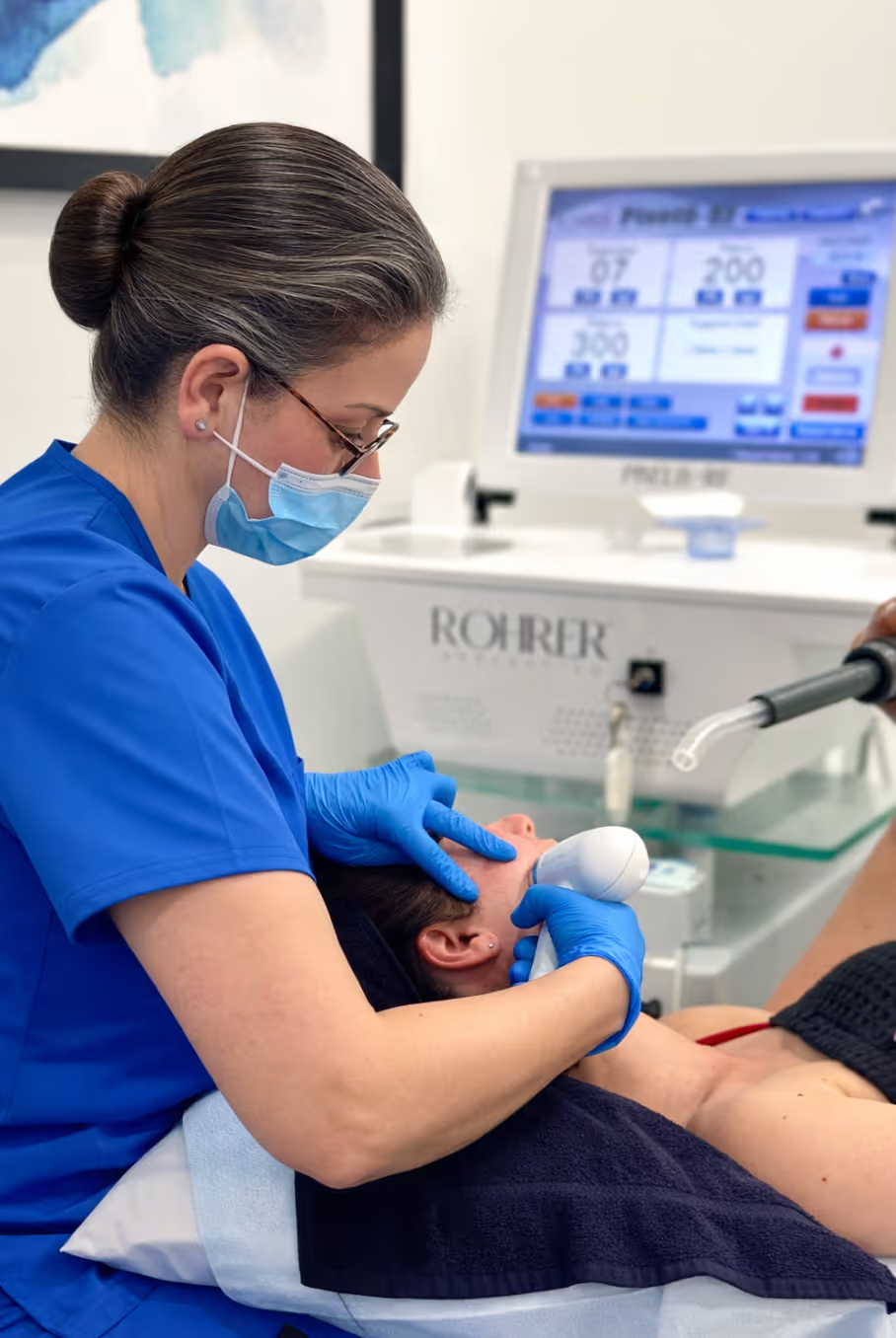
It is also worth noting that microneedling add-ons do not exist in isolation. Depending on your broader skin concerns, your clinician may consider how these treatments interact with other modalities, such as Pixel8-RF radiofrequency microneedling for laxity, or Vi Peel Precision Plus for pigmentation, as part of a more comprehensive protocol.
Why Tysons Elite Esthetics Is the Right Environment for This Decision
Choosing between PRP and exosomes is not a decision that should be made at the front desk. It requires a clinical conversation, informed by your skin's history, your goals, and a provider who understands the biological mechanisms well enough to make a genuine recommendation rather than default to the more expensive option.
At Tysons Elite Esthetics, every treatment plan is developed under the medical oversight of our licensed clinical team. This involvement ensures that add-on decisions are grounded in clinical reasoning, not trends or upselling.
Our Medical Estheticians hold the highest licensure available in the Commonwealth of Virginia. They are trained in advanced skin assessment and in the protocols that govern how regenerative agents are applied in clinical practice. The distinction matters when you are introducing biologics into freshly needled skin.
The "Glow Refined" philosophy that guides this practice is built on a simple premise: the best result is the one that is precisely calibrated to you. That applies as much to which add-on you choose as to any other element of your treatment.
If you are considering microneedling with PRP or microneedling with exosomes in Tysons Corner, McLean, or the surrounding Northern Virginia area, we welcome you to schedule a private consultation. The conversation is the first step toward a result that is worth having.
Start your transformation
Schedule your consultation with our knowledgeable and friendly team.