Morpheus8 vs. Ultherapy for Facial Tightening: Which Treatment Is Right for You in Tysons Corner

When clients at Tysons Elite Esthetics ask about facial tightening without surgery, the conversation often centers on two technologies: Morpheus8 and Ultherapy. Both are FDA-cleared. Both stimulate collagen. Both can address the gradual loss of definition along the jawline, mid-face, and neck that begins to emerge in the late 30s and accelerates through the 40s and 50s.
But the similarities end there. Morpheus8 delivers radiofrequency energy through microneedles, working from the skin's surface down into the subdermal layers. Ultherapy uses focused ultrasound to target tissue deep beneath the skin, at the same foundational layer addressed during surgical lifts. The depth of treatment, the sensation during the procedure, the recovery profile, and the type of laxity each addresses differ significantly.
For professionals in Tysons Corner and McLean who value precision and want to understand the clinical distinctions before committing to treatment, this comparison is essential.
How Morpheus8 and Ultherapy Work Differently
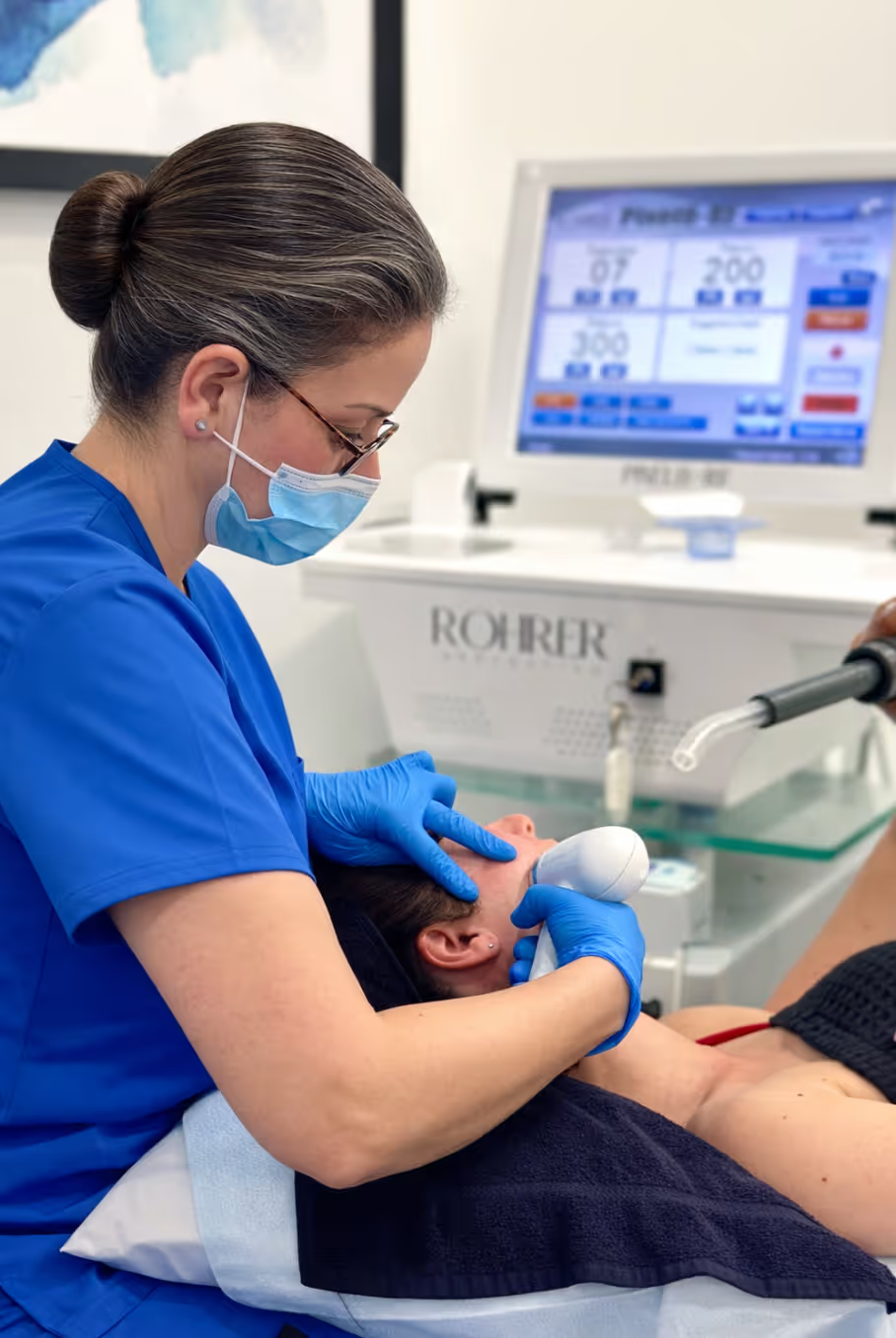
Morpheus8 combines microneedling with fractionated radiofrequency energy. Fine needles penetrate the skin to controlled depths, typically ranging from 1mm to 4mm depending on the treatment area. As the needles create micro-channels, radiofrequency is delivered directly into the dermis and subcutaneous fat, heating tissue to stimulate collagen remodeling and tighten the fibrous septa that support skin structure.
This approach is particularly effective for clients with:
- Texture irregularities, enlarged pores, or acne scars alongside laxity
- Mild to moderate jowling or loss of jawline definition
- Crepiness or thinning skin quality, especially on the neck and lower face
- Concerns that span both surface texture and deeper structural support
Ultherapy, by contrast, uses micro-focused ultrasound with visualization technology to target the superficial musculoaponeurotic system (SMAS), the same tissue layer repositioned during a surgical facelift. The ultrasound energy bypasses the skin's surface entirely, focusing thermal coagulation points at depths of 3mm, 4.5mm, and sometimes 1.5mm, depending on the treatment area.
Ultherapy may be more appropriate for clients with:
- Moderate to advanced brow descent or loss of upper facial volume support
- Significant laxity along the jawline or submental area
- A desire to avoid any surface disruption or downtime
- Good skin quality but weakening foundational support
Both technologies rely on the body's natural collagen production response. Results develop gradually over two to three months, with continued improvement over six months as new collagen fibers mature and contract.
What to Expect During and After Each Treatment
The treatment experience differs considerably between Morpheus8 and Ultherapy, and this can influence which option feels more aligned with your expectations.
Morpheus8:
- Topical anesthetic applied 30-45 minutes before treatment
- Controlled, tolerable warmth and pressure as the device moves across treatment zones
- Treatment time typically 30-60 minutes depending on the area
- Redness, mild swelling, and pinpoint marks visible for 24-48 hours
- Most clients resume professional activities within two to three days
- Makeup can usually be applied the following day
- Results develop over 4-12 weeks, with optimal outcomes after a series of 2-3 sessions spaced 4-6 weeks apart
Ultherapy:
- No anesthetic required, though some clients opt for oral pain relief beforehand
- Deep, pulsing sensation during energy delivery, intensity varies by treatment area
- Brow and jawline areas tend to be more comfortable than submental zones
- Treatment time typically 60-90 minutes for full face and neck
- Mild redness or swelling immediately after, resolves within hours
- No visible surface disruption, most clients return to work the same day
- Results develop over 2-3 months, with continued lifting over 6 months
- Single session protocol for most clients, though some choose a touch-up after one year
Neither treatment is without sensation. Morpheus8 is generally better tolerated due to the use of topical anesthetic. Ultherapy's deep heating can be more intense, particularly in bony areas, though the absence of downtime appeals to clients with demanding schedules.
Which Treatment Addresses Your Concerns More Effectively
The choice between Morpheus8 and Ultherapy is not about which technology is superior in the abstract. It is about which mechanism addresses your specific anatomy and aesthetic goals more precisely.
Consider Morpheus8 if you are prioritizing:
- Surface texture refinement alongside tightening, such as large pores, fine lines, or uneven tone
- Mild to moderate laxity in the lower face, jawline, or neck
- A treatment that works across multiple layers, from epidermis to subdermal fat
- The option to combine tightening with fat reduction in the submental area
- Flexibility in customizing depth and energy settings across different facial zones
Consider Ultherapy if you are prioritizing:
- Lifting and tightening at the foundational SMAS layer, mimicking surgical facelift mechanics
- Brow lift or correction of upper facial descent without surgery
- Jawline definition and submental laxity correction with no surface disruption
- Absolutely zero downtime, with the ability to attend evening events the same day
- A single-session protocol with gradual, natural-looking results over several months
Some clients benefit from a staged approach, using Ultherapy to address deep structural laxity first, then layering Morpheus8 several months later to refine texture and surface quality. This is not a standard protocol for everyone, but it reflects the precision-based approach our team takes when designing treatment plans.
For clients concerned about skin laxity after 40, understanding the different mechanisms of these technologies is essential to setting realistic expectations.
Why Tysons Elite Esthetics for Advanced Skin Tightening
Morpheus8 and Ultherapy are both powerful technologies, but their effectiveness depends entirely on the skill and anatomical knowledge of the provider. At Tysons Elite Esthetics, every treatment is performed under the medical direction of Dr. Navin Singh, a triple board-certified plastic surgeon and Johns Hopkins graduate. His surgical-level understanding of facial anatomy informs every protocol, from energy settings to treatment depth.
Our clinical team includes Virginia-licensed Medical Estheticians who hold the highest level of certification available in the Commonwealth. They are trained extensively in radiofrequency and ultrasound-based skin tightening technologies and work closely with Dr. Singh to ensure each treatment is tailored to the individual architecture of your face.
This is not a high-volume practice. Consultations are private, unhurried, and designed to answer the questions that discerning clients actually ask: what will this feel like, how long will results last, what are the limitations, and how does this fit into a long-term approach to maintaining facial structure as you age.
The Glow Refined philosophy that guides every treatment at Tysons Elite is built on subtlety, precision, and discretion. We do not promise transformation. We deliver refinement, in an environment that respects your time, your privacy, and your expectations.
If you are ready to explore whether Morpheus8 or Ultherapy is the right approach for your concerns, schedule a private consultation. We will evaluate your skin quality, discuss your goals, and design a protocol that aligns with both your anatomy and your standards.
Start your transformation
Schedule your consultation with our knowledgeable and friendly team.