Neck and Décolletage Rejuvenation Without Surgery: What Tysons Professionals Should Know About Treating Skin Laxity and Crepiness Below the Jawline

The face gets most of the attention. The neck and décolletage tell a different story, often more honestly than anything above the jawline. For professionals who invest thoughtfully in their appearance, the disconnect between a well-maintained face and a crepey, lax neck can feel frustrating precisely because it is so visible and so frequently overlooked in conventional treatment planning.
The skin below the jawline is structurally different. It is thinner, receives less sebaceous support, and is chronically exposed to UV, environmental stress, and the compounding effects of postural habits and screen time. By the mid-forties, many clients notice horizontal neck lines, surface crepiness, softening of the jawline-to-neck transition, and sun-related changes across the chest. These concerns are distinct from one another and respond to different clinical approaches.
Understanding what each treatment addresses, and why sequencing and precision matter, is the starting point for meaningful results.
Why the Neck and Décolletage Age Differently Than the Face
This area is frequently undertreated because it falls outside the traditional facial aesthetic conversation. But the biology here is specific and worth understanding before selecting a treatment path.
- Thinner dermis. The skin of the neck has fewer sebaceous glands and less intrinsic collagen density than facial skin, making it more susceptible to visible laxity as collagen production declines with age.
- UV exposure without protection. Many clients apply SPF to the face consistently but neglect the neck and chest. Cumulative photodamage here often manifests as pigmentation irregularities, surface roughness, and accelerated loss of skin integrity.
- Postural stress. Repeated flexion from device use contributes to horizontal neck lines that may deepen over time, independent of gravitational laxity.
- Décolletage wrinkling. Sleep position and the mechanical compression of the chest over years can produce persistent vertical and diagonal lines across the sternum and upper chest that are difficult to address with topicals alone.
For clients who have already explored facial rejuvenation, addressing the neck and chest is often the natural next step toward cohesion. The goal is not perfection. It is proportion and refinement.
Non-Surgical Treatments That Address Neck Laxity and Crepiness
Several clinical modalities have demonstrated meaningful results in this anatomical zone. At Tysons Elite Esthetics, treatment selection is individualized, never templated.
Radiofrequency Microneedling
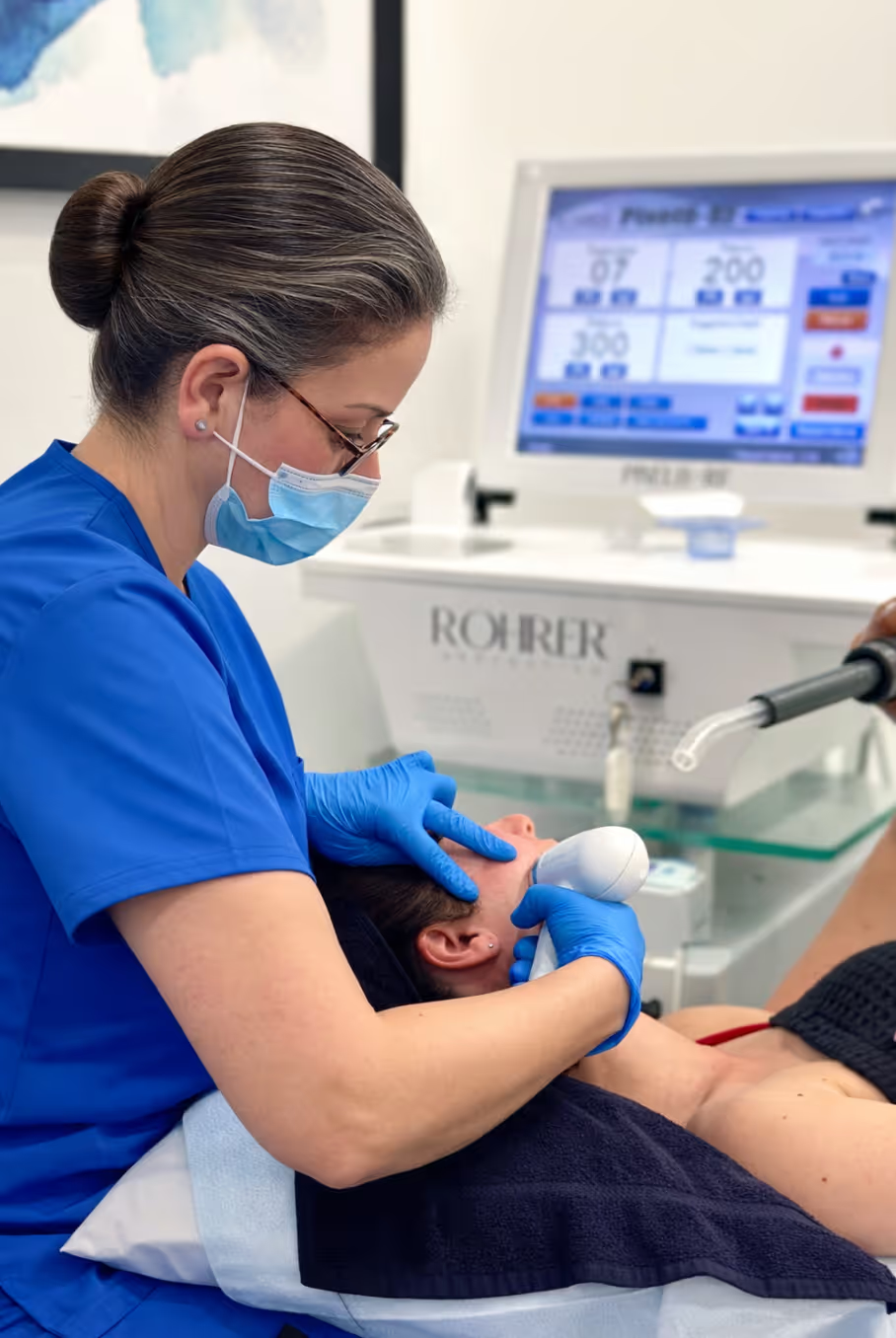
For clients experiencing skin laxity and surface crepiness along the neck, Pixel8-RF radiofrequency microneedling delivers controlled thermal energy to targeted dermal depths, stimulating collagen and elastin remodeling over a series of weeks. Many clients experience improved skin firmness and texture. A series of treatments is typically recommended for optimal cumulative benefit. Results continue to develop for several months following the final session.
CoolPeel Fractional Laser Resurfacing
For surface irregularities, crepiness, and photodamage, CoolPeel Fractional Laser Resurfacing remains one of the most precise tools available for skin renewal. The neck and décolletage can be treated alongside the face as part of a comprehensive resurfacing protocol. Parameters are adjusted carefully for this thinner skin, which responds differently than the face and requires clinical experience to treat safely. Dr. Singh's surgical-level oversight is particularly relevant here.
Neuromodulators for Neck Bands and Jawline Definition
Vertical platysmal bands, the rope-like cords that become visible along the neck with age and muscle activity, can be softened with targeted neuromodulator injections. This approach, sometimes called the Nefertiti lift, may also refine the jawline-to-neck transition without surgery. Our full guide to platysmal band treatment covers what to expect in detail. Horizontal neck lines may also respond to precise neuromodulator placement.
Chemical Resurfacing and Skin Conditioning
For clients with early photodamage and surface texture concerns, medical-grade peels offer a measured approach to cellular renewal. The Vi Peel Precision Plus can be applied to the neck and chest with appropriate formulation adjustments. This is a useful adjunct treatment in a broader protocol or a starting point for clients new to in-office resurfacing.
Plasma Pen Skin Tightening
For localized surface tightening, the Plasma Pen uses controlled plasma energy to initiate fibroblast activity and surface contraction. It may be appropriate for specific areas of the neck where tightening is the primary goal, as determined during consultation.
Spring Is a Considered Time to Begin Neck and Décolletage Treatment
April is a practical moment to initiate a neck and décolletage protocol. Temperatures are mild, sun exposure has not yet intensified to peak summer levels, and clients treated now allow adequate healing and early collagen remodeling to occur before the higher-UV months of July and August.
Laser-based and energy-based treatments require sun avoidance during recovery. Starting in late April means many clients will have progressed through initial healing and early collagen development by mid-summer, with results continuing to mature into fall. Diligent SPF use and protective clothing remain essential throughout, particularly for the chest and neck, which are chronically underprotected.
For clients considering a combined facial and neck protocol, spring scheduling also allows coordinated treatment sequencing with sufficient intervals between sessions.
Why Tysons Elite Esthetics for Neck and Décolletage Rejuvenation
The neck and décolletage are not forgiving zones for imprecision. The skin is thinner, healing is less predictable than on the face, and the risk of adverse outcomes with incorrectly calibrated energy devices is meaningful. This is not an area where a high-volume, protocol-driven environment is the right setting.
At Tysons Elite Esthetics, every treatment plan is developed under the medical oversight of Dr. Navin Singh, triple board-certified plastic surgeon and Johns Hopkins School of Medicine graduate. His surgical background informs how energy parameters are set, how anatomical nuance is respected, and how treatment protocols are sequenced across multiple modalities.
Our Medical Estheticians hold the highest level of licensure available in the Commonwealth of Virginia, with advanced training in laser protocols and medical-grade resurfacing. Our clinical team does not operate from standardized menus. Each client's anatomy, skin history, and outcome goals shape the protocol.
The Glow Refined philosophy that defines this practice applies here as it does across all treatments: subtle, precise, and calibrated to honor the integrity of your natural features rather than override them.
Clients throughout the Tysons, McLean, Great Falls, and Vienna corridor have found that the neck and décolletage, long neglected in their aesthetic planning, can be addressed with the same discretion and clinical standard they expect for everything else.
To explore what a personalized neck and décolletage protocol might include for your concerns, we invite you to schedule a private consultation at our Tysons Corner practice.
Start your transformation
Schedule your consultation with our knowledgeable and friendly team.