Brow Lift Without Surgery: What Tysons Professionals Should Know About Using Botox and Filler to Lift and Reshape the Brows After 40

The upper face communicates before you say a word. Brow position, arch shape, and the weight of the brow bone signal energy, alertness, and presence. For many professionals in their 40s and 50s, the brows have gradually descended or flattened in ways that feel unfamiliar. The face looks heavier. The eyes appear smaller. There is a persistent look of tiredness or seriousness that makeup cannot fully address.
What most clients do not realize is that a surgical brow lift is rarely the first, or best, answer to this concern. A precise, anatomy-driven approach using Botox and dermal filler can restore meaningful lift, improve arch definition, and open the eye area, with no incisions, no general anesthesia, and no recovery period. This is one of the most technically demanding applications in non-surgical aesthetics. Done well, the results are entirely natural. Done carelessly, they are not.
Why Brows Change After 40
Brow descent is not simply a skin issue. It results from several converging changes in the upper face:
- Muscle imbalance. The frontalis muscle runs vertically across the forehead and is responsible for brow elevation. Over time, the depressor muscles around the eye, particularly the orbicularis oculi and corrugator muscles, become relatively dominant. They pull the brow downward and inward, flattening the arch and creating heaviness at the outer brow tail.
- Volume loss. The brow fat pad thins with age, reducing the structural support that keeps the brow elevated and shaped. This is especially noticeable at the lateral brow, where hollowing creates a deflated appearance.
- Skin changes. Reduced collagen and elastin in the brow and forehead region allow gradual descent that compounds over years.
- Bone remodeling. The brow bone itself changes shape over time, which can affect how overlying tissue sits.
Understanding these layers is essential to treating them correctly. A neuromodulator alone may not be sufficient if volume loss is also present. Filler alone cannot override dominant depressor muscle activity. The most effective outcomes typically involve both modalities, placed with anatomical precision.
How a Non-Surgical Brow Lift Works
The non-surgical brow lift is a technique, not a single product. It combines strategic neuromodulator placement with targeted volume restoration, guided by a detailed assessment of each client's unique anatomy and aesthetic goals.
The Botox component:
- Small amounts of neuromodulator are injected into the depressor muscles that pull the brow downward, primarily the lateral orbicularis oculi at the outer brow and, when indicated, the corrugators and procerus.
- Relaxing these muscles allows the frontalis to exert relative dominance, lifting the brow passively and naturally.
- The placement must account for the existing balance of muscle activity. Over-treating the frontalis, or treating without accounting for it, can cause brow flattening or an unnatural elevation pattern.
- Lateral tail lift is often the most impactful single adjustment, creating a subtle arch that opens the outer eye.
The filler component:
- Hyaluronic acid filler placed precisely along the brow bone or directly within the brow fat pad can restore lost volume and create structural lift.
- This technique is particularly useful for clients with significant lateral brow hollowing, where no amount of muscle balancing will fully restore the appearance of a supported brow.
- Filler in this area requires an injector with deep familiarity with the vascular anatomy of the upper face. The supratrochlear and supraorbital vessels require careful avoidance.
- Products with appropriate lift capacity, such as Revance RHA fillers, may be selected for their ability to support tissue while moving naturally with facial expression.
For clients who want to understand how combining these modalities can address multiple areas of the face in a single appointment, our post on combining Botox and filler for full-face rejuvenation provides useful context.
What This Treatment Can and Cannot Address
Honest assessment is part of the clinical process. A non-surgical brow lift is well-suited for:
- Mild to moderate brow descent, particularly at the lateral tail
- Flattening of the natural arch
- Brow heaviness driven by muscle imbalance or volume loss
- Clients seeking improvement without surgical downtime or commitment
- Clients who want to assess their response to non-surgical treatment before considering a surgical procedure
It is not the right solution for:
- Significant skin excess at or above the brow that falls onto the eyelid
- Marked brow ptosis that has progressed beyond what muscle balancing and volume can address
- Clients whose primary concern is upper eyelid skin laxity rather than brow position
Distinguishing between a brow concern and an eyelid concern is an important clinical distinction. Our post on under-eye concerns and appropriate treatment selection reflects the same approach we take across the upper face: matching the treatment precisely to the underlying cause.
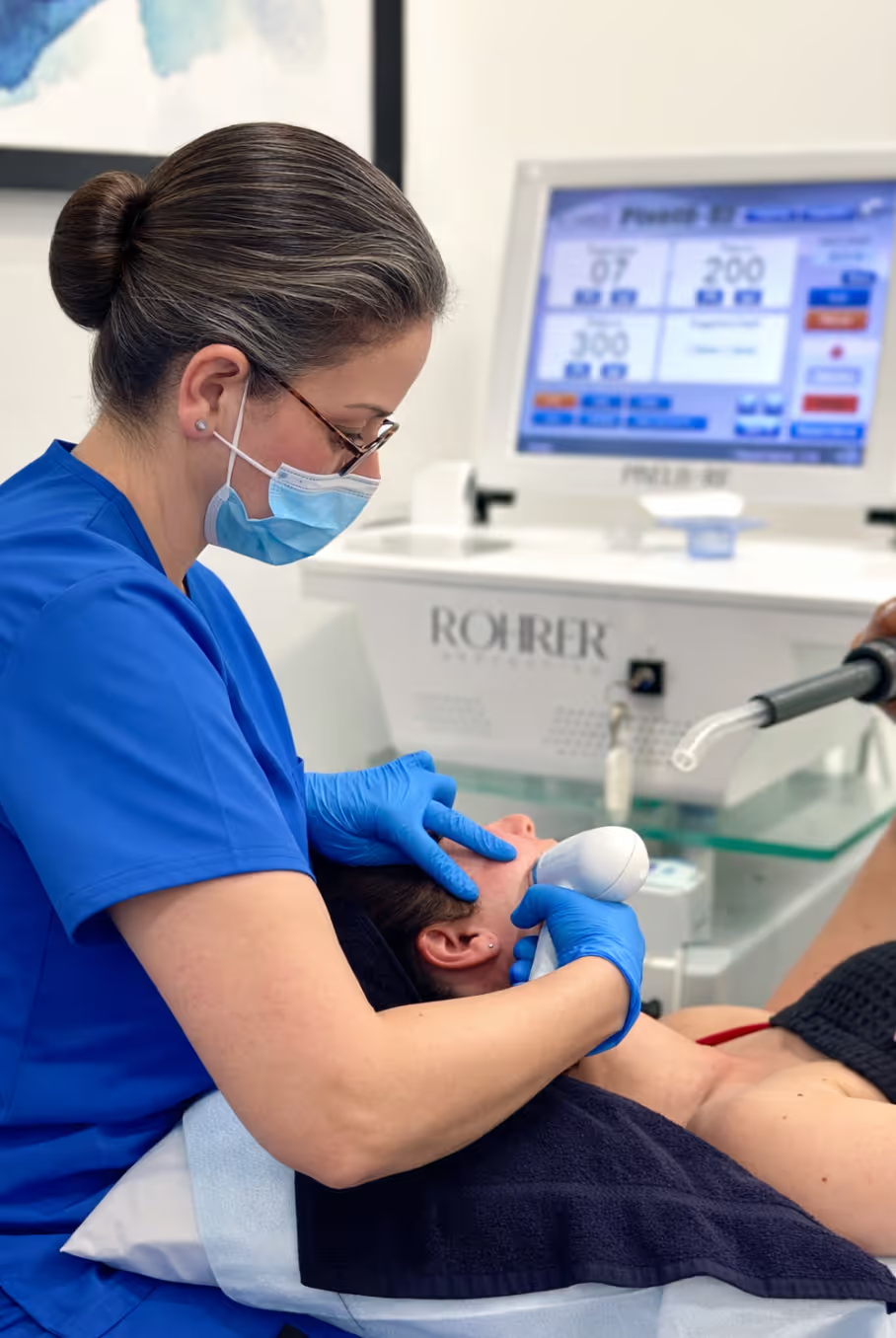
For clients with skin laxity contributing to upper face heaviness, a complementary treatment such as Pixel8-RF radiofrequency microneedling may be part of a broader plan to address tissue firmness alongside position.
Spring Timing and What to Expect
Late April is a particularly practical time to address brow position. Spring social commitments accelerate in May and June, and the visible results of Botox-based brow lifting typically settle fully within ten to fourteen days. Swelling from any filler placed in the brow region is generally minimal and resolves quickly, making this an appropriate window for professionals with upcoming events or travel.
Results from the neuromodulator component typically last three to four months, consistent with standard neuromodulator longevity. Volume placed with filler may persist longer depending on the product selected and individual metabolism. Our post on neuromodulator longevity and how to maintain results covers this in detail for clients who want to plan their treatment schedule accordingly.
Why Tysons Elite Esthetics
The non-surgical brow lift is among the most technique-dependent treatments in aesthetic medicine. Millimeters of placement and precise dosing are the difference between a natural, refreshed result and one that appears altered. This is not a treatment to approach casually.
At Tysons Elite Esthetics, every injectable treatment is performed under the medical direction of our licensed clinical team. This surgical-level understanding of facial anatomy informs every protocol at the practice, including how neuromodulators and fillers are positioned in the delicate upper face.
Our clinical team holds the highest level of licensure available in the Commonwealth of Virginia. They are supported by a Registered Nurse and practice under a framework built around the Glow Refined philosophy: results that are precise, proportionate, and entirely yours.
Tysons Elite Esthetics is located at 7777 Leesburg Pike in Falls Church, serving clients from Tysons Corner, McLean, Great Falls, Vienna, and across the Northern Virginia corridor.
If you are considering a non-surgical brow lift or a broader upper face assessment, we invite you to schedule a private consultation. The conversation begins with your anatomy, your goals, and what is genuinely achievable without surgery.
Start your transformation
Schedule your consultation with our knowledgeable and friendly team.