Ozempic Users Need Skin Tightening Sooner Than They Think

We've had this conversation more times this year than any other. A client comes in thrilled about the number on the scale — twenty, forty, sometimes eighty pounds down — and then quietly asks why their face and neck look older than they did before they started losing weight. The answer isn't in your imagination, and it isn't something a good moisturizer will fix. It's collagen and elastin that simply weren't asked to keep up with how fast the weight came off.
Here's what we tell every GLP-1 patient who sits down with us at Tysons Elite Esthetics: the window to intervene early is shorter than most people assume. Skin has some capacity to adapt to volume loss over months, but rapid, sustained weight loss — the kind Ozempic, Wegovy, Zepbound, and Mounjaro are designed to produce — outpaces that adaptation. We've written before about the specific mechanisms behind Ozempic face and the volume loss patients notice first, and about which treatments actually restore the collagen GLP-1 medications deplete. The throughline in both is timing. Skin laxity treated at the first signs of looseness responds dramatically better than skin laxity treated after it's had a year to set in.
Why "Wait and See" Rarely Works With GLP-1 Skin
Many patients delay treatment because they're still losing weight and want to "wait until they're done." We understand the instinct, but skin doesn't wait quietly in the meantime — it continues losing structural support the longer it goes untreated, and once elastin fibers have broken down significantly, no amount of catching up later fully reverses that. This is the same principle behind why collagen collapse starts earlier than most patients realize. GLP-1 weight loss simply compresses that timeline into months instead of years.
The good news: you don't need to wait until you've hit your goal weight to begin. In fact, beginning skin-supportive treatments while you're still losing weight often produces better long-term outcomes, because you're building structural support as the skin adjusts, rather than trying to rebuild it after the fact.
What Actually Rebuilds GLP-1-Affected Skin
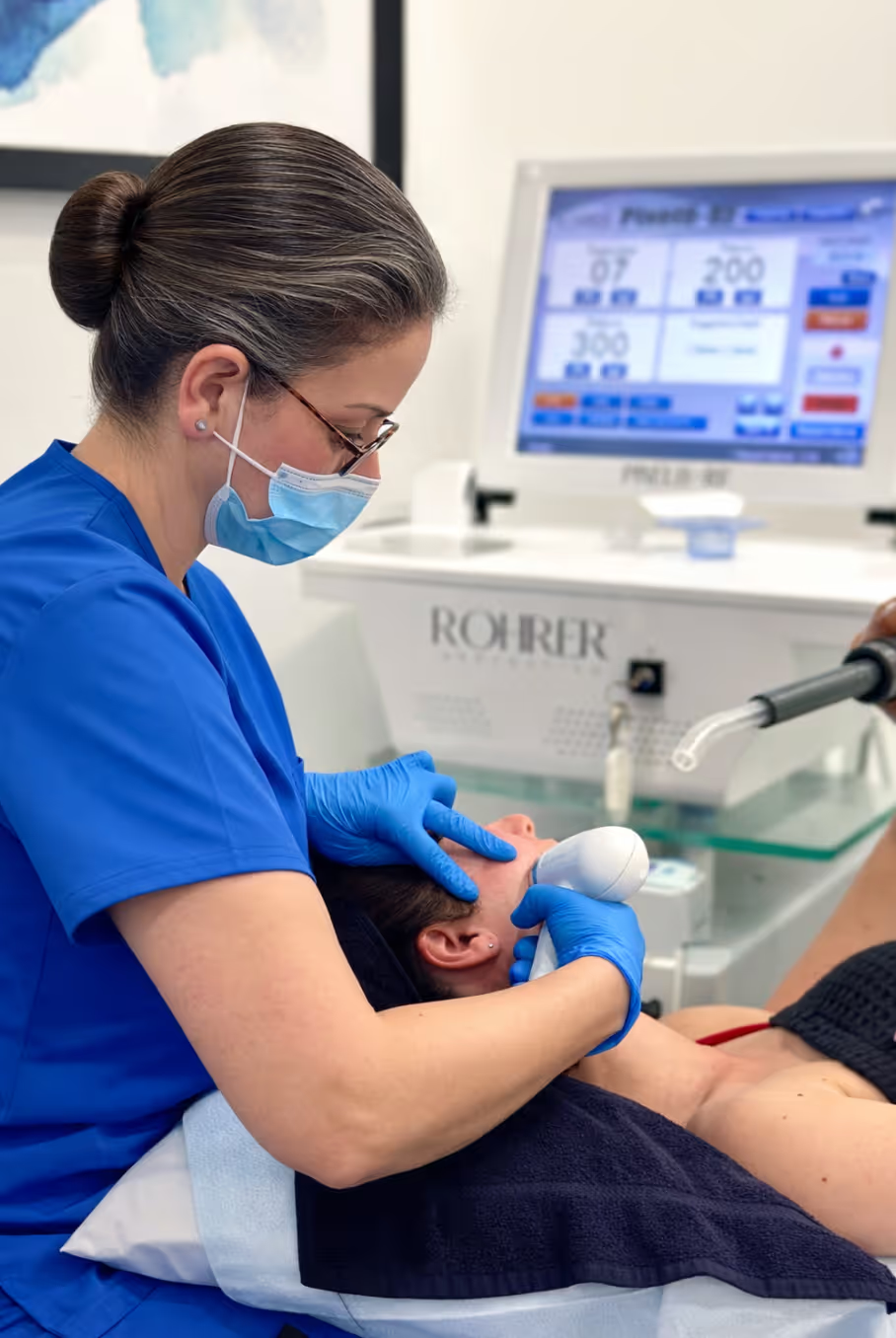
We are the only med spa in Northern Virginia authorized to administer Human Progenitor-Derived Exosomes, and for GLP-1 patients specifically, this matters. Exosomes signal the skin to regenerate collagen and elastin at a cellular level — precisely the two proteins depleted by rapid weight loss. We frequently pair exosome therapy with our rare European-sourced Pixel8-RF radiofrequency microneedling, which creates the micro-channels that let regenerative signals penetrate more deeply, tightening skin from the inside rather than superficially.
For patients with more pronounced laxity — particularly along the jawline, neck, or midface — we often layer in biostimulators. Sculptra and Radiesse work differently than dermal filler; instead of simply adding volume, they stimulate your own collagen production over months, which is exactly what depleted GLP-1 skin needs. We've covered why so many patients are now pairing GLP-1 medications with biostimulators as a proactive strategy rather than a corrective one, and for body-wide laxity beyond the face, non-surgical body contouring after weight loss addresses the arms, abdomen, and thighs using the same principle — supporting skin structure before it fully gives way.
The Consultation Makes the Difference
Every GLP-1 patient's skin responds differently depending on age, starting skin quality, how quickly weight was lost, and which areas carried it. This isn't a one-treatment-fits-all situation, and we won't pretend otherwise. What we do is sit down with you, assess where you are in your weight loss journey right now, and build a sequence — exosomes, Pixel8-RF, biostimulators, or some combination — timed to where your skin actually is, not where a generic protocol assumes it should be.
Our team has spent a combined 70+ years doing exactly this kind of individualized planning, and we've watched the GLP-1 landscape shift enough to know that the patients who come in early, even mid-journey, are the ones who avoid needing more aggressive intervention later. If you're on a GLP-1 medication and starting to notice your skin isn't keeping pace with your weight loss, that's the moment to come in — not six months from now.
Start your transformation
Schedule your consultation with our knowledgeable and friendly team.