PRP vs. PRF for Skin Rejuvenation: What Tysons Professionals Should Know About Platelet-Rich Treatments for Hair Loss and Facial Aging

Spring is a natural inflection point for skin and scalp health. Sun exposure resumes, professional schedules accelerate, and many clients in the Tysons-McLean corridor begin reassessing what their maintenance routines are actually delivering. For those experiencing early hair thinning, persistent skin dullness, or the fine-texture changes that accumulate through the late thirties and forties, platelet-rich treatments have become a serious clinical conversation, not a fringe option.
The challenge is that "PRP" has become a catch-all term. Platelet-rich plasma and platelet-rich fibrin are related but meaningfully different. Understanding the distinction is worth your time before scheduling a consultation.
What PRP and PRF Actually Are
Both treatments begin the same way: a small blood draw from the patient, processed in a centrifuge to concentrate growth factors. From there, the protocols diverge.
PRP (Platelet-Rich Plasma) uses a single, faster spin to separate platelets from red blood cells. The result is a liquid concentrate that can be injected or applied topically during microneedling. PRP has a longer clinical track record and is well-documented in peer-reviewed literature for both hair restoration and facial rejuvenation.
PRF (Platelet-Rich Fibrin) uses a slower centrifuge speed and no anticoagulant additive, which allows a fibrin matrix to form naturally. This matrix acts as a slow-release scaffold, gradually delivering growth factors over time rather than all at once. PRF also retains white blood cells, which may support additional healing responses at the treatment site.
The practical implication: PRF is considered by many clinicians to offer more sustained growth factor delivery. PRP may produce an earlier, more concentrated initial response. Neither is categorically superior for every patient or every indication. The right choice depends on the concern being addressed and the individual's biology.
Clinical Applications: Where Each Treatment Is Used
Platelet-rich treatments are used across two primary categories in aesthetic medicine: hair restoration and facial skin rejuvenation.
For hair loss:
- Both PRP and PRF are injected directly into the scalp at the level of the hair follicle
- The goal is to stimulate dormant follicles, extend the growth phase, and reduce shedding
- Many clients experience improvement in hair density and caliber after a series of treatments
- Results are gradual. Most protocols involve three to four sessions spaced four to six weeks apart, followed by maintenance
- These treatments are most effective for early-to-moderate androgenetic alopecia, not advanced follicle loss
For facial rejuvenation:
- Platelet-rich treatments are often used in combination with microneedling, applied topically to the skin immediately after channels are created
- They can also be injected as a standalone biostimulator, particularly under the eyes, along the jawline, and in areas of fine crepiness
- Many clients experience improvement in skin tone, fine texture, and overall luminosity over a series of treatments
- PRF's fibrin matrix may be particularly well-suited to delicate areas where slow, sustained growth factor release is preferred
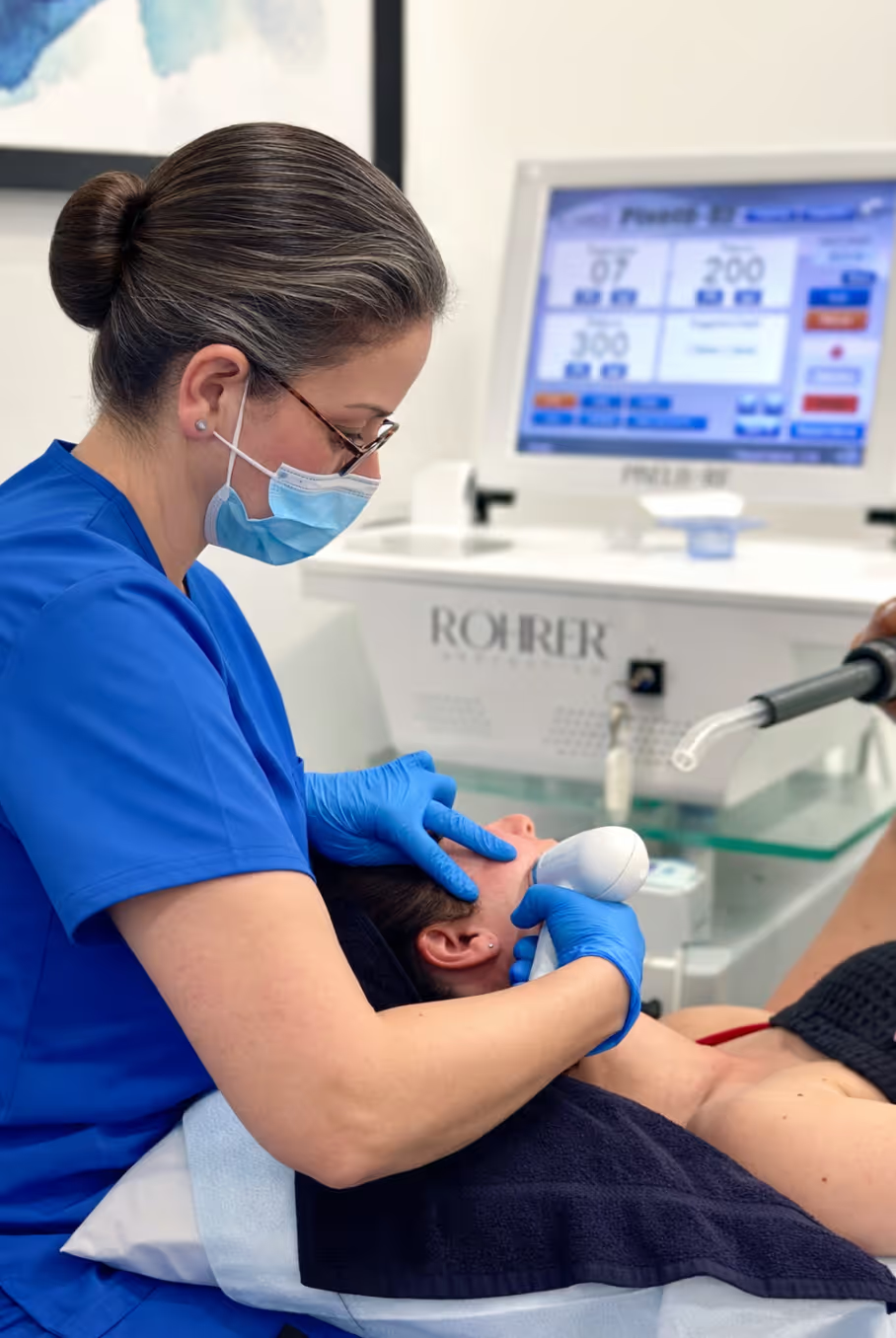
For clients already exploring skin tightening through modalities like Pixel8-RF radiofrequency microneedling, platelet-rich treatments can serve as a complementary protocol, addressing biostimulation at the cellular level while RF energy works on structural collagen remodeling.
Who Is a Strong Candidate
Platelet-rich treatments are autologous, meaning they use the patient's own blood. This makes them exceptionally well-tolerated with a low risk of adverse reaction. That said, candidacy still requires clinical evaluation.
Candidates who tend to respond well include:
- Adults in their late thirties through fifties noticing progressive hair thinning at the crown or temples
- Clients with overall skin quality concerns, including dullness, fine lines, and post-winter dehydration, rather than a single focal issue
- Those seeking a biologically grounded complement to existing injectable or energy-based treatment plans
- Clients who prefer treatments with minimal social downtime
Platelet-rich treatments are generally not appropriate for clients with certain clotting disorders, active scalp or skin infections, or those on specific anticoagulant medications. A thorough intake process is essential before proceeding.
For clients managing skin quality concerns alongside volume loss, it is worth understanding how biostimulators and structural treatments compare. The post on biostimulator treatments for skin laxity after 50 provides useful context on how different regenerative approaches address different aspects of aging.
Why Clinical Oversight Matters for Platelet-Rich Treatments
The centrifuge protocol, spin speed, draw volume, and injection depth all influence treatment outcomes meaningfully. This is not a commodity procedure. The variables involved require clinical judgment, not simply technique.
At Tysons Elite Esthetics, all platelet-rich treatment protocols are developed under the oversight of Dr. Navin Singh, our triple board-certified medical director and Johns Hopkins-trained plastic surgeon. His surgical-level understanding of facial anatomy and scalp vasculature informs how these treatments are positioned within each client's broader care plan.
Our clinical team, which includes Medical Estheticians holding Virginia's highest licensure designation and a Registered Nurse, administers these treatments within a framework built around precision and discretion. The Glow Refined philosophy extends here as it does across every service: outcomes that are biologically meaningful, visually refined, and earned over time.
For clients considering a full spring skin reset, platelet-rich treatments pair naturally with modalities like seasonal skin renewal protocols designed to transition the skin thoughtfully as conditions change.
Begin With a Private Consultation
If you are evaluating whether PRP or PRF is appropriate for your hair or skin concerns, the conversation begins with a thorough clinical assessment. There is no single protocol that suits every patient. What matters is matching the right treatment to the right indication, with a clinical team qualified to make that distinction.
Tysons Elite Esthetics serves clients from Tysons Corner, McLean, Great Falls, Vienna, and the broader Northern Virginia corridor at 7777 Leesburg Pike, Falls Church, VA 22043, steps from the Tysons Galleria. We invite you to request a private consultation through tysonseliteesthetics.com.
Start your transformation
Schedule your consultation with our knowledgeable and friendly team.