RF Microneedling vs. Laser Resurfacing for Skin Rejuvenation: What Tysons Professionals Should Know About Choosing the Right Energy Device Treatment in 2025
Late spring is an instructive moment to think about your skin. You have emerged from a long winter, possibly with dullness, texture irregularities, or the early signs of sun exposure beginning to surface again. You are also approaching the summer months, when UV intensity increases and post-treatment downtime deserves careful planning. For the discerning professional weighing their options, two treatments consistently rise to the top of the conversation: RF microneedling and laser resurfacing. Both deliver meaningful results. They are not interchangeable.
This guide is designed to help you understand how each modality works, who benefits most from each, and how the clinical team at Tysons Elite Esthetics approaches the decision on your behalf.
How RF Microneedling Works
Radiofrequency microneedling combines two distinct mechanisms of action into a single treatment. Insulated microneedles penetrate the dermis at precise depths, then deliver controlled radiofrequency energy directly into the tissue at that depth. The thermal injury stimulates collagen and elastin remodeling. The skin responds by producing new structural protein over the weeks and months that follow.
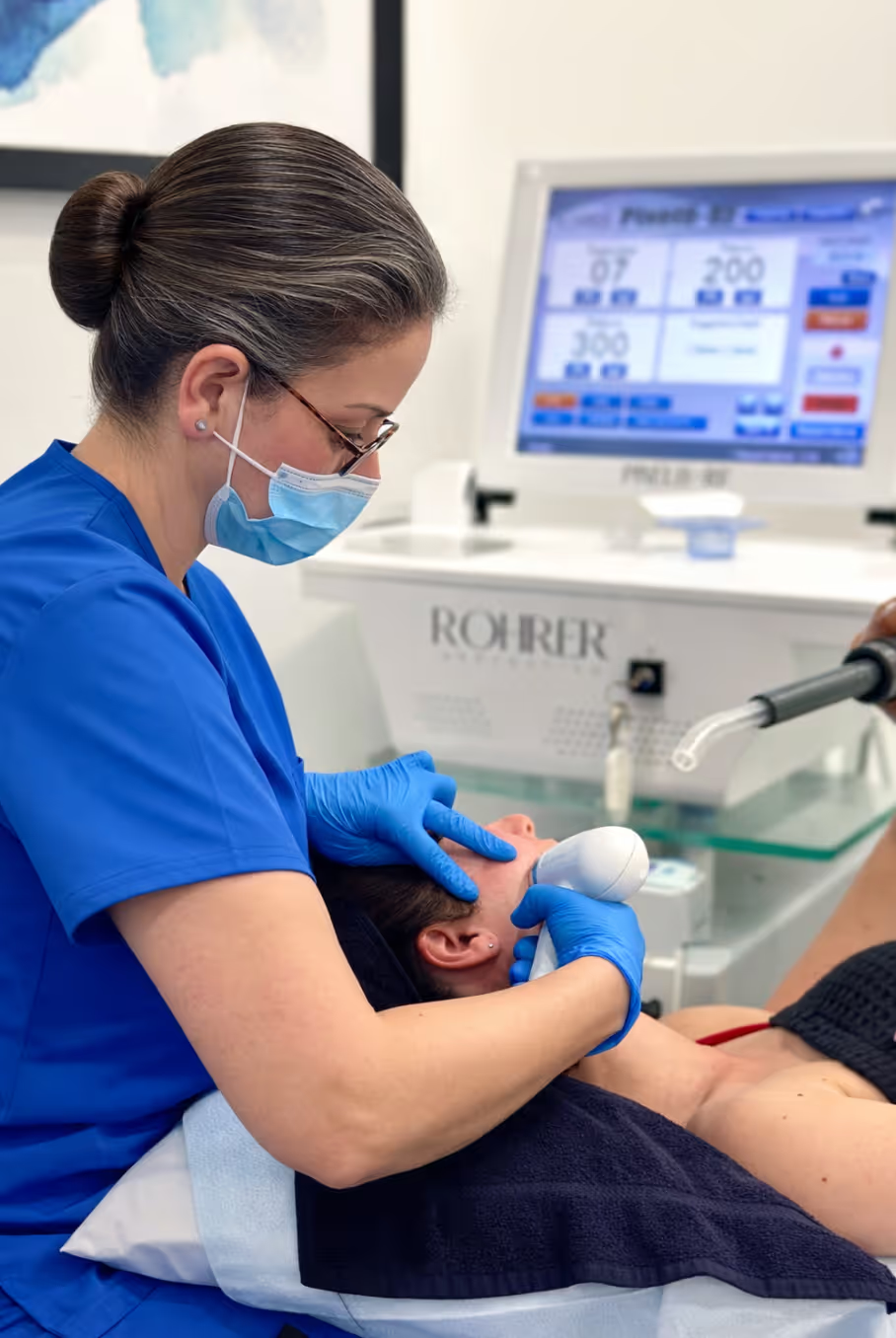
At Tysons Elite Esthetics, we offer the Pixel8-RF Radiofrequency Microneedling system. Key characteristics of this approach include:
- Fractional delivery, meaning only a percentage of tissue is treated in each session, preserving surrounding tissue for faster recovery
- Adjustable needle depth, allowing the clinician to target superficial texture or deeper laxity depending on the concern
- Effective across all Fitzpatrick skin types, including deeper skin tones, with a lower risk of post-inflammatory hyperpigmentation than ablative laser
- Social downtime of approximately two to four days for most clients, with redness and mild swelling as the primary responses
- Gradual improvement over three to six months as collagen remodeling matures
For more detail on what the treatment process involves, our blog post on RF microneedling for skin laxity in Tysons Corner covers expectations from the first session through full results.
How Laser Resurfacing Works
Laser resurfacing uses targeted wavelengths of light to remove or remodel damaged skin tissue. At Tysons Elite Esthetics, we offer both CoolPeel Fractional Laser Resurfacing and Ablative Skin Resurfacing, each suited to different depths of concern and recovery tolerance.
Ablative laser resurfacing removes the outer layers of the epidermis, triggering significant collagen remodeling and revealing fresher, more even skin beneath. It is among the most impactful non-surgical options available for:
- Moderate to deep wrinkles and lines
- Significant sun damage, including dyschromia and solar lentigines
- Acne scarring with textural depth
- Skin laxity on the face, neck, and décolletage
The trade-off is downtime. Ablative CoolPeel resurfacing typically requires seven to fourteen days of recovery, with redness that may persist for several weeks. This is a treatment that demands planning, particularly in the spring and summer months when UV exposure must be meticulously avoided during healing.
Fractional settings allow for gradations of intensity, enabling a clinician to calibrate depth and coverage based on each client's skin and schedule. For clients managing sun damage from prior seasons, our guide to CoolPeel Fractional Laser Resurfacing for sun damage provides relevant context.
Choosing Between the Two: Clinical Considerations
The honest answer is that the right choice depends on your skin, your concerns, your timeline, and your tolerance for downtime. A few clinical principles guide the decision:
- Skin tone matters. RF microneedling is generally safer for medium to deeper skin tones. Ablative laser carries a higher risk of hyperpigmentation in clients with Fitzpatrick types IV through VI and requires careful evaluation before proceeding.
- Depth of concern matters. Surface-level texture, mild laxity, and early fine lines often respond well to RF microneedling across a series of treatments. Significant sun damage, deeper wrinkles, and more pronounced laxity may warrant the more aggressive remodeling that ablative laser provides.
- Timing matters. Both treatments require UV avoidance during recovery. Spring and early summer treatments are possible, but scheduling must account for healing time and sun exposure patterns. Many clients in the Tysons-McLean corridor opt to complete laser resurfacing by mid-May, before peak summer activity begins.
- Downtime tolerance matters. A senior professional with a board presentation the following week is not an ideal candidate for full ablative resurfacing. RF microneedling may offer a more workable recovery profile for the time-constrained client.
- Combination approaches are often optimal. In some cases, a phased protocol using RF microneedling for tissue tightening alongside laser for surface correction yields results that neither treatment achieves independently.
The Tysons Elite Standard: Surgical Oversight for Energy Device Treatments
Energy-based treatments are among the most technically demanding services in medical aesthetics. The outcomes are directly tied to the precision of the provider and the clinical judgment applied at each step.
At Tysons Elite Esthetics, every energy device treatment is performed under the medical oversight of our licensed clinical team. This surgical-level understanding of tissue anatomy informs how energy is delivered, at what depth, and with what parameters for each individual client.
Our Medical Estheticians hold the highest level of licensure available in the Commonwealth of Virginia, with advanced training in laser protocols and medical-grade resurfacing. The team is also supported by a Registered Nurse. This is not a high-volume environment where protocols are standardized and applied uniformly. Each treatment plan is individualized.
Founder Luise Estelle designed the practice around the Glow Refined philosophy: results that enhance without announcing themselves, delivered with European discipline and clinical rigor. For the professional who values discretion and precision above all, that standard matters.
If you are considering RF microneedling or laser resurfacing and want to understand which approach is appropriate for your skin and timeline, we invite you to schedule a private consultation at our practice on Leesburg Pike in Tysons Corner, convenient to McLean, Great Falls, Vienna, and the broader Northern Virginia corridor.
Start your transformation
Schedule your consultation with our knowledgeable and friendly team.