Rosacea Treatment in Tysons Corner: What Professionals Should Know About Laser, IPL, and Topical Options for Managing Redness and Flushing in 2025

Rosacea has a particular way of asserting itself at the worst possible moments. A high-stakes presentation. A client dinner under warm lighting. A video call where every pixel of facial redness is magnified. For the professionals who make up this community, it is not a minor concern. It is a condition that affects how others perceive composure and health, and one that worsens incrementally without consistent, medically guided management.
What many clients discover, often after years of trying pharmacy-counter remedies, is that rosacea is not one condition. It is a spectrum. The treatment that works for diffuse background redness is not the same as the one that addresses visible broken capillaries or flushing episodes. Understanding the distinction is where effective management begins.
What Is Actually Happening Beneath the Surface
Rosacea is a chronic inflammatory skin condition primarily affecting the central face. It is characterized by periods of flare and remission, and it tends to progress over time when left unaddressed. There are several recognized subtypes, and many clients present with features of more than one.
- Erythematotelangiectatic rosacea: Persistent central facial redness, flushing, and visible blood vessels. This is the most common presentation among clients seeking aesthetic treatment.
- Papulopustular rosacea: Inflammatory bumps and pustules that can be mistaken for adult acne, typically accompanied by background redness.
- Phymatous rosacea: Skin thickening, most commonly affecting the nose, and more prevalent in men.
- Ocular rosacea: Eye irritation, dryness, and sensitivity that accompanies facial rosacea in a significant portion of cases.
Common triggers include sun exposure, heat, alcohol, spicy food, stress, and certain skincare products. As spring transitions into the warmer months of May and June, outdoor activity increases and UV exposure intensifies, both of which are reliable rosacea provocateurs for clients in Northern Virginia.
IPL for Rosacea: What the Evidence Supports
Intense Pulsed Light remains one of the most clinically established options for managing the vascular component of rosacea. IPL delivers broad-spectrum light energy that is selectively absorbed by oxyhemoglobin in dilated blood vessels. The targeted vessels are thermally disrupted, reducing the appearance of redness and visible capillaries without damaging surrounding tissue.
For clients with erythematotelangiectatic rosacea, IPL Photofacial treatments may offer meaningful improvement in baseline redness, flushing response, and the density of visible vessels. Many clients experience progressive improvement over a series of sessions, with maintenance treatments recommended to sustain results.
Important clinical considerations for IPL and rosacea:
- IPL is not appropriate during active inflammatory flares. Treatment is best scheduled during a period of relative skin calm.
- Skin tone is a significant variable. IPL parameters must be carefully calibrated for each client, particularly for those with olive or deeper complexions.
- Spring and early summer require heightened sun avoidance protocols before and after treatment. Treated skin is more photosensitive in the weeks following a session.
- Multiple treatments are typically required. A single session is rarely sufficient for meaningful, lasting reduction.
Laser Options: When Vascular Targeting Requires Greater Precision
For clients with discrete, visible blood vessels or persistent telangiectasias that do not respond adequately to IPL alone, vascular laser treatments offer a more targeted approach. Unlike IPL's broad light spectrum, dedicated vascular lasers deliver a specific wavelength optimized for oxyhemoglobin absorption, allowing for precise treatment of individual vessels.
In cases where rosacea has also contributed to textural changes, skin thickening, or more significant photodamage, CoolPeel Fractional Laser Resurfacing may be considered as part of a broader skin quality plan, though it requires careful evaluation given the sensitivity of rosacea-prone skin.
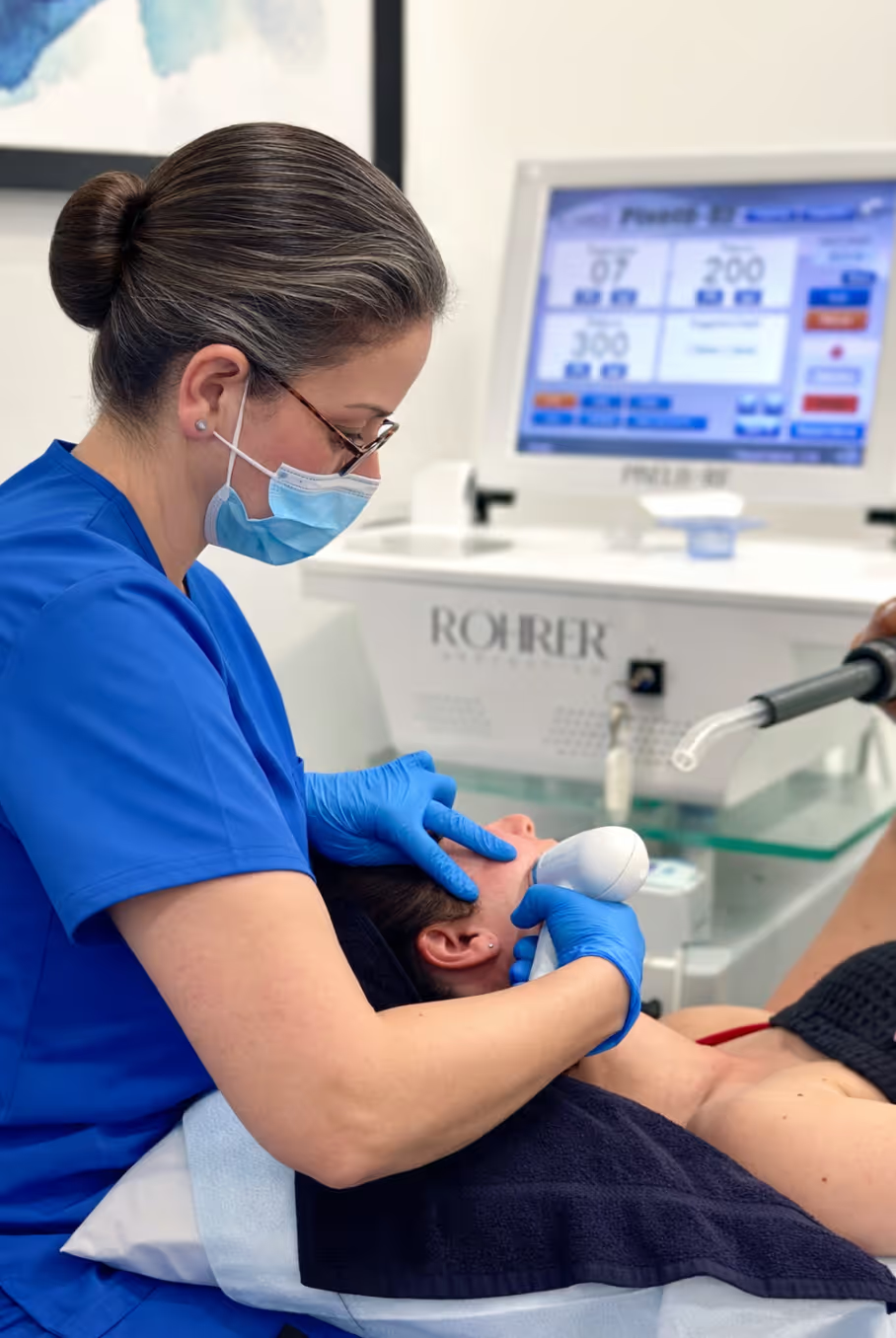
For clients who are not candidates for ablative approaches, Pixel8-RF Radiofrequency Microneedling can address textural and laxity concerns without the vascular targeting of IPL or laser. It is not a primary rosacea treatment, but it may be incorporated into a broader skin quality plan for appropriate candidates.
Topical and Supportive Management: The Non-Negotiable Foundation
No energy-based treatment for rosacea performs optimally without a complementary topical regimen. This is a point that is frequently underemphasized at high-volume clinics where treatment time is prioritized over clinical education.
Prescription topical options that are commonly used in rosacea management include:
- Metronidazole: An anti-inflammatory topical available in gel and cream formulations, widely used for papulopustular subtype management.
- Azelaic acid: Addresses both inflammatory lesions and background redness; generally well-tolerated and available in prescription concentrations.
- Ivermectin: Targets the Demodex mite population now understood to contribute to rosacea inflammation in many clients.
- Brimonidine and oxymetazoline: Topical vasoconstrictors that provide temporary reduction in facial redness for time-sensitive situations.
Medical-grade skincare at Tysons Elite Esthetics is selected to complement active rosacea management. Barrier support, fragrance-free formulations, and broad-spectrum mineral SPF are non-negotiable components of any rosacea protocol. Given that we are now entering the higher-UV months of late spring, diligent daily sun protection is as clinically relevant as any in-office treatment.
Clients managing hyperpigmentation alongside rosacea-related redness may also benefit from reading our overview of hyperpigmentation treatment options in Tysons Corner, as the two conditions sometimes coexist and require coordinated care.
Why Tysons Elite Esthetics for Rosacea Management
Rosacea is a condition that punishes imprecision. The wrong IPL settings, the wrong timing, or the wrong skincare guidance can trigger a flare rather than resolve one. This is why clinical oversight is not incidental at Tysons Elite Esthetics. It is foundational.
Every treatment protocol is developed under the medical direction of our licensed clinical team. Rosacea-prone skin is reactive skin. It demands a provider who understands not only what a device can do, but what it should not do in a given clinical context.
Our Medical Estheticians hold the highest level of licensure available in the Commonwealth of Virginia, with advanced training in laser protocols and clinical skin assessment. They do not operate according to a standardized menu. Each client presentation is evaluated individually, and treatment parameters are adjusted accordingly.
Founder Luise Estelle built this practice around a philosophy of refined, precise results. For rosacea clients, that means a protocol designed to calm, restore, and maintain, not to over-treat a reactive condition in search of faster outcomes.
If persistent facial redness, flushing, or visible vessels have become a professional concern, a private consultation at Tysons Elite Esthetics is the appropriate next step. We serve clients throughout Tysons Corner, McLean, Great Falls, Vienna, and the broader Northern Virginia corridor from our location at 7777 Leesburg Pike, Falls Church.
Start your transformation
Schedule your consultation with our knowledgeable and friendly team.