Scar Revision Without Surgery in Tysons Corner: What Professionals Should Know About Treating Surgical, Traumatic, and C-Section Scars With Laser and RF Microneedling in 2025

A scar is not simply a cosmetic concern. For many professionals, it is a daily reminder of something they would prefer to leave behind. Whether the scar traces a cesarean section, a surgical procedure, or an old injury, its visibility, texture, and feel can affect confidence in ways that are difficult to articulate in a consultation room.
What has changed in recent years is the quality and precision of non-surgical scar revision. With the right combination of laser technology and radiofrequency microneedling, many clients experience meaningful improvements in scar texture, pigmentation, elevation, and pliability, without incisions, general anesthesia, or extended recovery.
This is not a shortcut. It is a clinical approach that, when applied correctly, addresses the underlying architecture of a scar rather than simply masking its surface.
Why Scars Respond Differently to Treatment
Not all scars are the same, and understanding the type and maturity of a scar determines what treatment approach is appropriate.
- Atrophic scars sit below the surrounding skin surface, often the result of deep tissue injury or surgical incisions that healed with insufficient collagen deposition.
- Hypertrophic scars are raised, firm, and confined to the original wound boundary. They often result from surgical incisions under tension, including C-sections and abdominoplasty closures.
- Keloid scars extend beyond the original wound margin and involve overproduction of collagen. These require careful clinical assessment before any energy-based treatment is considered.
- Pigmented or erythematous scars may be flat but carry persistent redness or darkening that draws attention and creates the appearance of poor healing.
Scar maturity also matters. Fresh scars, typically under six months old, are often still remodeling and may respond to different protocols than fully mature scars. A thorough assessment at the outset prevents wasted treatment cycles.
What RF Microneedling Does for Surgical and Traumatic Scars
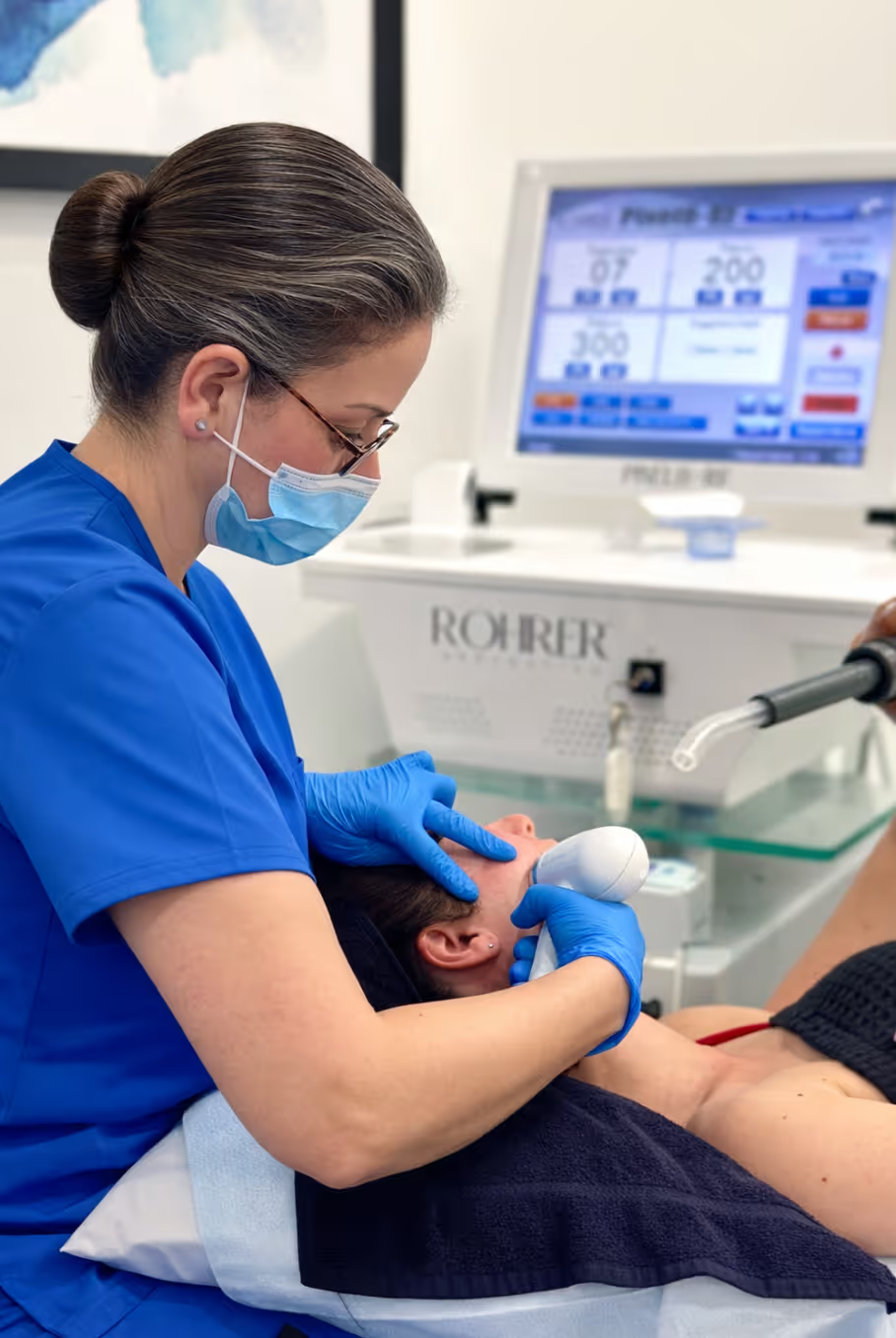
Radiofrequency microneedling delivers thermal energy directly into the dermis through precisely calibrated needles, triggering controlled wound healing and collagen remodeling at the tissue level. For scar revision, this mechanism is particularly relevant.
The Pixel8-RF platform, available at Tysons Elite Esthetics, allows the clinical team to adjust needle depth and energy delivery with precision, targeting the dense, disorganized collagen that defines most surgical scars. Over a series of treatments, many clients experience a visible softening of scar texture, reduction in elevation, and improved surface uniformity.
C-section scars, in particular, can respond well to RF microneedling. The horizontal incision pattern, combined with the tension of tissue healing in that region, often produces a thickened, adherent scar that can be addressed through progressive dermal remodeling. Treatments also address the associated skin laxity and texture irregularities in the lower abdominal area that frequently accompany these scars.
For a deeper look at how this platform addresses skin laxity and structural remodeling more broadly, our blog post on RF microneedling for skin laxity at Tysons Corner offers useful context.
When Laser Resurfacing Adds Precision to Scar Revision
Laser treatments address scar revision from a different angle. Where RF microneedling works beneath the surface, laser resurfacing targets the visible architecture of the scar, including surface irregularities, post-inflammatory hyperpigmentation, and textural discrepancies between scar tissue and surrounding skin.
Ablative and fractional laser protocols create controlled micro-columns of thermal injury in the skin, stimulating new collagen and elastin synthesis while simultaneously resurfacing the scar's upper layers. The result is a gradual blending of the scar with surrounding tissue in terms of both color and texture.
For scars with significant pigmentation, whether from post-inflammatory hyperpigmentation or darker baseline skin tone, laser selection and settings require careful calibration. This is not a protocol that should be applied generically. The risk of worsening pigmentation in the wrong hands is real, particularly for skin tones in the Fitzpatrick III to V range.
Our CO2 laser resurfacing and ablative skin resurfacing laser services provide additional information on what these platforms accomplish at the tissue level.
Why Medical Direction Matters for Scar Revision
Scar revision using energy-based devices sits at the intersection of aesthetic medicine and reconstructive care. The margin for error is narrower than in standard skin rejuvenation, and the consequences of incorrect protocol selection include worsened scarring, dyspigmentation, and thermal injury.
At Tysons Elite Esthetics, every treatment plan is developed under the medical direction of Dr. Navin Singh, a triple board-certified plastic surgeon and Johns Hopkins School of Medicine graduate. His background in reconstructive and aesthetic surgery informs how the clinical team approaches scar assessment, treatment sequencing, and outcome monitoring.
This is not incidental oversight. It is the difference between a generalized protocol and a plan that accounts for scar type, tissue characteristics, skin tone, and the underlying anatomy of the treatment area.
Our Medical Estheticians hold the highest level of licensure available in the Commonwealth of Virginia, and the team is further supported by a Registered Nurse. For treatments involving complex tissue concerns like scar revision, this level of clinical depth is not optional. It is foundational.
For clients who have also experienced skin texture irregularities alongside their scars, our blog post on stretch mark treatment with laser and RF microneedling covers related tissue remodeling considerations.
What to Expect From a Scar Revision Consultation
A private consultation at Tysons Elite Esthetics begins with a thorough assessment of the scar's type, age, depth, pigmentation, and location. No two scar revision plans are identical. The sequence and combination of treatments, whether RF microneedling alone, laser alone, or a staged combination of both, is determined by what the tissue requires.
- Most non-surgical scar revision protocols involve a series of treatments spaced four to six weeks apart
- Downtime varies by modality and intensity, though most clients find it manageable within a professional schedule
- Results develop progressively over several months as collagen remodeling continues between sessions
- Sun protection during and after treatment is essential, particularly for laser protocols
- Realistic expectations are established at the outset. Scar revision improves appearance and texture. It does not produce an invisible outcome in every case
Spring and early summer in Northern Virginia bring longer days and increased sun exposure, which makes timing and sun protection particularly important for clients beginning laser-based scar revision during this season. Consultation timing should account for that.
If you are also considering scar-adjacent concerns such as persistent skin texture or acne scarring, our post on acne scar treatment in Tysons Corner addresses how similar modalities are applied to that distinct category of scarring.
Schedule a Private Consultation
Tysons Elite Esthetics is located at 7777 Leesburg Pike in Falls Church, convenient to clients throughout Tysons Corner, McLean, Great Falls, and Vienna. For those considering non-surgical scar revision, a private consultation with our clinical team is the appropriate first step.
Contact us to arrange a time that suits your schedule. There is no obligation, and every consultation is conducted with the discretion this type of conversation deserves.
Start your transformation
Schedule your consultation with our knowledgeable and friendly team.