Skin Tightening After Summer: What Tysons Professionals Should Know About RF Microneedling and Laser Treatments for Fall Skin Rejuvenation in 2025

Summer in Northern Virginia is demanding on skin. Months of UV exposure, humidity, and heat leave a particular kind of residue: uneven tone, subtle laxity, a texture that no longer responds to topical products the way it once did. For professionals accustomed to presenting their best, this gradual shift is noticeable, even if no one else can name it yet.
Late spring into early summer is one of the most strategically sound windows to address it. The skin has been stressed. The repair mechanisms that manage UV damage are already active. And the upcoming months offer an ideal recovery environment for the treatments that actually move the needle on laxity, texture, and tone.
At Tysons Elite Esthetics, two categories of treatment are most frequently recommended for post-summer skin concerns: radiofrequency microneedling and laser resurfacing. Both work through controlled injury to the dermis. Both stimulate collagen remodeling. The clinical question is which is appropriate for your specific presentation, and in what sequence.
What Summer Actually Does to Skin Structure
UV damage operates at multiple depths. At the surface, it manifests as hyperpigmentation, redness, and uneven texture. At the dermal level, cumulative UV exposure degrades collagen and elastin fibers, the structural proteins responsible for skin firmness and resilience. This is the mechanism behind what most clients describe as skin that has "lost its snap."
Specific concerns that emerge or worsen after summer include:
- Increased skin laxity along the jawline, neck, and lower face
- Worsening of fine lines and crepe texture, particularly around the eyes and mouth
- Melasma and sun spot activation
- Enlarged pores and surface roughness from congestion and dehydration
- Loss of firmness in the décolletage and on the hands
These are structural changes, not cosmetic inconveniences. Topical skincare can support the barrier and address surface tone, but it cannot remodel collagen at depth. That requires energy-based intervention.
RF Microneedling: Precision Remodeling at the Dermal Level
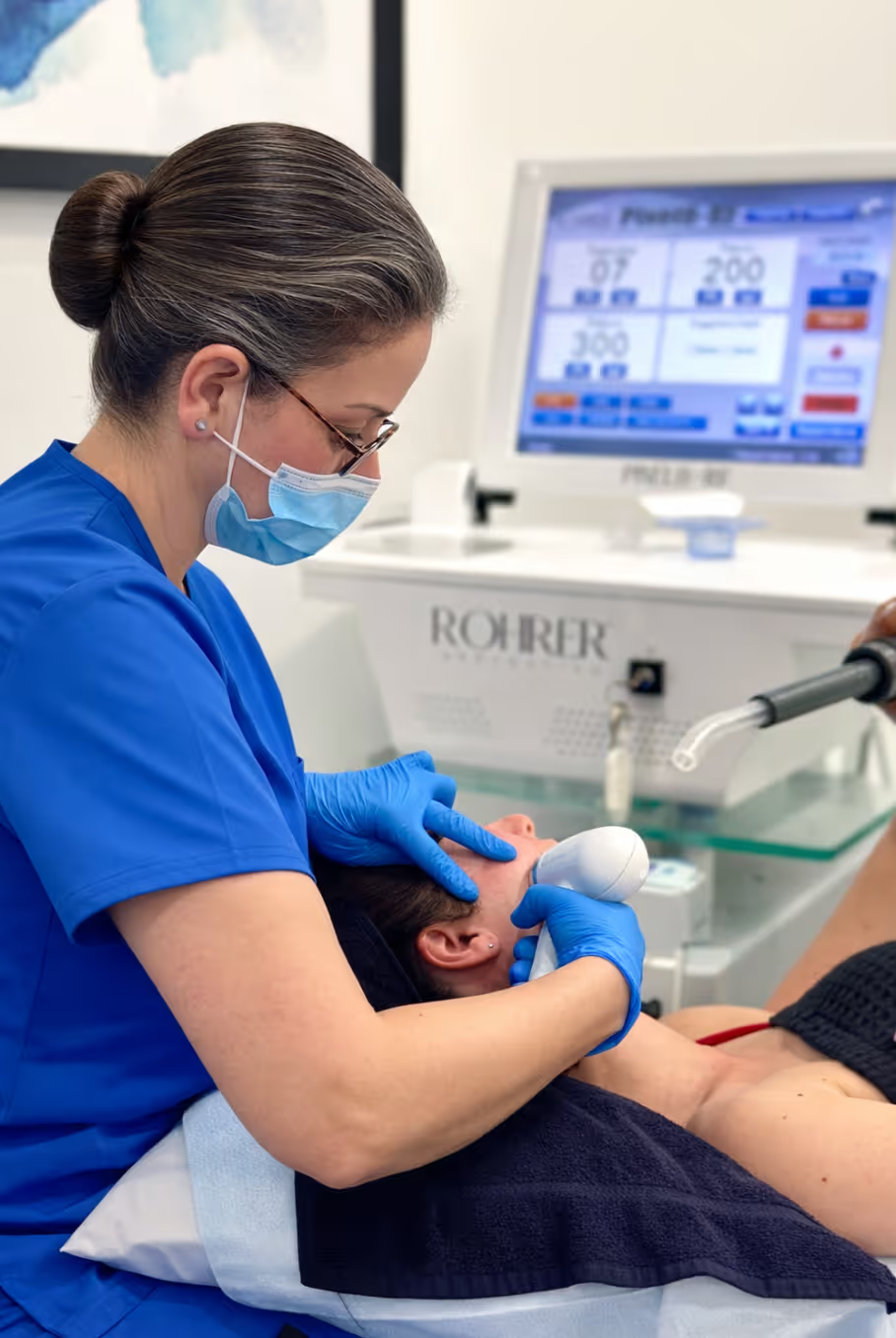
Radiofrequency microneedling delivers controlled thermal energy through insulated needles directly into the dermis, bypassing the epidermis and concentrating heat precisely where collagen production originates. The result is a cascade of remodeling activity that continues for months after treatment.
At Tysons Elite Esthetics, our clinical team uses the Pixel8-RF platform, selected for its precision, adjustable depth, and consistent energy delivery across treatment zones.
RF microneedling is particularly well-suited for:
- Skin laxity in the lower face, jowl area, and neck
- Crepey texture around the eyes and mouth
- Post-summer collagen depletion requiring structural restoration
- Acne scarring and textural irregularity
- Clients who prefer minimal downtime relative to ablative laser options
Many clients experience three to four days of redness and mild swelling. The deeper remodeling process unfolds over the following three to six months, with results that continue to develop gradually. For a more detailed clinical overview, see our guide on radiofrequency microneedling for skin laxity at Tysons Corner.
CoolPeel Fractional Laser Resurfacing: Addressing Accumulated Surface and Structural Damage
For clients with more pronounced sun damage, deeper lines, or significant textural concerns, ablative laser resurfacing offers a higher degree of correction in a single treatment course. CoolPeel fractional laser removes damaged outer layers of skin while simultaneously delivering thermal energy to the dermis, stimulating collagen production and tightening the underlying tissue.
Our CoolPeel Fractional Laser Resurfacing protocol addresses the face, neck, décolletage, and hands, making it appropriate for clients managing sun damage across multiple areas. It is also among the most clinically effective options for resurfacing acne scars and reversing the textural consequences of years of UV exposure.
CoolPeel fractional laser requires meaningful downtime, typically seven to fourteen days depending on treatment intensity. This is a considered investment of time, not a lunchtime procedure. The results, however, can reflect years of structural improvement that incremental treatments cannot match.
For clients managing brown spots and vascular irregularity alongside laxity, IPL photofacial treatments may be recommended as a complementary modality, targeting pigment and redness before or alongside resurfacing.
How to Choose, and How Treatments Are Often Combined
The distinction between RF microneedling and laser resurfacing is not simply a question of intensity. It is a question of what the skin actually needs. Many clients benefit from a sequenced approach: addressing surface pigment and tone first, then initiating structural remodeling with RF microneedling, and reserving laser resurfacing for deeper correction at a defined interval.
Clients who respond well to a combined approach often present with:
- Mixed concerns, including both laxity and significant pigmentation changes
- Neck and décolletage involvement alongside facial concerns
- A preference for staged treatments with recovery distributed across several appointments
- Post-summer skin that has not fully responded to previous single-modality treatment
For those also considering surface-level texture refinement without energy-based treatment, Vi Peel Precision Plus and the microneedling pen offer complementary options earlier in a treatment sequence. For a broader overview of how post-summer damage is addressed clinically, our fall skin reset guide outlines the full framework.
Why Tysons Elite Esthetics
Tysons Elite Esthetics is a boutique medical aesthetics practice at 7777 Leesburg Pike in Falls Church, serving professionals throughout Tysons Corner, McLean, Great Falls, and Vienna. It is not a high-volume clinic. Every treatment plan is developed in the context of the Glow Refined philosophy: precise, measured, and calibrated to your natural architecture rather than a generic protocol.
Our clinical team brings advanced surgical-level training and aesthetic expertise to every treatment plan. This surgical-level anatomical precision informs every laser and energy-based protocol at the practice, ensuring that treatments are not simply administered but genuinely understood at a clinical level.
Our Medical Estheticians hold Virginia's Master Esthetician designation, the highest level of esthetics licensure in the Commonwealth, with advanced training in medical-grade laser protocols and chemical resurfacing. The team is further supported by a Registered Nurse.
This level of oversight matters most when treatment involves thermal energy delivered to living tissue. Precision here is not a differentiator. It is a prerequisite.
Begin With a Private Consultation
If post-summer skin changes have been on your mind, the most productive next step is a private consultation. The clinical picture is different for every person, and the appropriate treatment sequence depends on your skin's specific presentation, history, and goals.
We welcome clients from Tysons Corner, McLean, Great Falls, Vienna, Falls Church, Arlington, and across the Northern Virginia and DC Metro area. Appointments are private, unhurried, and oriented entirely around your outcome.
Contact Tysons Elite Esthetics to schedule your consultation at tysonseliteesthetics.com.
Start your transformation
Schedule your consultation with our knowledgeable and friendly team.