Spring Skin Renewal: How to Transition Your Skin Care and In-Office Treatments From Winter to Spring in Tysons Corner

By late April in Tysons Corner, the skin tells its own story of the winter past. Months of dry indoor heat, compromised barrier function, and minimal UV exposure leave a specific kind of damage: dullness, uneven texture, residual hyperpigmentation, and that particular flatness that no moisturizer fully corrects. For professionals in McLean, Great Falls, and Vienna who take their skin seriously, this seasonal transition is not simply about switching products. It is a clinical opportunity.
The skin behaves differently in spring than in winter. Humidity returns, UV index climbs, and the skin's natural renewal cycle accelerates. Understanding how to work with that biology, rather than against it, is the foundation of an effective spring skin renewal approach.
What Winter Actually Does to Your Skin
Before selecting spring treatments, it is worth understanding what the prior season has left behind. Northern Virginia winters are not extreme by northern standards, but they are sufficient to cause measurable skin stress.
- Barrier disruption: Cold air and indoor heating systems strip moisture from the skin's outermost layers. Many clients arrive in spring with a compromised barrier, meaning sensitivity, redness, and reactivity that was not present in October.
- Accumulated dullness: Reduced cell turnover in colder months allows dead skin cells to accumulate at the surface, flattening luminosity and making pores appear more prominent.
- Residual sun damage: Hyperpigmentation from the previous summer often intensifies over winter as melanin settles. Many clients notice it most clearly in March and April, in natural spring light.
- Dehydration beneath the surface: Not the same as dryness, true dermal dehydration affects skin plumpness and the appearance of fine lines. Winter depletes this more than most clients realize.
Spring In-Office Treatments: What to Prioritize and When
April is one of the more clinically strategic months in Northern Virginia. UV index is rising but not yet at peak summer intensity, which means certain treatments that require sun avoidance remain viable for a few more weeks. This window matters.
Chemical Peels
A well-formulated medical-grade peel is one of the most efficient tools for transitioning skin from winter to spring. The Vi Peel Precision Plus addresses pigmentation, texture, and collagen stimulation simultaneously, with a recovery profile that suits a professional's schedule. It works best when UV exposure can be managed consistently in the weeks following treatment, making late April an appropriate window before summer activity intensifies.
IPL Photofacial for Pigmentation and Redness
For residual sun damage, post-inflammatory hyperpigmentation, or diffuse redness that accumulated over winter, IPL photofacial treatments offer targeted correction. IPL works by selectively targeting melanin and hemoglobin, breaking down discoloration without affecting surrounding tissue. Spring is an optimal time to begin a series before UV exposure rises and before the skin becomes a contraindication.
Radiofrequency Microneedling
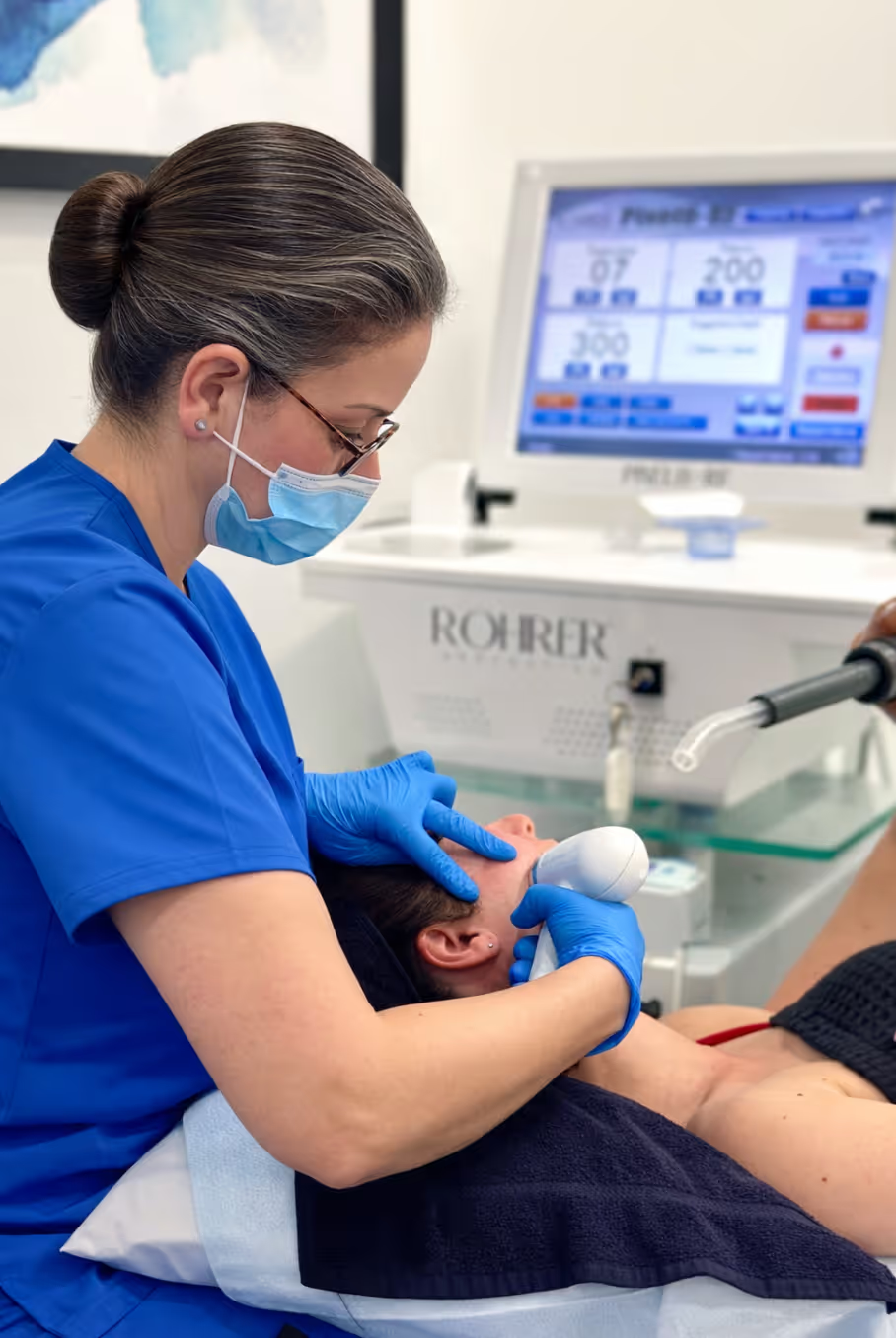
For clients managing skin laxity, enlarged pores, or textural irregularities from winter dehydration, Pixel8-RF radiofrequency microneedling delivers collagen remodeling at a depth that surface treatments cannot reach. Results from treatments performed in spring typically mature through summer, with clients often noticing the full effect by July and August. Those interested in a deeper understanding of what this treatment involves may find our guide to Pixel8-RF for skin laxity a useful starting point.
The Oxifusion Facial as a Bridge Treatment
For clients whose skin is still reactive from winter barrier disruption, an aggressive resurfacing treatment is not always the right first step. The Oxifusion Facial offers a gentler re-entry: deep hydration, antioxidant infusion, and brightening without the downtime or inflammatory response of resurfacing. Many clients use it as a preparatory treatment before moving to a peel or IPL series.
Adjusting Your At-Home Protocol for the Season
In-office treatments work best when the home routine supports them. The transition from winter to spring calls for specific adjustments that many clients overlook.
- Scale back occlusive moisturizers: The heavy creams that protected the barrier through February may now be trapping debris and contributing to congestion. A lighter, hydrating serum base is often more appropriate by April.
- Reintroduce active ingredients gradually: Vitamin C, retinoids, and exfoliating acids can be reintroduced or increased in frequency now that barrier function has typically recovered. Doing so before summer maximizes their efficacy during the months ahead.
- Elevate sun protection consistently: This is the step most professionals shortcut. As UV index climbs through April and May, daily broad-spectrum SPF 50 is not optional. It is the single factor most likely to determine whether spring treatments hold through summer.
- Reassess your hydration approach: Spring humidity reduces the need for thick emollients, but internal hydration remains important. Many clients find that hyaluronic acid serums perform better in spring than in winter, when the air lacked sufficient humidity for them to draw moisture effectively.
The Tysons Elite Esthetics Approach to Seasonal Skin Renewal
At Tysons Elite Esthetics, seasonal transitions are treated as clinical milestones, not marketing moments. Our founder, Luise Estelle, built the practice around the understanding that skin care is cumulative, and that each season creates both challenges and opportunities that an informed clinician can use strategically.
Our medical estheticians hold the highest level of licensure in the Commonwealth of Virginia, with advanced training in chemical resurfacing, laser protocols, and medical-grade skin analysis. Every treatment plan is developed under the medical oversight of Dr. Navin Singh, our triple board-certified medical director and Johns Hopkins-trained plastic surgeon, whose anatomical precision informs every protocol we offer.
This is not a practice that recommends treatments by season because the calendar suggests it. It is a practice that assesses each client's specific skin condition, identifies the clinical opportunity the season presents, and builds a plan that produces visible results by the time summer arrives in Northern Virginia.
For those who experienced significant sun damage last year and are considering a more comprehensive correction, our post on CoolPeel Fractional Laser Resurfacing for sun damage offers additional context on when deeper resurfacing is the right choice before summer.
A private spring skin consultation at Tysons Elite Esthetics begins with a thorough assessment of where your skin is today and a clear plan for where it can be by June. We serve clients throughout Tysons Corner, McLean, Great Falls, Vienna, and the broader Northern Virginia corridor from our location at 7777 Leesburg Pike in Falls Church, convenient to the Greensboro Silver Line Metro station.
To schedule a consultation, visit tysonseliteesthetics.com.
Start your transformation
Schedule your consultation with our knowledgeable and friendly team.