Stretch Mark Treatment in Tysons Corner: What Professionals Should Know About Laser, Microneedling, and RF Treatments for Reducing the Appearance of Stretch Marks in 2025

Stretch marks are not a cosmetic afterthought. For professionals who have navigated pregnancy, significant weight changes, or the natural shifts of midlife, they represent a persistent texture concern that neither topical creams nor wishful thinking have resolved. The good news is that medical-grade technology has advanced considerably, and the treatment landscape in 2026 offers meaningful options for reducing their appearance, improving skin texture, and restoring a more uniform surface, without surgery, without extended downtime, and without dramatic interventions.
What matters is choosing the right approach for the right type of mark, administered by a team with the clinical depth to make that distinction accurately.
Why Stretch Marks Are Difficult to Treat
Stretch marks, or striae, form when the dermis is stretched beyond its elastic capacity, causing collagen and elastin fibers to rupture beneath the surface. The result is a visible scar, technically, not simply a skin discoloration.
This distinction matters clinically. Because the damage occurs in the deeper layers of the dermis, surface-level treatments produce limited results. Effective treatment must reach the dermis and stimulate meaningful structural repair.
- Striae rubrae are newer, often pink or red, and represent active inflammation. They tend to respond more readily to treatment because the tissue is still biologically active.
- Striae albae are older, white or silver, and represent mature scar tissue with reduced vascularity. They are more resistant and typically require a more intensive or combined approach.
- Skin tone matters. Treatment selection must account for Fitzpatrick skin type to minimize the risk of post-inflammatory hyperpigmentation, a critical consideration that demands clinical oversight, not a one-size-fits-all protocol.
The Primary Treatment Options: What the Evidence Supports
At Tysons Elite Esthetics, treatment planning is grounded in clinical assessment rather than a fixed menu. The modalities most commonly used for stretch mark reduction include the following.
RF Microneedling
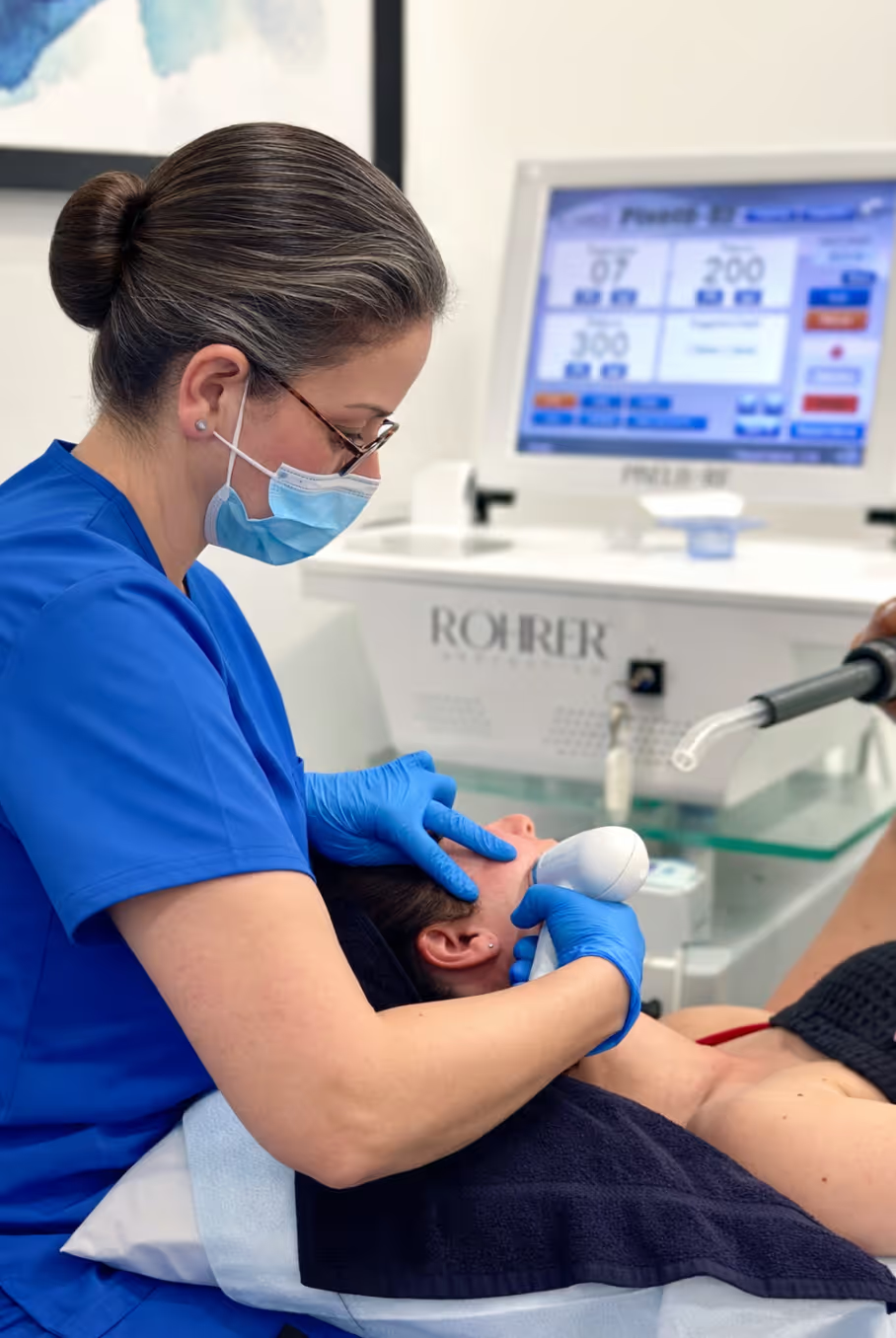
Radiofrequency microneedling combines controlled micro-injuries with targeted heat energy delivered into the dermis. This dual mechanism stimulates collagen remodeling at the depth where stretch marks actually originate. The Pixel8-RF platform available at Tysons Elite delivers precise, adjustable energy with insulated needles that protect the epidermis while treating the dermis directly.
- Suitable for both striae rubrae and striae albae, though results vary by mark maturity
- Many clients experience improvement in texture, depth, and surface uniformity over a series of treatments
- Works across a range of skin tones with appropriate settings
- Minimal downtime, typically two to four days of redness and mild sensitivity
- A series of three to four sessions is standard, spaced four to six weeks apart
For a deeper look at what RF microneedling can address on the body and face, the RF microneedling and skin laxity guide provides useful clinical context.
Ablative and Fractional Laser Resurfacing
Laser energy, particularly fractional CoolPeel, creates controlled columns of thermal injury that trigger the skin's wound-healing cascade. When applied to stretch marks, this process can improve surface texture, reduce the visual contrast of striae albae, and stimulate new collagen deposition in the treated zone.
- Most effective on lighter skin tones or when used with appropriate parameters for medium tones
- Can improve the appearance of mature, white stretch marks more meaningfully than microneedling alone in some cases
- Requires a more deliberate recovery period, typically five to ten days depending on intensity
- The timing of spring and early summer treatments requires careful sun protection planning, which the clinical team addresses at consultation
More on the laser resurfacing approach is available on the CoolPeel Fractional Laser Resurfacing service page.
Microneedling Pen
For clients seeking a lower-intensity entry point, or as part of a maintenance protocol following more intensive treatment, the microneedling pen can be used to address early-stage striae rubrae and improve overall skin texture in the treated area. Results are more gradual than RF-assisted platforms, but the approach carries minimal downtime and is appropriate for a broader range of skin types.
Combining Modalities: When One Treatment Is Not Enough
Experienced clinicians rarely rely on a single modality for stretch mark reduction. The most meaningful results for mature or extensive striae typically come from a thoughtfully sequenced combination approach.
- RF microneedling as the primary collagen stimulus, followed by topical growth factors or peptide serums to support healing
- Fractional laser for surface texture refinement after initial RF sessions have begun remodeling the deeper tissue
- Ongoing maintenance with lighter microneedling or medical-grade topicals to preserve and extend results
This layered philosophy mirrors the approach used across Tysons Elite's body treatment portfolio. Clients exploring non-surgical body work may also find the Wonder Body treatments and body contouring after weight loss guide relevant to a broader conversation about post-change skin concerns.
Why Clinical Oversight Changes the Outcome
Stretch mark treatment is not a high-risk procedure. But it is a nuanced one. Applying the wrong laser wavelength to a deeper skin tone, treating active striae rubrae too aggressively, or failing to account for prior sun exposure can produce outcomes that are worse than the original concern.
At Tysons Elite Esthetics, every treatment plan is developed under the medical direction of our licensed clinical team. This oversight ensures that treatment parameters are selected with precision, not approximation.
Luise Estelle, our founder, built this practice around the principle that clinical excellence and discretion are not competing values. They are the same value. Our Medical Estheticians hold the highest level of licensure available in the Commonwealth of Virginia, with advanced training in laser protocols and medical-grade resurfacing. This is not a high-volume environment. Each client receives a personalized assessment, a realistic expectation conversation, and a protocol designed specifically for their skin.
The Glow Refined philosophy extends to body treatments as meaningfully as it does to facial work. The goal is never dramatic before-and-after contrast. It is consistent, measured improvement that returns confidence quietly, and permanently.
Beginning the Conversation
If you have been considering stretch mark treatment in the Tysons Corner, McLean, or Northern Virginia area, the appropriate next step is a private consultation, not a package purchase. The clinical team will assess the type, location, age, and extent of the marks, your Fitzpatrick skin type, and your schedule constraints before recommending a protocol.
Tysons Elite Esthetics is located at 7777 Leesburg Pike, Falls Church, VA, minutes from Tysons Galleria and the Greensboro Silver Line Metro station. Contact the practice at tysonseliteesthetics.com to schedule your consultation.
Start your transformation
Schedule your consultation with our knowledgeable and friendly team.