Stubborn Chin Fat Returns After Kybella Dissolves — Now What?

Kybella was a genuine breakthrough when it launched — the first injectable approved to permanently destroy submental fat cells. For many patients, it delivered real, meaningful reduction in chin fullness. But here's what most people weren't told clearly enough at the time: Kybella could not stop the remaining fat cells from expanding. And for patients who experienced weight fluctuations, hormonal shifts, or simply the slower metabolic pace that comes with aging, the chin fat returned. Sometimes partially. Sometimes almost entirely.
If you're sitting with that frustration right now — having invested in a treatment that seemed to work, only to watch the results quietly reverse — it's worth understanding exactly what happened before deciding what to do next. Kybella used deoxycholic acid to rupture and destroy fat cells in the treatment area. Those specific cells were gone permanently. But submental fat is not a fixed deposit. The surrounding and underlying fat cells that weren't destroyed remained fully capable of storing more fat. When the body's overall fat distribution shifted — due to weight gain, aging-related metabolic changes, or even the fat redistribution patterns associated with GLP-1 medications — the chin area could refill. It wasn't a failure of the product. It was a limitation that wasn't always communicated with the specificity patients deserved.
There's also a structural nuance worth naming here. The chin and neck region isn't just fat — it's a layered anatomy that includes skin laxity, muscle tone, and the position of underlying structures. Kybella addressed fat volume but did nothing for the skin's elasticity or the definition of the jawline itself. So even when Kybella worked as intended, patients with some degree of skin looseness sometimes found their results looked incomplete. Now, with fat returning, the picture is more complex than it was before the first treatment.
Kybella has since been discontinued by its manufacturer, which means this conversation has a practical urgency beyond just your individual situation. The question isn't whether to try Kybella again — it's which of the available alternatives is actually better suited to where you are now. As we've covered in detail in our post on Kybella being discontinued and what replaces it for chin fat, the landscape has shifted considerably, and in several respects, the options now available are more refined than what Kybella offered.
For patients whose submental fat has returned, the current conversation at Tysons Elite Esthetics typically starts with an honest anatomical assessment. Where exactly is the fullness? Is it true submental fat sitting beneath the chin? Is there a component of skin laxity contributing to the softness of the profile? Is the platysma muscle involved, creating a loss of definition rather than — or in addition to — excess fat? These are not rhetorical questions. The answers change the treatment recommendation significantly, and conflating them is how patients end up disappointed a second time.
For patients with genuine submental fat recurrence and without significant skin laxity, CoolSculpting Elite has become one of the most clinically defensible options. It uses controlled cooling to induce apoptosis — programmed cell death — in fat cells, with results that develop gradually over two to four months as the body clears the treated cells. Like Kybella, it permanently eliminates the specific cells treated. And like Kybella, it cannot prevent remaining cells from expanding if weight changes significantly. But for patients who are weight-stable and seeking a non-injection option with a relatively comfortable recovery profile, it remains a strong choice for isolated submental fullness.
For patients whose chin profile involves both fat and a loss of jawline sharpness, the more compelling approach involves combining fat reduction with structural contouring. Jawline filler and non-surgical chin augmentation can restore angular definition that makes the chin-to-neck transition appear cleaner — independent of, or in addition to, fat reduction. The illusion of a more defined profile is often partly structural, not purely about volume removal. Our team has consistently found that patients who address both the fat and the underlying bone and tissue projection achieve the most satisfying outcomes.
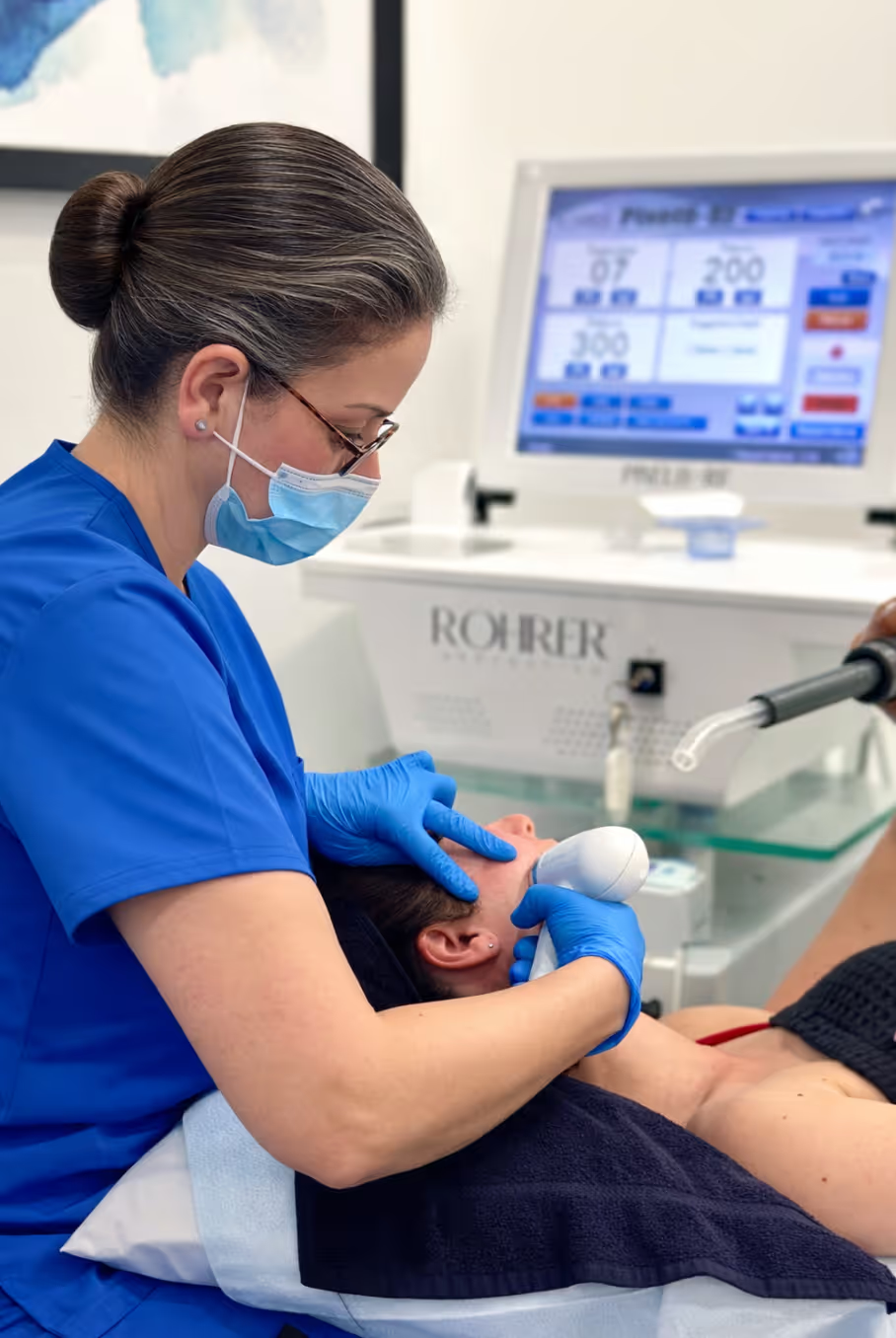
Where skin laxity is present — something that becomes increasingly common after 40, and especially after significant weight fluctuations or the fat loss associated with GLP-1 medications — fat reduction alone tends to leave patients underwhelmed. Removing fullness from under loose skin doesn't tighten that skin. In these cases, Pixel8-RF radiofrequency microneedling or CoolPeel Fractional Laser Resurfacing applied to the neck and submental region can meaningfully improve tissue firmness and collagen density. These treatments work at the dermal level, stimulating the structural proteins that give skin its ability to contract and redrape after fat reduction. Treating fat without addressing the skin above it is like remodeling a room without repainting — the bones of the result are right, but the finish is missing.
There's also a conversation worth having about the platysmal bands — the vertical cords in the neck that can become more prominent as the muscle loses tone and the neck skin loses elasticity. If these are contributing to the visual softness of your profile, Botox in the platysma (sometimes called the Nefertiti lift) can restore meaningful definition along the jawline and upper neck. This is covered in depth in our post on platysmal band treatment with Botox and is often an underutilized piece of the submental contouring puzzle.
For patients who experienced significant weight loss — whether through lifestyle changes, GLP-1 medications, or bariatric intervention — the submental region often presents its own distinct challenge. Fat volume may have decreased overall, but the skin envelope doesn't always contract to match. If this sounds familiar, our discussion of body contouring after weight loss addresses the broader principles, and many of the same treatment strategies apply to the neck and chin specifically.
What we don't recommend is repeating the same single-modality approach that left you in this position. The patients who come to us with recurring submental fat after previous treatments are almost always better served by a planned combination protocol — one that matches the specific anatomical contributors to their current presentation, not a general "chin fat" treatment applied without that discrimination. Our team brings a combined 70+ years of experience in medical aesthetics, and the nuance of submental contouring — how fat, skin, muscle, and structure interact — is territory we navigate every week for patients across McLean, Vienna, Falls Church, and the greater Fairfax County area.
If you're ready to have a genuinely honest conversation about what's happening under your chin and what will actually address it, we're here for that. Schedule a consultation at Tysons Elite Esthetics, and we'll work through the anatomy with you before recommending anything.
Start your transformation
Schedule your consultation with our knowledgeable and friendly team.