Summer Skin Recovery: How to Treat Sun Damage, Uneven Tone, and Post-Sun Aging in Tysons Corner

By late spring in Northern Virginia, the cumulative effects of sun exposure are already underway. UV radiation does not announce itself with immediate visible damage. It works quietly, disrupting melanin production, degrading collagen, and accelerating the kind of surface aging that no moisturizer will reverse. For professionals in Tysons Corner, McLean, and Great Falls who maintain a polished appearance year-round, this is the season to address what has accumulated, and to protect what has not yet changed.
Sun damage treatment is not a single intervention. It is a clinical sequence matched to your specific presentation, your skin type, and your schedule. What follows is a clear-eyed overview of what summer sun actually does to skin after 35, and which medical-grade treatments can meaningfully address it.
What Sun Damage Actually Looks Like After 35
The visible signs most clients present with in late spring and early summer fall into several distinct categories. Understanding them helps clarify why a single product or a single treatment rarely resolves the full picture.
- Hyperpigmentation and melasma: Uneven brown or gray-brown patches, often on the cheeks, forehead, and upper lip. These are driven by melanocyte overactivity triggered by UV and hormonal factors. They deepen with repeated sun exposure and are among the most persistent concerns to treat.
- Solar lentigines: Discrete flat spots, commonly called sun spots or age spots, appearing on the face, chest, and hands. These are the direct result of cumulative UV exposure and tend to multiply with each summer season.
- Post-inflammatory hyperpigmentation: Residual discoloration following acne, inflammation, or prior cosmetic treatments, often exacerbated by sun exposure during healing periods.
- Uneven surface texture: Roughness, enlarged pores, and early actinic changes resulting from repeated UV damage to the skin's outermost layers.
- Loss of luminosity: The dull, flat appearance that emerges when the skin's natural renewal cycle is disrupted by chronic sun exposure and collagen degradation.
Clinical Treatment Options for Sun Damage and Hyperpigmentation
The right approach depends on the depth and type of pigmentation, your Fitzpatrick skin type, and how much downtime is acceptable. At Tysons Elite Esthetics, treatment planning begins with an honest assessment of all of these factors.
IPL Photofacial (Intense Pulsed Light)
For clients with discrete sun spots, redness, and surface-level tone irregularities, IPL photofacial treatments target pigmented lesions and vascular concerns with minimal downtime. Many clients experience a temporary darkening of treated spots followed by gradual clearing over one to two weeks. A series of treatments typically yields more consistent results than a single session.
Chemical Peels for Tone Correction
Medical-grade peels remain one of the most clinically reliable tools for addressing uneven tone, post-sun discoloration, and surface texture. The Vi Peel Precision Plus is formulated specifically for hyperpigmentation and melasma, combining trichloroacetic acid with brightening agents that work at multiple depths. It requires several days of peeling but delivers meaningful tone correction that over-the-counter brighteners cannot replicate.
CoolPeel Fractional Laser Resurfacing
For clients with deeper pigmentation, significant textural damage, or sun-related skin aging that goes beyond surface discoloration, CoolPeel Fractional Laser Resurfacing addresses both tone and structural changes simultaneously. It removes damaged outer layers and stimulates new collagen formation. Downtime is more significant than IPL or peels, typically one to two weeks, but the depth of correction is considerably greater. Medical director Dr. Singh's surgical background informs how this treatment is calibrated, particularly in clients with mixed concerns across multiple skin layers.
Radiofrequency Microneedling
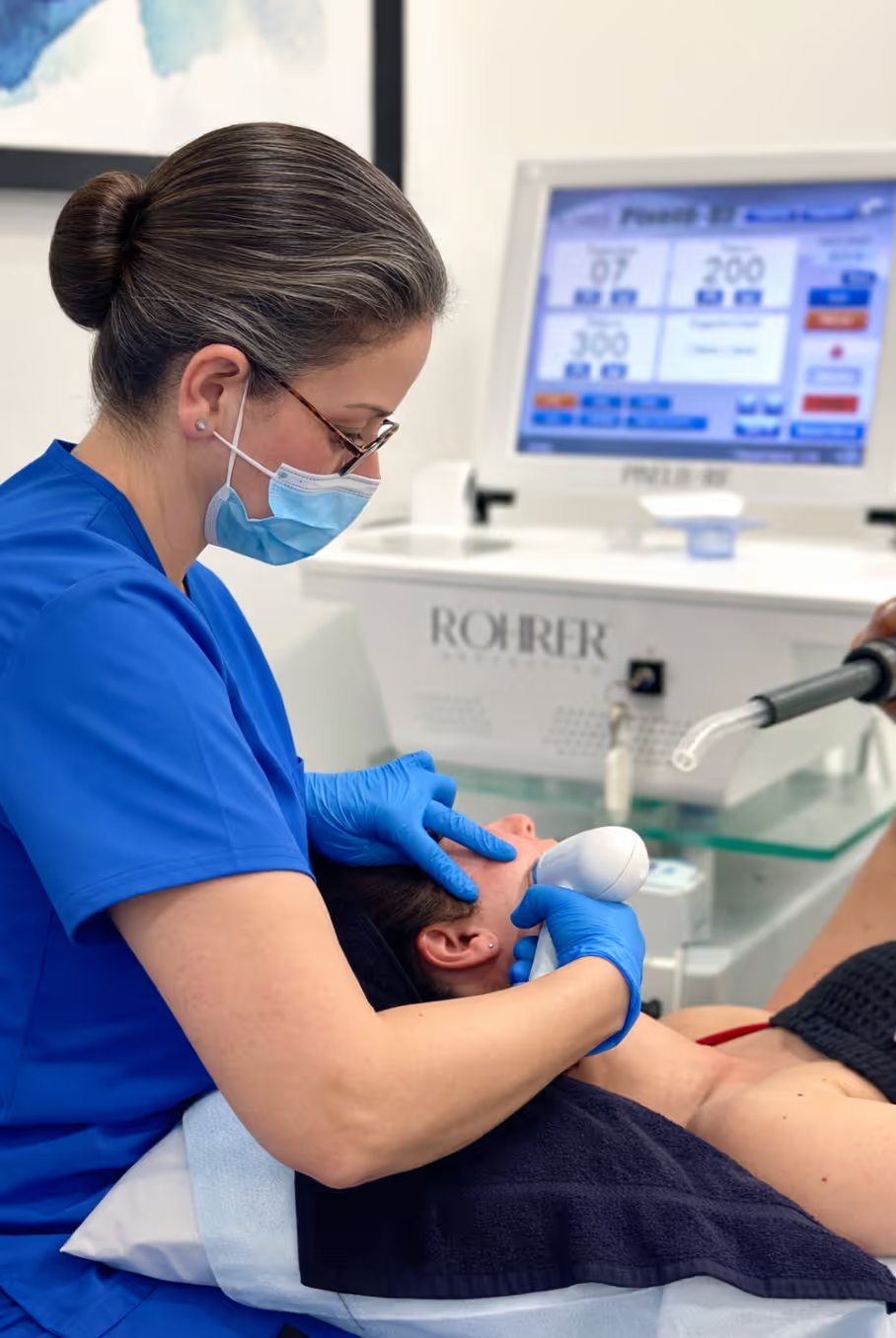
When sun damage has contributed to visible texture loss, enlarged pores, or early laxity, Pixel8-RF radiofrequency microneedling addresses the structural dimension of post-sun aging. By stimulating collagen and elastin remodeling at controlled depths, it improves the quality and resilience of skin that has been chronically exposed. Many clients combine this with pigment-targeting treatments for a more complete correction.
Sequencing Matters: Why Treatment Order Is a Clinical Decision
One of the most common errors in sun damage treatment is layering interventions without a coherent plan. Aggressive pigment treatments applied to compromised skin can worsen post-inflammatory hyperpigmentation. Laser treatments performed without addressing the underlying melanin dysregulation often produce inconsistent results.
At Tysons Elite Esthetics, the clinical approach follows a logical sequence:
- Assess and stabilize the skin barrier before any resurfacing or laser work
- Address active melanin dysregulation with appropriate topical or peel protocols
- Layer deeper treatments once the skin is prepared and responding predictably
- Maintain results with medical-grade home care and appropriate sun protection
This is not a one-appointment process for most clients presenting with meaningful sun damage. It is a structured plan that respects how skin heals and responds.
Why Tysons Elite Esthetics for Sun Damage Treatment
Sun damage treatment in the hands of an experienced clinical team produces different outcomes than the same device operated in a high-volume setting. The distinction lies in assessment, protocol selection, and the clinical judgment applied to every parameter.
Tysons Elite Esthetics operates under the medical direction of Dr. Navin Singh, a triple board-certified plastic surgeon and Johns Hopkins University School of Medicine graduate with faculty experience at both Johns Hopkins and the University of Maryland. His oversight ensures that laser and resurfacing treatments are performed with the anatomical precision and safety standards that surgical-level training demands. This matters most when treating complex pigmentation, darker skin tones, or layered concerns that require careful calibration.
Our Medical Estheticians hold the highest licensure available in the Commonwealth of Virginia, including advanced training in chemical resurfacing and medical-grade laser protocols. The team is further supported by a Registered Nurse. Every treatment plan is tailored, not templated.
Founded by Luise Estelle, the practice is built around the Glow Refined philosophy: precise, discreet, results-driven care that enhances rather than overwrites. Clients from Tysons Corner, McLean, Great Falls, and Vienna choose this practice because they have learned the difference between a treatment and a plan.
If you are beginning to see the effects of summer sun in your skin tone, texture, or clarity, a private consultation is the appropriate first step. There is no pressure and no protocol until we understand your skin thoroughly.
Schedule a consultation at Tysons Elite Esthetics, located at 7777 Leesburg Pike, Falls Church, VA, just minutes from Tysons Galleria and the Greensboro Silver Line Metro station.
Start your transformation
Schedule your consultation with our knowledgeable and friendly team.