Temple Filler for Hollow Temples: What Tysons Professionals Should Know About Restoring Upper Face Volume After 40

There is a particular kind of facial aging that does not announce itself loudly. No single wrinkle, no obvious change. Instead, the face begins to look subtly different, slightly drawn, perhaps tired in a way that rest does not fix. For many professionals in their 40s and 50s, that shift originates not in the midface or under the eyes, but higher: in the temples.
Temple hollowing is among the earliest and most structurally significant signs of volume loss in the upper face. Yet it remains one of the least discussed areas in aesthetic medicine, even as it quietly reshapes the entire frame of the face. Understanding what causes it, and how it can be addressed, is worth the time of anyone making considered decisions about how they age.
Why the Temples Hollow After 40
The temple region sits at the junction of the skull, the temporal muscle, and the overlying fat compartments. With age, several things occur simultaneously:
- Fat compartment loss. The temporal fat pad, like the fat pads throughout the face, diminishes over time. This reduction begins earlier than most clients expect, often in the mid-30s.
- Muscle atrophy. The temporalis muscle, which plays a role in jaw movement, can thin with age, contributing to visible concavity in the lateral face.
- Bone resorption. The skull itself changes shape with age. Temporal bone resorption contributes to the sunken quality that distinguishes an aging temple from a youthful one.
- Weight loss and GLP-1 use. Clients who have lost weight, including those on semaglutide or other GLP-1 medications, may notice accelerated temple hollowing. Volume loss from GLP-1 treatments often manifests prominently in the upper face.
The result is a concavity at the side of the skull that creates a skeletal appearance. The brow may appear to drop. The eye area can look more sunken. The overall effect is one of depletion rather than age.
What Temple Filler Does and How It Works
Temple filler is a dermal filler treatment placed in the temporal region to restore lost volume, improve the structural silhouette of the upper face, and create a smoother transition between the forehead, brow, and cheekbone.
The treatment typically uses hyaluronic acid fillers or, in appropriate candidates, collagen stimulators such as Sculptra or Radiesse. Each option has different considerations:
- Hyaluronic acid fillers such as Revance RHA or Revanesse Versa offer immediate volume restoration and the option of reversal with hyaluronidase if needed. They are well suited to clients who want to see results quickly and maintain flexibility in their treatment approach.
- Collagen stimulators such as Sculptra work differently, stimulating the body's own collagen production over several months. For clients who prefer a gradual, biologically integrated result, this approach may be appropriate. Read more about how collagen stimulators differ from hyaluronic acid fillers before your consultation.
The temple is considered a technically demanding area. The temporal artery runs through this region, and deep injection near the periosteum requires precise anatomical knowledge and a practiced hand. This is not a treatment to pursue in a high-volume setting.
What to Expect: Treatment, Recovery, and Results
For most clients, temple filler is a brief in-office procedure. A typical appointment may include:
- A thorough consultation and facial assessment before any product is chosen or placed
- Topical numbing to minimize discomfort at the injection site
- Precise placement using either a fine needle or cannula, depending on the anatomy and product selected
- A review of aftercare, including avoiding pressure on the area for 24 to 48 hours
Most clients experience minimal downtime. Some mild swelling or tenderness at the injection site is not unusual in the first day or two. Bruising is possible but can often be minimized with proper technique and pre-treatment guidance.
Results with hyaluronic acid fillers are visible immediately, though final results settle over one to two weeks as any initial swelling resolves. Collagen stimulators produce results that build gradually over two to four months.
Duration varies by product and individual metabolism. Hyaluronic acid fillers in the temples may last twelve to eighteen months or longer in some clients. Collagen stimulators can maintain results for two years or more.
Temple Filler in Context: The Upper Face as a Whole
Temple hollowing rarely occurs in isolation. Volume loss in the upper face tends to involve the brow, the orbital area, and often the midface simultaneously. A well-designed treatment plan considers these regions together rather than treating each in isolation.
Clients who notice hollow temples often also observe changes under the eyes. The relationship between these two areas is meaningful: as volume diminishes in the upper face, the eye appears more sunken, and the under-eye area may appear more prominent. Understanding the distinction between under-eye bags and hollow under-eyes can help clarify which treatment approach is most appropriate.
For clients also seeing changes in the midface, cheek filler and midface volume restoration may be considered alongside or after temple treatment, depending on the overall picture.
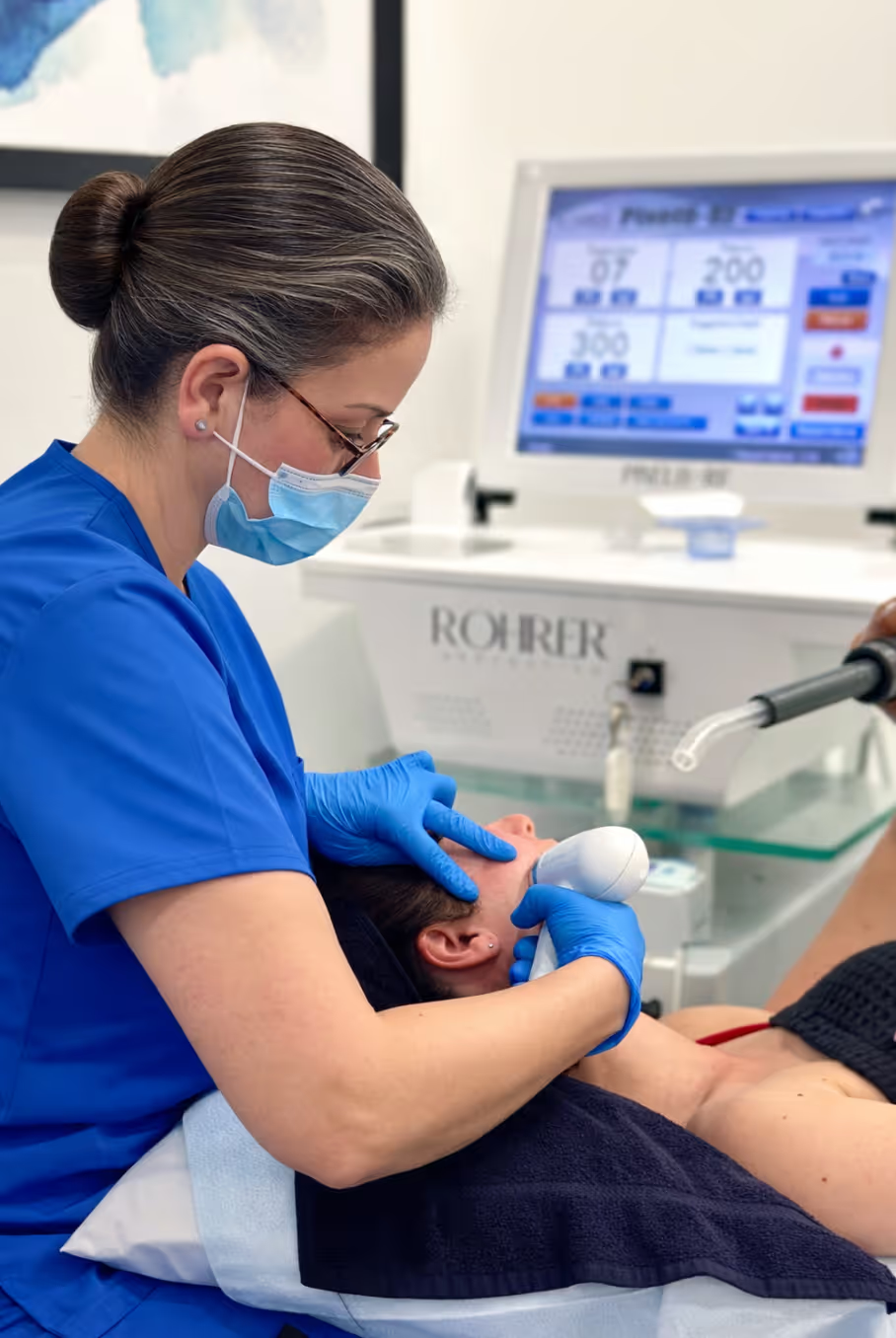
Skin quality in the temporal region also matters. Clients addressing both volume and surface texture may benefit from a coordinated approach that includes treatments such as Pixel8-RF radiofrequency microneedling for skin tightening, or CoolPeel Fractional Laser Resurfacing for more significant textural concerns.
Why Tysons Elite Esthetics for Temple Filler in Northern Virginia
Temple filler belongs in a practice where anatomical precision is the standard, not the aspiration. At Tysons Elite Esthetics, every injectable treatment is performed under the medical direction of Dr. Navin Singh, a triple board-certified plastic surgeon and Johns Hopkins School of Medicine graduate with faculty experience at both Johns Hopkins and the University of Maryland. His surgical-level oversight means that treatments in technically sensitive areas, such as the temples, are approached with an understanding of the underlying anatomy that is not common in high-volume settings.
Our clinical team holds the highest level of licensure available in the Commonwealth of Virginia. The practice is led by founder Luise Estelle, whose European aesthetic discipline shapes the philosophy behind every treatment: refinement over excess, structure over volume for its own sake.
The Glow Refined philosophy means that the goal of temple filler here is never to fill a space. It is to restore the frame of the face in a way that is coherent, proportional, and imperceptible to anyone who is not looking closely. Clients leave looking like themselves, refreshed and structurally balanced, rather than treated.
Tysons Elite Esthetics is located at 7777 Leesburg Pike, Falls Church, VA 22043, convenient to Tysons Corner, McLean, Great Falls, Vienna, and the broader Northern Virginia corridor.
If you have noticed a change in the contour of your upper face and would like a precise clinical assessment, we invite you to schedule a private consultation. There is no obligation, and every conversation begins with a thorough evaluation rather than a predetermined treatment plan.
Start your transformation
Schedule your consultation with our knowledgeable and friendly team.