Under-Eye Bags vs. Hollow Under-Eyes: What Tysons Professionals Should Know About Choosing Between Filler, Neuromodulators, and Skin Tightening for the Right Under-Eye Concern in 2025

The under-eye area is one of the most frequently misread zones in aesthetic medicine. Clients arrive knowing something looks off — they look tired, older than they feel, or somehow diminished even on a good day. What they do not always know is why. And that distinction determines everything about which treatment will actually help.
Under-eye bags and hollow under-eyes are two distinct concerns. They can coexist, but they require different approaches. Applying filler to a true bag, or tightening skin over a hollow, will not improve the result. In some cases, it can make the concern more visible. This is why diagnosis precedes treatment at every level of serious clinical practice.
Understanding the Difference: Bags Versus Hollows
The language clients use is often interchangeable. The anatomy is not.
- Under-eye bags are characterized by puffiness or protrusion beneath the eye. This is typically caused by herniated orbital fat, fluid retention, or a combination of both. The issue is volume that has shifted forward. Skin laxity can make this more prominent over time.
- Tear trough hollows are the opposite. Here, volume has been lost. The orbital rim becomes more pronounced, casting a shadow that reads as darkness or fatigue. This is a deflation problem, not an inflation one.
- Dark circles can accompany either concern, but they are often a product of shadowing rather than pigment. Treating the structural cause frequently reduces the appearance of darkness without any pigment-specific intervention.
- Skin crepiness and laxity are a separate layer of the issue. Fine skin under the eye loses elasticity over time, contributing to a textured or aged appearance that neither filler nor neuromodulators fully address on their own.
Many clients present with two or three of these concerns simultaneously. A thorough assessment of facial anatomy is required before any treatment plan is designed.
When Tear Trough Filler Is the Right Answer
For clients with true volume loss in the tear trough, a well-placed hyaluronic acid filler can produce a meaningful correction. The result, when done with precision, is a smoother transition from the lower lid to the cheek. Shadows soften. The face reads as rested rather than altered.
Tear trough filler is among the most technically demanding injectable procedures in aesthetic medicine. The tissue is thin, the vasculature is complex, and overfilling creates a visible shelf effect rather than a correction. Filler type matters as much as placement. Softer, more cohesive formulations, such as those in the Revance RHA collection or Revanesse Versa, tend to integrate more naturally in this region than denser products designed for structural support.
Ideal candidates for tear trough filler typically:
- Have visible hollowing or a shadowed groove beneath the eye
- Retain reasonable skin quality in the lower lid
- Do not have significant fat herniation or true puffiness
- Are not experiencing significant skin laxity that would remain visible after volume correction
For a deeper look at the clinical considerations around this treatment, the post on tear trough filler for under-eye hollows addresses candidacy and realistic expectations in detail.
The Role of Neuromodulators and Skin Tightening for Under-Eye Bags
True under-eye bags, driven by herniated fat, are generally not corrected by filler or neuromodulators. The structural cause — fat that has shifted forward through a weakened orbital septum — requires a surgical approach for definitive correction. That said, non-surgical options may reduce the visual impact of mild puffiness or address the contributing factors around the bag.
Where neuromodulators can contribute:
- A small amount of neuromodulator placed in the orbicularis oculi can soften the muscle that contributes to under-eye bunching, which can slightly open the appearance of the lower lid area
- This is a nuanced technique, not a standard treatment, and is most appropriate for clients with mild dynamic concerns rather than true structural bags
Where skin tightening is relevant:
- For clients with crepey, lax skin in the lower lid and under-eye area, treatments that stimulate collagen remodeling may improve skin quality and reduce the textured appearance
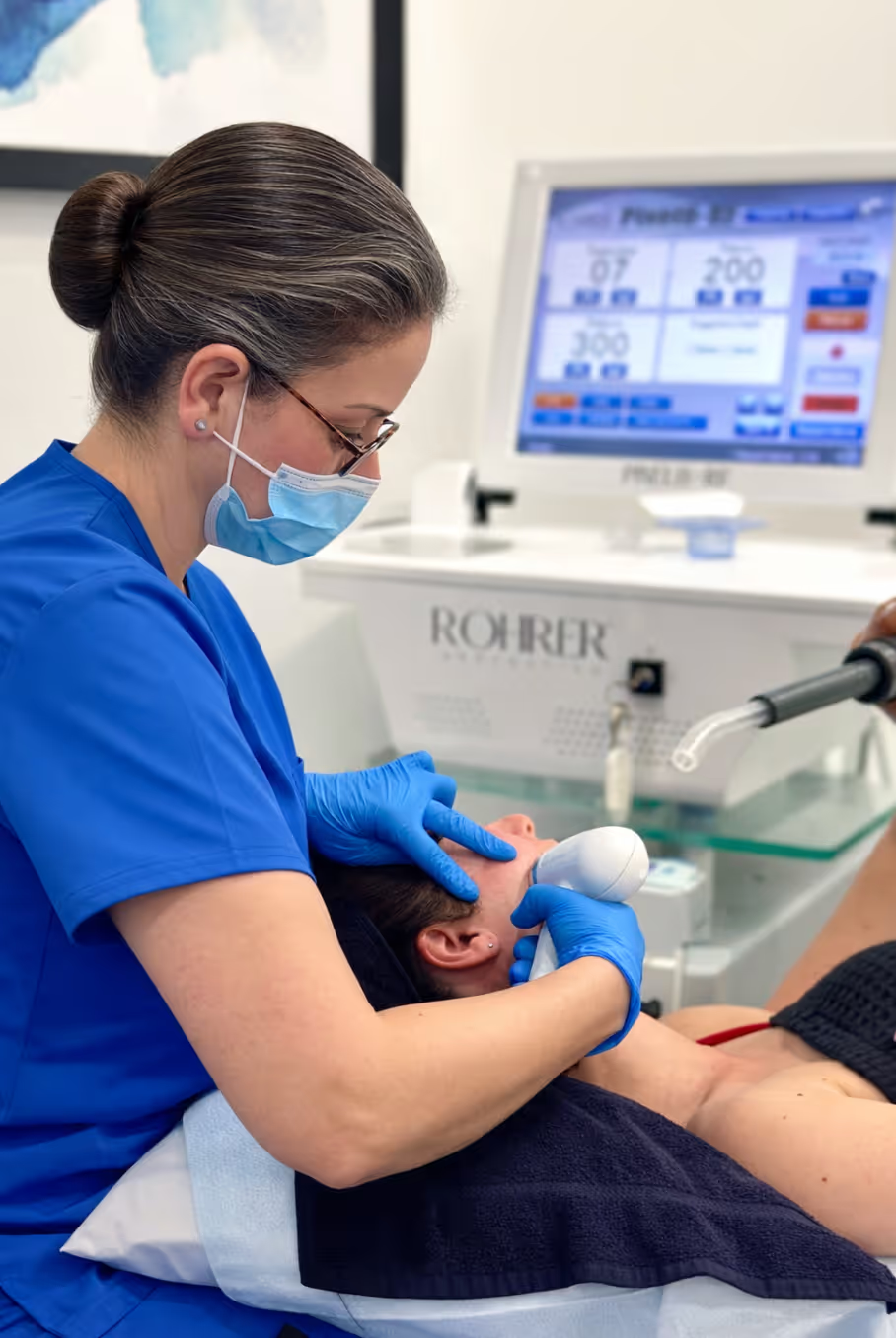
- Pixel8-RF radiofrequency microneedling can be considered for clients with fine skin laxity in this region, with appropriate candidacy screening
- Plasma Pen treatments may also be evaluated for periorbital skin quality, depending on the client's specific concerns and skin type
- Skin tightening does not eliminate fat herniation but can improve the overall quality and texture of the surrounding tissue
The distinction between surgical and non-surgical candidacy for under-eye bags is a conversation the practice approaches honestly. Not every concern has a non-surgical answer, and clients benefit most from providers who will say so clearly. For a broader comparison of when filler reaches its limits, the post on under-eye filler versus blepharoplasty outlines that threshold in useful detail.
Why Precise Diagnosis Matters More Than Any Single Treatment
Spring light is unforgiving. As the season shifts in late April across the Tysons and McLean corridor, clients often begin noticing concerns they were less aware of during the lower-contrast light of winter. The under-eye area is frequently among the first to prompt a consultation.
What separates a result that looks natural from one that looks treated is not the product. It is the assessment that precedes it.
At Tysons Elite Esthetics, every injectable consultation is conducted under the surgical-level anatomical oversight of Dr. Navin Singh, our triple board-certified medical director and Johns Hopkins-trained plastic surgeon. His framework ensures that treatment selection is grounded in a genuine understanding of each client's facial structure, not a default recommendation based on the presenting complaint alone.
Our clinical team of licensed Medical Estheticians and Registered Nurse brings that same precision to every treatment executed within the practice. The Glow Refined philosophy that founder Luise Estelle has built into every aspect of this practice means that subtlety and accuracy are never compromised for speed or convenience.
Clients in Tysons Corner, McLean, Great Falls, and Vienna who are evaluating their under-eye options are welcome to begin with a private consultation. The conversation starts with what you are actually seeing, not with a menu of available treatments.
Contact Tysons Elite Esthetics at tysonseliteesthetics.com to schedule a private consultation at 7777 Leesburg Pike, Falls Church, VA.
Start your transformation
Schedule your consultation with our knowledgeable and friendly team.