Vacation Skin After Flying: Protecting Your Results Mid-Summer

You've just had a beautiful treatment — filler that restored the softness around your cheeks and temples, or a skin tightening session that finally addressed the laxity you'd been watching develop for two years. Then comes the family trip to Europe, the long weekend in the Bahamas, or the work conference in a desert city. And somewhere between the recycled cabin air and the midday sun at 95 degrees, you find yourself wondering whether everything you've invested in is quietly unraveling at 35,000 feet.
It's a real concern — and one worth thinking through before you leave, not after you land. At Tysons Elite Esthetics, we see this conversation come up constantly in the weeks leading into summer. Clients who've done everything right in terms of timing their treatments and following their aftercare instructions at home still find themselves uncertain about what air travel actually does to their results. The honest answer is nuanced: flying itself won't erase a well-placed filler or reverse a properly healed RF treatment. But the conditions that come with travel — dehydration, UV exposure, time zone shifts that disrupt sleep and cortisol rhythms, and the temptation to skip your skincare routine while on vacation — can create a cascade of effects that show up on your skin before you've even unpacked your suitcase.
What Flying Actually Does to Your Skin
Commercial aircraft cabins typically maintain humidity levels between 10 and 20 percent — significantly lower than the 30 to 60 percent most people have at home. That dryness pulls moisture out of the skin's surface layers rapidly, which can cause hyaluronic acid-based fillers to temporarily appear less voluminous than they did before your flight. This is not a structural change to the filler itself — once you rehydrate properly, most clients notice their results normalize within 24 to 48 hours. But if you're landing and immediately attending a wedding, a reunion, or a client dinner, that timing matters.
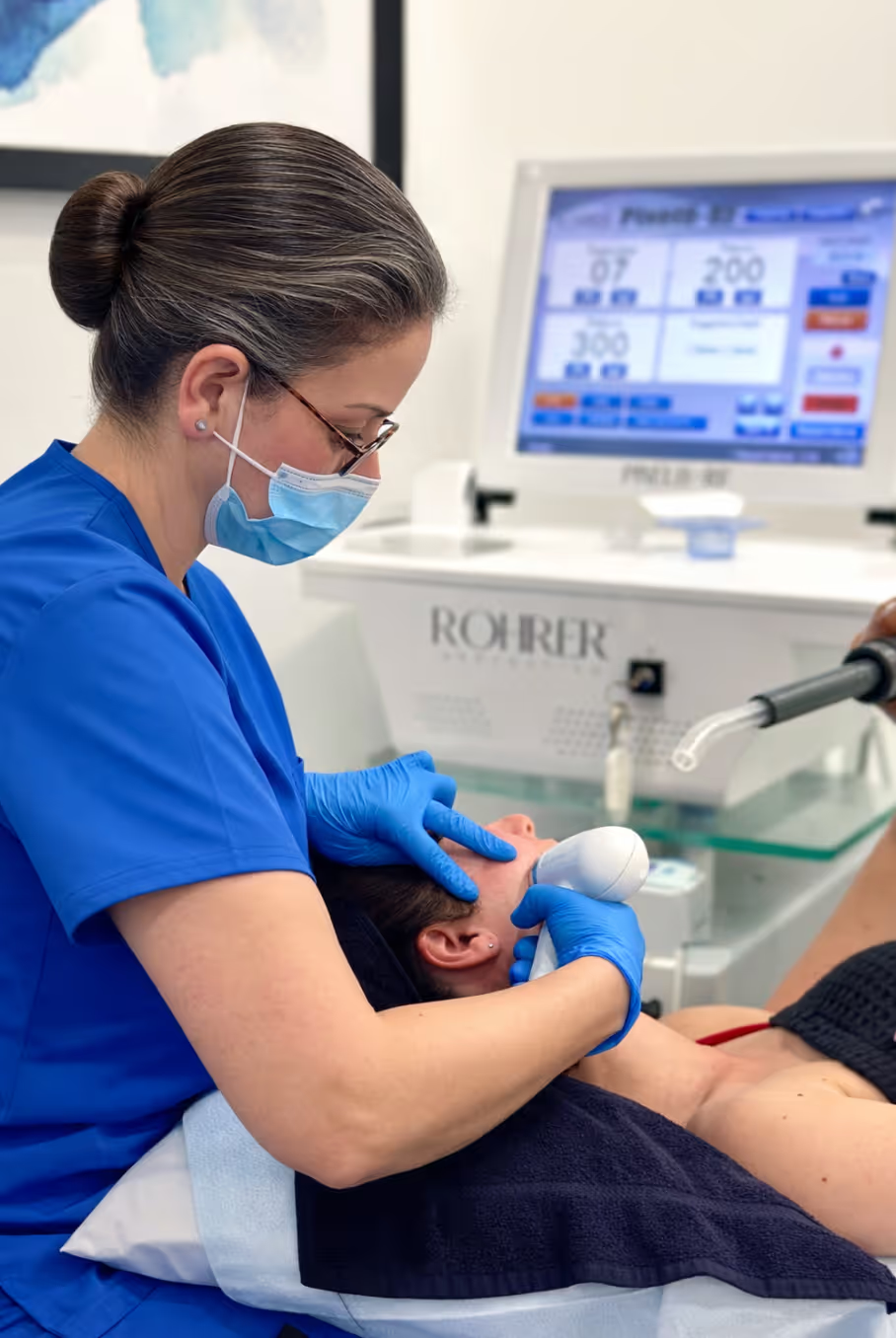
For clients who've recently had Pixel8-RF radiofrequency microneedling or other energy-based treatments, the barrier repair work your skin is doing in the days after treatment can be compromised by extended dehydration. The skin is actively healing, and flying within the first two weeks after a significant energy treatment — especially anything ablative — is something we strongly advise planning around. If you've had CO2 laser resurfacing, the calculus is even more conservative: sun exposure at altitude is more intense, your treated skin is more photosensitive, and the combination of those two factors can set results back in ways that are frustrating to correct after the fact.
J-plasma skin tightening — one of the more advanced options we offer — requires particular attention to post-treatment protection. The results from J-plasma are genuinely impressive, producing the kind of skin contraction and surface refinement that clients describe as transformative. But that improvement is earned through a healing process that takes real time, and disrupting that process with the dehydrating environment of a long-haul flight, the UV intensity of a beach vacation, or the sleep deficit that comes with crossing time zones can slow the final outcome. If you're searching for j-plasma skin tightening near me and hoping to schedule before a summer trip, our team will walk through your travel calendar in the consultation so your timing supports your results rather than working against them.
Dermal Filler Aftercare in Summer: What Changes When You're Traveling
The core principles of dermal filler aftercare don't change just because you're on vacation — but the conditions that challenge those principles become more intense. Heat is probably the factor clients underestimate most. We've written at length about how summer heat affects filler, and the summary holds: sustained exposure to high temperatures can accelerate swelling in recently treated areas and, over time, may affect how long hyaluronic acid fillers maintain their structure. This doesn't mean you can't travel after filler — it means timing and protection matter.
Our general guidance for clients with recent filler who are heading into summer travel:
- Wait at least two weeks before flying after any new filler treatment. This gives initial swelling time to resolve and lets the filler integrate properly into the tissue before you introduce the dehydrating effects of cabin air.
- Hydrate aggressively before, during, and after your flight. This isn't just a skincare recommendation — it's physiological. Hyaluronic acid fillers attract and retain water, and when your body is systemically dehydrated, the skin around the filler shows it. Aim for significantly more water than you think you need, and avoid the alcohol and caffeine that most people reach for on long flights.
- Pack a travel-sized hyaluronic acid serum and a barrier-supportive moisturizer. Apply both before you board and again mid-flight if you're on anything over five hours. The goal is to keep the skin's surface from signaling water loss through tightness and flakiness — both of which look worse in areas where you have filler.
- Wear SPF 50 on travel days, even if you're not in direct sun. UV radiation is more intense at altitude, and windows — even on planes — allow some UVA transmission. For clients who've had recent treatment, this is non-negotiable.
For clients who've invested in longer-lasting filler options or who are managing a full-face rejuvenation plan, thinking about travel the same way you think about sun protection — as a consistent maintenance behavior rather than a one-time precaution — pays dividends over time.
Protecting Skin Tightening Results While You Travel
Clients who've recently completed any RF microneedling, laser, or plasma-based tightening treatment need to be especially intentional in summer. The structural improvements these treatments create — new collagen deposition, skin contraction, surface refinement — develop over months, and the conditions that slow or reverse that process are concentrated in summer travel: UV exposure, heat, inconsistent skincare, and disrupted sleep.
The number one protective measure is consistent, broad-spectrum SPF. Not the SPF you packed because it was travel-sized and convenient — a mineral or mineral-hybrid formula with SPF 50 or higher, applied every two hours when you're outdoors. If you've had any resurfacing treatment in the last 90 days, your skin's melanin response is more reactive than baseline, meaning sun exposure carries a higher risk of triggering hyperpigmentation in treated areas. This isn't a reason to skip the vacation — it's a reason to be deliberate about sun protection in the same way you're deliberate about everything else you're protecting.
Sleep is worth naming directly. Cortisol — your primary stress hormone, which also happens to be a significant driver of collagen breakdown — spikes with disrupted sleep. Jet lag doesn't just make you tired; it shifts your circadian rhythm in ways that affect cellular repair, skin turnover, and inflammation levels. Clients recovering from energy-based treatments who cross multiple time zones often notice that their skin looks more reactive, dull, or uneven in the first few days after arrival. That's not coincidence. We generally recommend building in a day of rest and recovery at your destination before significant sun exposure or any social events where you're counting on your skin looking its best.
Before You Leave: A Practical Pre-Travel Checklist
For clients at Tysons Elite Esthetics who are planning summer travel, the conversation we recommend having before you book anything is about treatment timing. Some treatments are ideally scheduled six to eight weeks before a major trip — enough time for full healing and for the best of your results to be visible when you arrive. Others can be timed closer to departure with the right aftercare protocol. The answer depends entirely on the treatment, your skin, and your specific travel itinerary.
What we know from more than 70 combined years working with clients in the Northern Virginia area is that the clients who get the most from their treatments are the ones who plan. They don't arrive for a consultation two weeks before a beach trip and ask what we can do; they come in with their calendar and let us design a timeline that serves them. That kind of planning is something our team genuinely enjoys — it's the difference between a transactional appointment and a treatment relationship that compounds over time.
If you're heading into summer with upcoming travel and existing results you want to protect — whether that's filler, a recent tightening treatment, or an exosome therapy session that's still showing improvement — contact our team before you leave. A brief pre-travel check-in, even by phone, can help you identify any protective steps specific to your treatment history and travel plans. For clients new to the practice who are just beginning to explore what's possible, this overview of where Tysons patients typically start is a useful introduction to how we think about skin health over time.
Your results don't take a vacation. They just need you to be a thoughtful travel companion.
Start your transformation
Schedule your consultation with our knowledgeable and friendly team.