Exosomes or Filler First? Sequencing Treatments for Lasting Results
It's a question we hear often at our Tysons practice, usually from clients who've done their research and arrived with two treatments in mind but no clear sense of which should come first: exosomes or filler. The honest answer is that it depends entirely on what your skin actually needs — and that distinction is where most generic advice falls short.
Filler and exosomes solve different problems, even though both fall under the umbrella of "regenerative aesthetics." Filler restores volume immediately — it lifts, contours, and fills space that's been lost to time or genetics. Exosomes, particularly the Human Progenitor-Derived Exosomes we're the only Northern Virginia practice authorized to use, work differently. They signal your own cells to repair and regenerate, improving skin quality, texture, and resilience from within. One is architectural. The other is biological. Sequencing them wrong doesn't ruin your results, but it can mean waiting longer to see the full benefit of either.
**When Filler Should Come First**
If structural volume loss is your primary concern — hollowed cheeks, deflated temples, a jawline that's lost definition — we typically recommend addressing that foundation first. Filler gives us an accurate picture of your face's true structure, which makes it easier to judge where exosome therapy will have the most visible impact on skin quality afterward. This is especially relevant for clients working through the difference between sagging skin and true volume loss, since the treatment order often depends on which one is actually driving the concern in the mirror.
There's also a practical reason to sequence this way: exosomes work best on skin that's had time to settle. Introducing them immediately after significant filler placement can make it harder to track which changes came from which treatment, and our team believes strongly in transparency about what's producing your results — not just that results are happening.
**When Exosomes Should Come First**
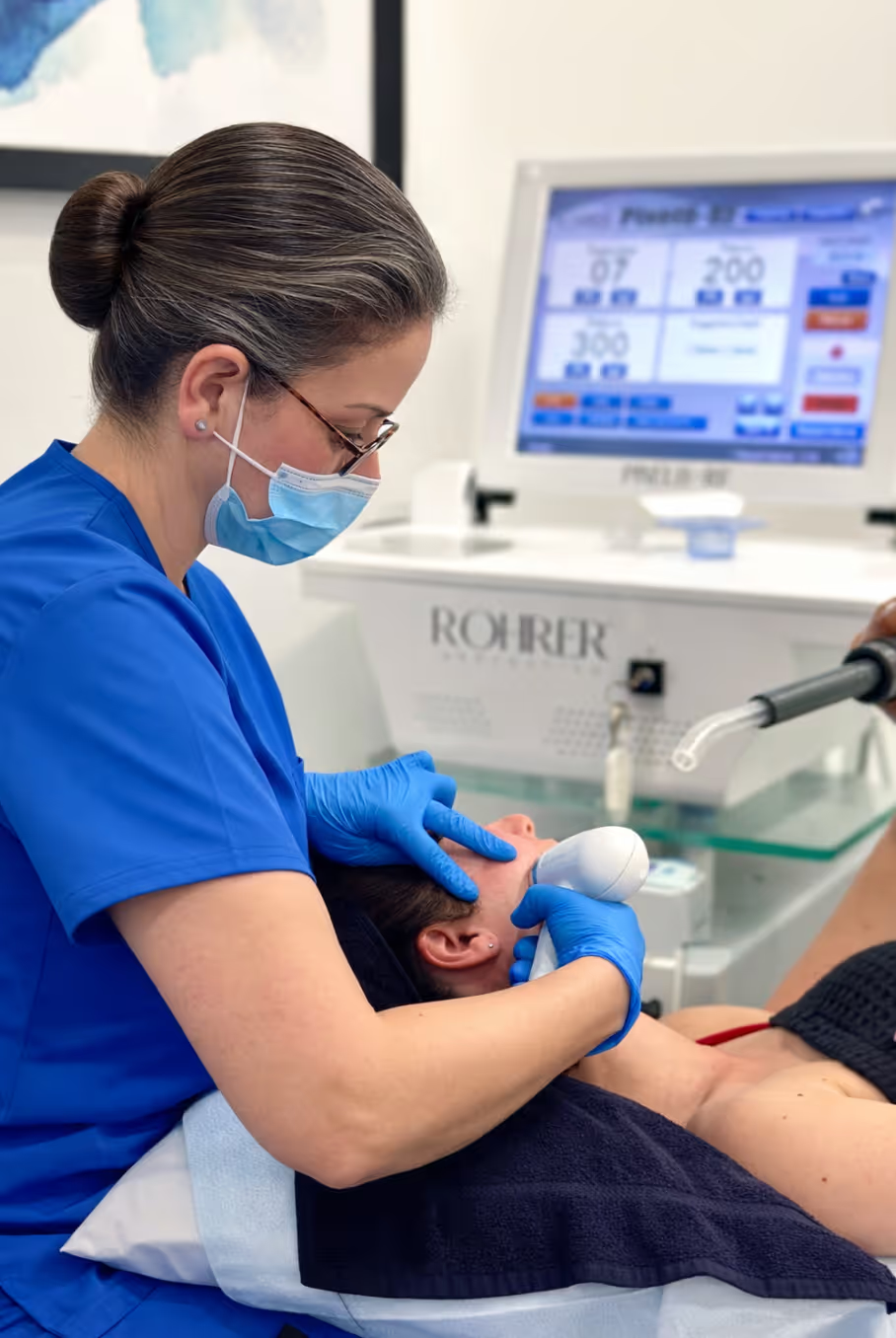
For clients whose primary concern is skin quality — dullness, fine texture irregularities, slow recovery from sun or stress damage, or thinning that shows up before any real volume loss — we often start with exosome therapy. This is particularly true for clients recovering from energy-based treatments. If you've had Pixel8-RF recently, pairing it with exosomes at the right interval can meaningfully extend and deepen your results — we've written in detail about how exosomes after Pixel8-RF amplify recovery and outcomes. Starting here builds a healthier canvas, which means any filler placed afterward integrates more naturally and tends to look less "done."
This sequencing also matters for clients newer to regenerative treatments who are still deciding between options. We regularly walk clients through how platelet-rich fibrin compares to exosome therapy, since understanding the mechanism behind each treatment makes the sequencing decision far more intuitive.
**What We Consider Before Recommending Either**
Sequencing isn't a formula — it's a conversation. We look at your skin's current elasticity, how your body has responded to previous treatments, your timeline (are you preparing for an event, or building a long-term plan?), and whether you have any existing filler that may need to be addressed first. If you've had prior filler placed elsewhere that's shifted or aged unevenly, we may recommend dissolving it before starting anything new, simply because layering fresh treatment over an unclear foundation rarely produces the result you're hoping for.
We also consider how biostimulators fit into the picture. Clients exploring longer-term collagen support sometimes ask how exosomes compare to options like Sculptra or Radiesse — a distinction we cover more fully in our piece on how collagen stimulators work differently than hyaluronic acid fillers. Understanding these distinctions helps clarify not just what to do, but in what order.
**Why This Decision Deserves a Real Consultation**
Our team has spent a combined 70+ years reading skin — noticing not just what a client wants to change, but what will actually move the needle for their specific concerns and timeline. Sequencing exosomes and filler correctly is one of the more nuanced decisions we make with clients, and it's not something we're comfortable answering in a five-minute conversation. It requires an honest look at your skin, your history with prior treatments, and your goals for the next year — not just the next event on your calendar.
If you're weighing exosomes against filler, or wondering whether you need both and in what order, we'd rather have that conversation in person. It's the kind of detail that separates a treatment plan that looks good for a season from one that continues to serve you for years.
Start your transformation
Schedule your consultation with our knowledgeable and friendly team.