Sagging Skin or True Volume Loss? Knowing the Difference Changes Everything

There is a moment many clients describe in their consultations at Tysons Elite Esthetics — a moment when they point to their face and say, "I just look tired," or "everything is falling." They know something has changed. What they rarely know is exactly what changed, and that distinction matters more than most people realize. Treating sagging skin as though it were a volume problem, or adding structure where the real issue is tissue laxity, doesn't just fail to help — it can actively make things worse. Getting this right requires more than an injection technique. It requires a thorough understanding of how the face ages, and the experience to read those changes accurately before anything is planned.
Volume loss and skin laxity are two distinct biological processes that often occur simultaneously, which is precisely why they're so easy to confuse. True volume loss happens as fat pads beneath the skin shrink, migrate, or redistribute — a process that typically accelerates after 40. The midface hollows, the temples shade inward, the undereye area deepens, and the jawline softens not because the skin has changed, but because the scaffolding beneath it has. Restoring that midface volume with a well-placed hyaluronic acid filler or biostimulator can make someone look years younger without a single millimeter of tightening. When volume loss is the primary driver, the right filler in the right location restores proportion and lift in a way that looks entirely natural — because the structure was simply there before, and you're returning it.
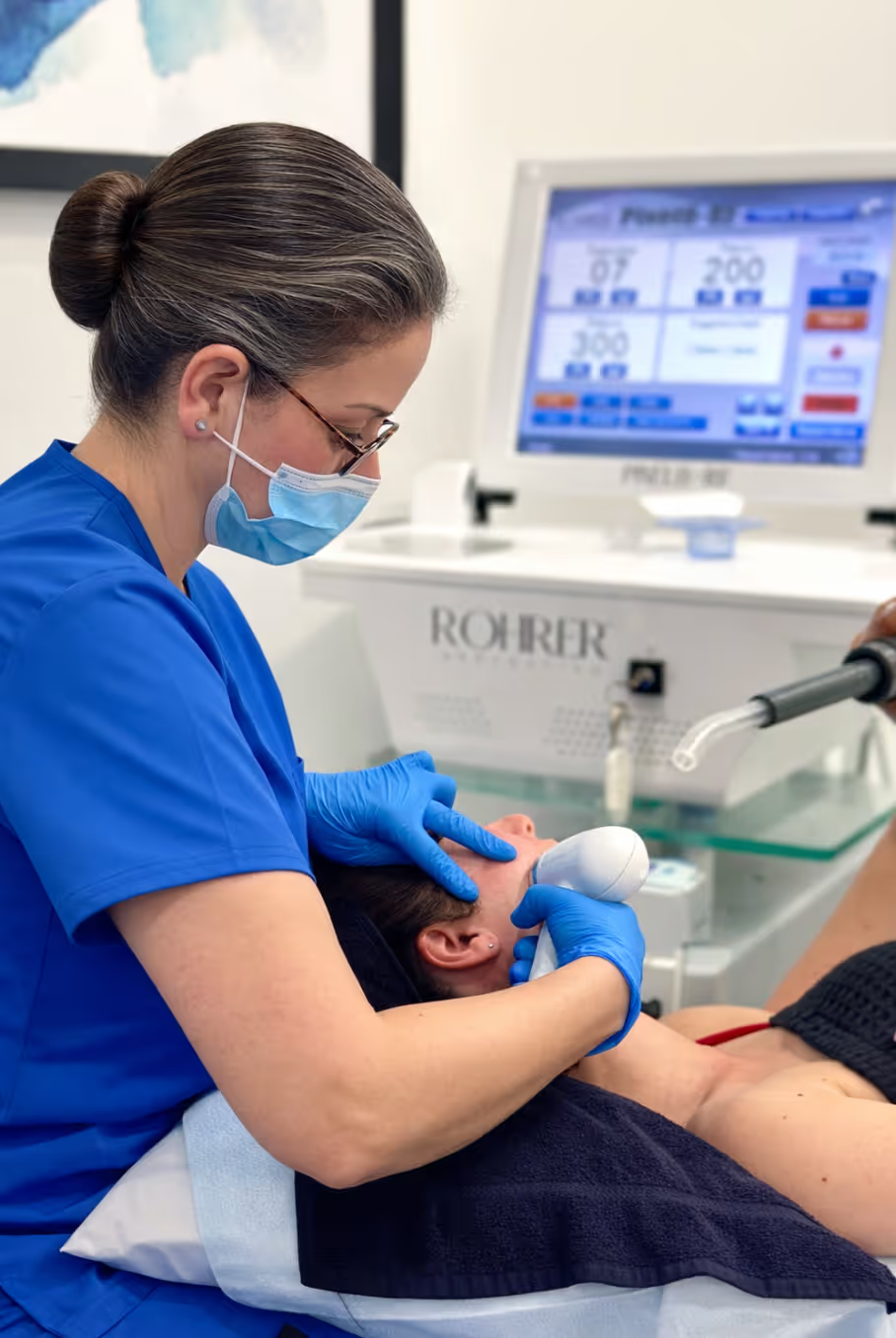
Skin laxity is a different story. This is what happens when collagen and elastin production slow, the skin's internal architecture weakens, and gravity begins to win in ways it previously couldn't. You see it in the jowls, the neck, the inner arms, the areas just below the cheekbones where skin once held tightly. Adding filler to a face that's primarily dealing with laxity — rather than volume depletion — can sometimes create a heaviness or puffiness that reads as "done," rather than refreshed. What laxity actually responds to is energy: radiofrequency, ultrasound, laser, or devices that stimulate the dermis and underlying tissue to tighten and remodel from within. Our team reaches for tools like Pixel8-RF radiofrequency microneedling and CoolPeel Fractional Laser Resurfacing when the goal is genuine structural tightening rather than replenishment. For clients navigating the neck and lower face specifically, understanding whether Ultherapy still makes sense for sagging neck skin is a conversation worth having during your consult.
The challenge — and this is what makes skilled assessment so critical — is that most people over 45 are experiencing both. The face doesn't simply lose volume in one decade and develop laxity in the next. They tend to layer on top of each other. A client may have genuine midface hollowing that would benefit beautifully from a collagen stimulator like Sculptra, while also showing early jowling that calls for an energy-based tightening protocol. The treatment plan needs to address both in the right order and with the right timing. Our team's combined 70-plus years of experience in medical aesthetics means we've seen every variation of this overlap — and we've learned to build plans that sequence treatments strategically rather than treating one signal while ignoring the other. Combination treatment planning is often where the most meaningful, lasting results come from.
There are also cases where what looks like sagging is actually the downstream effect of something else entirely. Rapid weight loss — including from GLP-1 medications — can deplete facial fat so quickly that the skin, which hasn't had time to adapt, appears to hang rather than simply sag. This isn't pure laxity; it's volume depletion presenting as laxity. Ozempic face is a genuine clinical phenomenon, and it requires a treatment approach that prioritizes thoughtful volume restoration before any tightening protocol. Similarly, some clients arrive having accumulated filler over years — sometimes at multiple practices — and the apparent heaviness or drooping they're experiencing is actually distorted tissue from excess product rather than true anatomical aging. In those cases, the right first step is often dissolving existing filler before adding anything new. Knowing when hyaluronidase makes sense first is a conversation that protects the integrity of everything that follows.
What all of this points to is a simple truth: the consultation matters as much as the treatment. Not a quick glance and a product recommendation — a real conversation about your history, your goals, the changes you're noticing, and what the clinical picture actually shows. At Tysons Elite Esthetics, that's how every appointment begins. Whether the right answer turns out to be dermal filler, a biostimulator like Sculptra or Radiesse, an energy-based tightening device, or a combination of all three — you'll know exactly why, and what to expect at every step. The difference between looking refreshed and looking overdone almost always comes down to this first conversation being done well.
Start your transformation
Schedule your consultation with our knowledgeable and friendly team.