Sagging Neck Skin in Your 40s: Is Ultherapy Still Worth It?

Why the Neck Changes So Noticeably in Your 40s
Most people expect facial aging. The neck catches them off guard. In your 40s, a combination of collagen loss, reduced skin elasticity, weakening platysmal bands, and accumulated sun exposure begins to show in ways that no amount of moisturizer or posture correction will address. The skin under the chin softens. The jawline definition that once separated your face from your neck starts to blur. What you see in a straight-on photo looks fine — until you turn to the side.
This is also the decade when patients start researching neck lift procedures in Northern Virginia — not because they want surgery, but because they're hoping there's something effective enough that they won't need it. For many, Ultherapy is one of the first names they encounter. And for good reason: it's FDA-cleared specifically for lifting skin on the neck and chin, it requires no incisions, and it's been available long enough to have a meaningful body of real-world evidence behind it.
But "long enough to have evidence" also means long enough for the conversation to evolve. Newer energy devices have entered the market. Patients are asking sharper questions. And experienced providers are thinking more carefully about when Ultherapy is genuinely the right tool — and when something else, or something combined, will serve a patient better.
What Ultherapy Actually Does to Neck Skin
Ultherapy uses focused ultrasound energy to target the deep structural layers of the skin — specifically the superficial muscular aponeurotic system, or SMAS, the same tissue layer addressed during surgical neck and facelift procedures. By delivering precise thermal injury at depths of 3.0mm, 4.5mm, and sometimes 1.5mm, the treatment triggers the body's natural wound-healing response, stimulating new collagen and elastin production over the months that follow.
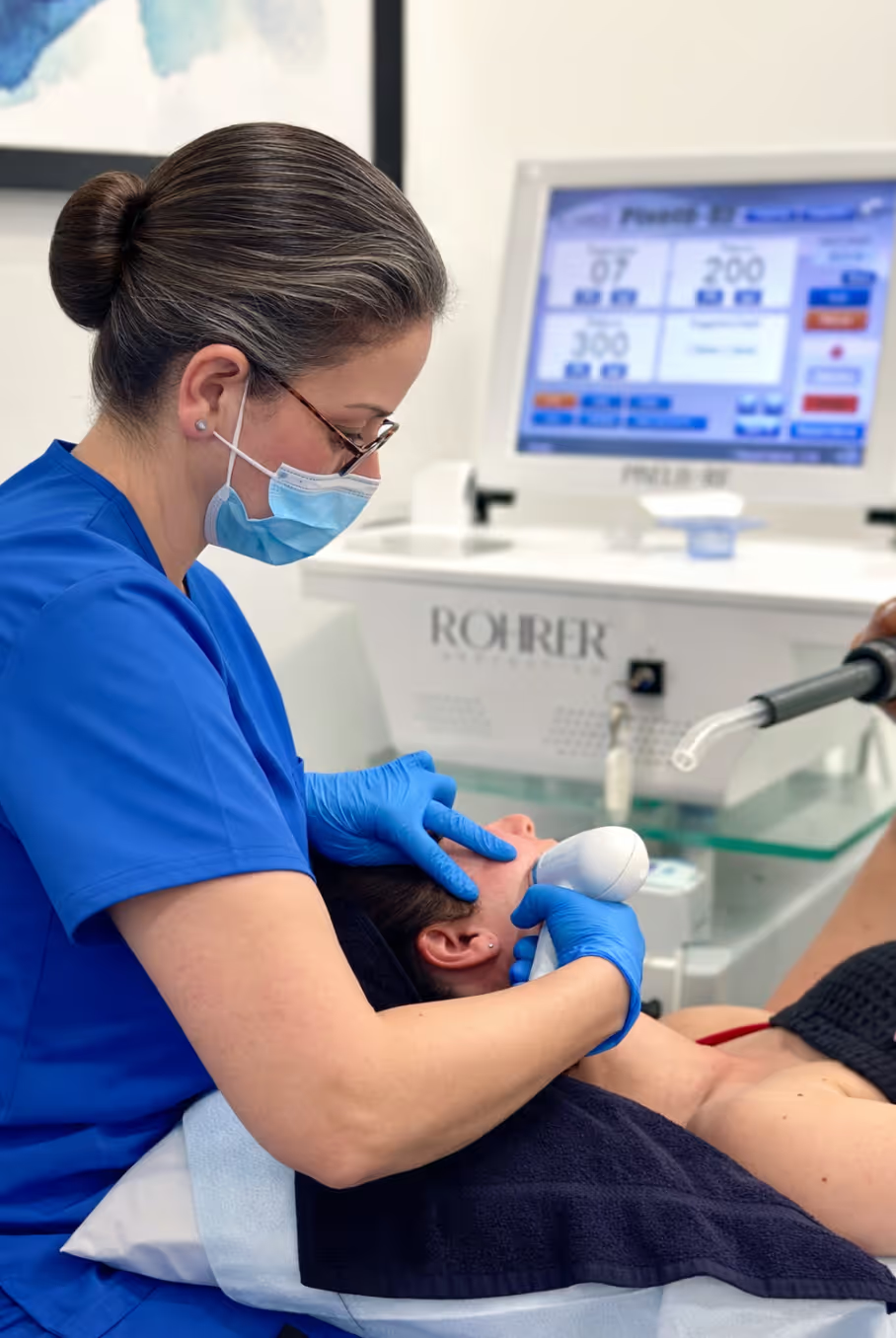
The key distinction between Ultherapy and other skin-tightening modalities is depth. Radiofrequency-based treatments like Pixel8-RF radiofrequency microneedling work primarily in the dermis and subdermal tissue. Ultherapy reaches deeper — which is part of what makes it relevant for the neck, where meaningful lift requires engaging tissue below the skin surface. The treatment also includes real-time ultrasound imaging, which allows the provider to visualize the tissue before delivering energy. This isn't a cosmetic detail — it meaningfully affects precision and safety, particularly in the neck where anatomy varies considerably from patient to patient.
What this means clinically is that Ultherapy doesn't resurface the skin, doesn't address texture or pigmentation, and won't correct significant volume loss. What it does — when performed correctly on an appropriate candidate — is stimulate structural tightening from the inside out, with results that continue developing over three to six months and can last a year or more depending on the patient's skin quality and age at treatment.
What Ultherapy Neck Before and After Results Actually Look Like
This is where honest expectations matter. Ultherapy neck before and after photos can be compelling — and they can also be selectively curated. The reality is that Ultherapy produces a spectrum of results depending on several factors: how much laxity exists to begin with, the patient's age, skin thickness, and underlying tissue quality, and critically, how the treatment is administered.
In patients in their early-to-mid 40s with mild to moderate neck laxity, good skin quality, and no significant volume depletion, Ultherapy can produce genuinely visible tightening — a cleaner jawline, reduced soft tissue droop under the chin, and improved skin tone along the neck. These are real results that hold up in photographs and in the mirror, not subtle changes that require imagination to appreciate.
In patients with more advanced laxity — significant platysmal banding, considerable submental fullness from fat (rather than loose skin), or skin that has already lost significant structural integrity — Ultherapy alone is unlikely to deliver the transformation they're looking for. This doesn't mean Ultherapy has nothing to offer these patients, but it does mean that expectations need to be calibrated honestly before treatment begins, and that a combination approach may produce better outcomes.
One consistent finding in long-term outcome data is that patients who start Ultherapy earlier — before laxity becomes pronounced — tend to see the most meaningful results and can often maintain them with periodic treatments rather than chasing more dramatic interventions later. The same principle we discuss in the context of preventive skincare for professionals applies here: the window for non-surgical intervention is easier to work within when you're not starting from a significant deficit.
How Many Ultherapy Treatments Are Needed for the Neck?
This is one of the most common questions patients ask — and the most variable to answer, because it depends heavily on what you're starting with.
For most patients in their 40s with mild to moderate neck laxity, a single Ultherapy session is the standard starting point. Results develop gradually over the following three to six months as new collagen matures, and a thorough assessment at the six-month mark helps determine whether a second session would provide additional benefit. Ultherapy is not a one-and-done permanent fix — collagen continues to age, and most patients who are happy with their results choose to maintain them with a follow-up treatment every one to two years.
Some patients with moderate laxity, particularly those who've noticed accelerated changes or who have inherently thinner, more sun-damaged skin, may benefit from two sessions spaced several months apart before reaching their optimal result. This isn't a sign that the treatment isn't working — it reflects the biology of collagen remodeling, which takes time and may require more than one stimulus to reach the desired endpoint in tissue that has already been depleted.
What we don't recommend is compressing treatments too closely together in hopes of accelerating results. The collagen synthesis process has its own timeline, and working against it by retreating too soon doesn't improve outcomes — it just adds cost and discomfort without the clinical benefit you're looking for.
Is Ultherapy Still Worth It in 2026?
Yes — for the right patient, with the right expectations, performed by an experienced team. What's changed isn't whether Ultherapy works; it's the context in which it's evaluated and the alternatives that now sit alongside it.
The modern question isn't "Ultherapy or nothing." It's "Ultherapy as a standalone, or as part of a more comprehensive approach?" At Tysons Elite Esthetics, our team — with more than 70 combined years in medical aesthetics — rarely thinks about the neck in isolation. Sagging neck skin in your 40s often coexists with jawline softening, submental volume changes, and the early appearance of platysmal bands. Addressing only one element of that picture while ignoring the others tends to produce results that feel incomplete.
For patients where the primary concern is skin laxity along the neck and under the chin, Ultherapy remains one of the most targeted and well-validated non-surgical tools available. For patients where laxity is part of a broader structural picture — volume loss, muscle laxity, textural changes — it works best in combination. That might mean pairing it with a biostimulator like Sculptra or Radiesse to address collagen depletion at a deeper level (a strategy we explore in our post on why serious skin tightening starts with the right device combination), or combining it with Botox for platysmal bands when the neck cords are also contributing to the aged appearance.
For patients specifically exploring neck and jawline concerns together, our post on non-surgical options for sagging jowls offers additional context on how we think about the lower face and neck as a unified treatment zone. And if you're weighing Ultherapy against radiofrequency microneedling specifically, we break down that comparison in detail in our piece on Morpheus8 vs. Ultherapy for facial tightening.
What to Expect From a Neck Lift Consultation in Northern Virginia
If you're exploring neck lift options in Northern Virginia and wondering whether Ultherapy belongs in your plan, the most useful thing we can offer is an honest consultation — not a sales conversation, but a clinical one.
That means looking carefully at the actual tissue involved: how much of what you're seeing is loose skin, how much is soft tissue, whether the platysma is contributing, and whether there are other structural factors that will limit what any single treatment can accomplish. It means being direct about what Ultherapy will and won't do for your specific anatomy, and giving you a realistic picture of the timeline for results and the maintenance commitment involved.
For some patients, Ultherapy is the right starting point and the primary tool. For others, it's one element of a plan that includes complementary treatments — and for a small subset, a surgical consultation is the most honest recommendation we can make. Our job isn't to sell you a treatment; it's to give you an accurate map of your options and the expertise to help you navigate it.
The neck is one of the most nuanced areas in non-surgical aesthetics. Done well, treatment here can be genuinely transformative. Done without the right assessment, it's a frustrating and expensive lesson in mismatched expectations. If you're ready to have that conversation, we're here for it — at whatever pace makes sense for you.
Start your transformation
Schedule your consultation with our knowledgeable and friendly team.