Why Patients Are Pairing GLP-1 Drugs With Biostimulators Now

GLP-1 medications have quietly reshaped the conversation inside med spas across Northern Virginia. Patients who started semaglutide or tirzepatide six, twelve, or eighteen months ago are now walking in with a specific concern: the body changed, but the face changed too — and not in the direction they wanted. Hollowed temples, softened jawlines, and skin that seems to have loosened faster than expected are now among the most common complaints we hear from patients who are otherwise thrilled with their weight loss results.
This pairing — GLP-1 drugs alongside collagen-stimulating biostimulators like Sculptra — isn't a trend born from aesthetics marketing. It's a clinical response to a real physiological sequence. Understanding why it's happening requires a quick look at how GLP-1 drugs actually work in the body, what they do to soft tissue, and why the face tends to reveal the story before anywhere else does.
How GLP-1 Drugs Work in the Body — and Why the Face Pays the Price
GLP-1 (glucagon-like peptide-1) receptor agonists work by mimicking a naturally occurring hormone that regulates appetite, slows gastric emptying, and signals satiety to the brain. The result is a meaningful reduction in caloric intake over time — often 15–25% of total body weight in clinical trial populations. What the clinical trials measure less carefully is the compositional breakdown of that weight loss: how much of what's lost is fat, how much is lean tissue, and where the body pulls from first.
Facial fat is metabolically active and responds quickly to systemic caloric deficit. Unlike the subcutaneous fat deposits most patients are targeting — the abdomen, flanks, upper arms — facial fat compartments don't regenerate easily once they've diminished. The result is what many clinicians have started calling "GLP-1 face" or Ozempic face: a hollowed, gaunt, or prematurely aged appearance that seems inconsistent with the patient's actual age and overall health.
Compounding the issue is the speed of the loss. Collagen and elastin — the structural proteins that keep skin anchored and resilient — adapt slowly. When volume disappears faster than the skin can accommodate, laxity follows. Jowls soften. The under-eye area deepens. The midface loses the gentle convexity that reads as youth. Patients who haven't experienced these changes yet often will, particularly those who are still actively losing weight.
What Biostimulators Actually Do — and Why Timing Matters
Biostimulators work differently than traditional hyaluronic acid fillers. Rather than adding immediate volume, they trigger the body's own collagen-producing response over several months. Sculptra (poly-L-lactic acid) stimulates fibroblasts to produce new collagen gradually, building structural support from within. Radiesse (calcium hydroxylapatite) does the same while also providing some immediate volumizing effect. Both are well-suited to patients experiencing the diffuse, global volume loss that GLP-1 medications tend to produce — because that kind of loss calls for structural rebuilding, not spot-filling.
Patients frequently ask about Sculptra results after 2 weeks, and it's worth being direct: at two weeks, you are not yet seeing the treatment's full effect. Sculptra works in phases. In the first few weeks, you may notice some initial fullness from the water in the product's suspension — but that resolves. The meaningful collagen stimulation builds over eight to twelve weeks per session, with full results typically visible three to six months after a series of treatments. This is intentional. It's also what makes Sculptra look natural rather than abrupt — the change unfolds at roughly the same pace as the aging it's correcting, which is why starting early rather than waiting tends to produce the most seamless outcomes.
For patients on GLP-1 medications, the timing question is a clinical one. If a patient is still actively losing weight — particularly in the face — adding volume prematurely can lead to results that look correct now but disproportionate in six months. The more productive approach is to assess rate of facial change, anticipate the likely endpoint, and build a treatment plan that accounts for where the face is going, not just where it is today. This is a nuanced conversation that benefits from a provider with significant experience in both biostimulators and full-face rejuvenation planning. Our team's combined 70+ years in medical aesthetics means we've seen enough treatment arcs to know when to act and when to wait.
The Real Cost Conversation: GLP-1 Costs and Aesthetic Budgeting
One of the more practical questions patients raise is how to think about GLP-1 costs alongside aesthetic maintenance. The medications themselves — particularly branded semaglutide and tirzepatide — can run anywhere from $900 to $1,400 or more per month depending on insurance coverage, compounding pharmacy access, and dosing. That's a meaningful monthly expenditure, and it raises a reasonable question: is there budget left for the aesthetic work the medication is necessitating?
The honest answer is that the aesthetic work doesn't have to happen all at once. Sculptra, in particular, is designed to be administered in a series — often two to four sessions spaced several weeks apart — which allows patients to distribute cost over time while still building toward a comprehensive result. A thoughtful provider will help you prioritize: which areas are changing fastest, which changes are most visible, and which interventions deliver the most structural return. In many cases, a conservative biostimulator protocol combined with strategic skin tightening and neuromodulator work accomplishes far more than a reactive approach of adding filler wherever volume appears to be missing.
It's also worth understanding that the cost of waiting has its own arithmetic. Collagen loss compounds. Skin that has been lax for two or three years is more difficult to treat than skin that was supported early. Patients who begin biostimulator work while the structural foundation is still intact tend to need less intervention over time — not more. If you've been thinking through the hidden costs of delaying treatment, that logic applies directly here.
How We Approach This at Tysons Elite Esthetics
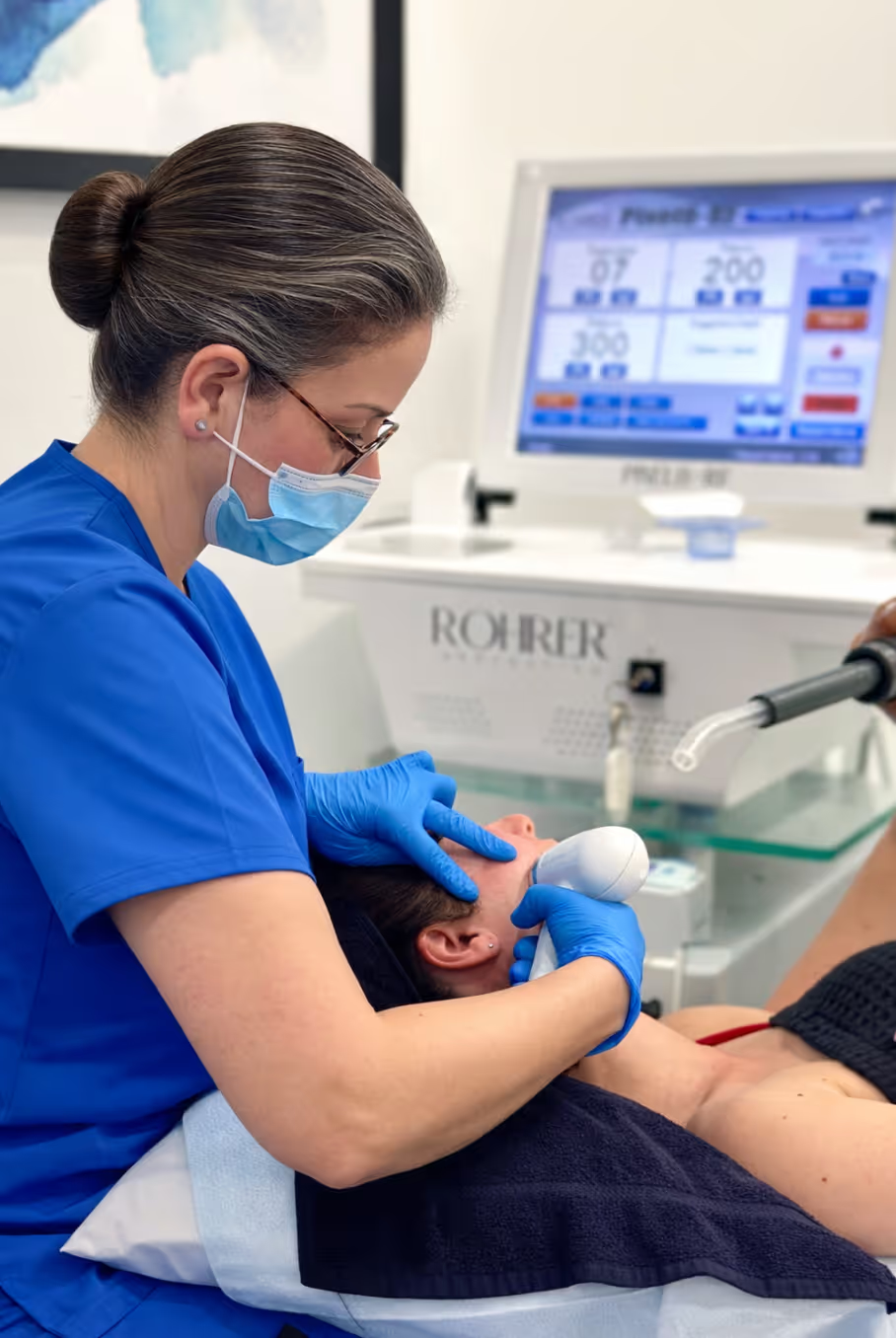
Every patient we see who is currently on or recently completed a GLP-1 protocol gets an individualized assessment — not a template. We look at the rate and pattern of facial change, the current state of skin quality and laxity, and the patient's longer-term goals. For some patients, the right first step is a biostimulator series. For others, it's a combination approach that might include Sculptra or Radiesse alongside RF microneedling to address both volume and skin texture simultaneously. For patients concerned about specific areas — like softening jowls or changes to the neck and lower face — we build a sequenced plan that addresses cause, not just symptom.
What we don't do is treat the face as a series of isolated problems to be filled one at a time. The patients who are navigating GLP-1-related facial changes deserve a provider who thinks about the whole picture — the structural changes happening beneath the surface, the rate at which those changes are progressing, and the most efficient path to a result that looks like them, only rested and supported. That's the conversation we want to have with you.
If you're currently on a GLP-1 medication and noticing changes in your face — or if you want to get ahead of those changes before they become pronounced — we'd encourage you to schedule a consultation. The earlier you understand your options, the more choices you have.
Start your transformation
Schedule your consultation with our knowledgeable and friendly team.