Hyperpigmentation Treatment in Tysons Corner: What Professionals Should Know About Laser, Chemical Peels, and Topicals for Melasma and Sun Spots in 2025

Spring light is unforgiving. As the days lengthen and sun exposure increases across Northern Virginia, many professionals in their 40s and 50s notice something they would prefer not to: patches of discoloration that concealer no longer covers convincingly. Melasma. Sun spots. Post-inflammatory hyperpigmentation. The terminology varies. The frustration does not.
Hyperpigmentation is among the most common skin concerns treated at Tysons Elite Esthetics, and among the most frequently undertreated elsewhere. Over-the-counter brightening serums may offer modest maintenance, but they rarely resolve established pigmentation. What works is a layered clinical approach, matched precisely to the type and depth of pigment involved.
This guide covers what discerning professionals in Tysons Corner, McLean, and the broader Northern Virginia corridor should understand before pursuing treatment.
Not All Pigmentation Is the Same — and Treatment Depends on the Distinction
The first step in effective hyperpigmentation treatment is accurate classification. Treating melasma with the same protocol used for solar lentigines, for example, can worsen rather than improve the condition.
- Melasma is hormonally driven and typically appears as symmetrical patches on the cheeks, upper lip, and forehead. It sits in the dermis as well as the epidermis, making it more resistant to treatment and prone to recurrence. Aggressive laser use without proper preparation can trigger a post-inflammatory flare.
- Solar lentigines (sun spots) are caused by cumulative UV exposure and tend to appear on the face, hands, and chest. They are generally epidermal and respond well to targeted energy-based treatments and chemical peels.
- Post-inflammatory hyperpigmentation (PIH) follows skin trauma, including acne, and varies widely in depth and persistence. Fitzpatrick skin type plays a significant role in both susceptibility and treatment planning.
A thorough consultation is essential before any intervention. At Tysons Elite Esthetics, our clinical team assesses pigmentation type, skin tone, and history before recommending a protocol.
Laser Treatments: Precision for Defined Pigment
For solar lentigines and certain types of epidermal hyperpigmentation, laser-based treatments can produce meaningful clearance with appropriate patient selection.
- IPL Photofacial (Intense Pulsed Light) uses broad-spectrum light to target melanin in sun-damaged skin. It works well for diffuse redness and sun spots on lighter skin tones. Many clients experience progressive improvement over a series of sessions. Learn more about our IPL Photofacial treatments.
- CO2 Laser Resurfacing addresses deeper pigmentation along with texture, fine lines, and overall tone. It involves a recovery period but can produce more comprehensive resurfacing results for appropriate candidates. Our CO2 Laser Resurfacing is performed under the medical oversight of Dr. Singh, with surgical-level attention to depth and safety.
- Ablative Resurfacing may be considered for clients with more advanced photodamage. See our Ablative Skin Resurfacing Laser page for more detail.
For melasma specifically, laser treatments require caution. Heat-based devices can stimulate melanocytes and worsen pigmentation if used without proper pre-treatment conditioning. This is where medical oversight is not optional — it is essential.
Chemical Peels: Controlled Exfoliation With Clinical Depth
Chemical peels remain one of the most clinically effective tools for hyperpigmentation when formulated appropriately and applied at the correct depth. They work by accelerating cell turnover and, in the case of formulations designed for pigmentation, interrupting melanin synthesis at the cellular level.
- Vi Peel Precision Plus is specifically formulated for melasma and stubborn hyperpigmentation. It combines trichloroacetic acid, retinoic acid, salicylic acid, phenol, and vitamin C in a blend designed to address both epidermal and upper dermal pigmentation. It is well-tolerated across a range of skin tones. Explore our Vi Peel Precision Plus service for details.
- Peels also complement laser treatments when used as part of a sequenced protocol, particularly for clients whose pigmentation is layered or hormonally driven.
- Spring is a suitable window for peel treatments, provided clients commit to rigorous sun protection during and after the healing process. Post-peel skin is particularly vulnerable to UV-triggered rebound pigmentation.
Those weighing peels against other texture and tone treatments may also find our comparison of microneedling versus chemical peels useful reading before their consultation.
Topical Protocols: The Foundation That Determines Everything Else
In-office treatments for hyperpigmentation do not work in isolation. Their efficacy depends heavily on what is applied to the skin before and after each session. This is one area where the difference between a thoughtful clinical practice and a high-volume med spa becomes apparent.
- Tyrosinase inhibitors such as hydroquinone, kojic acid, tranexamic acid, and azelaic acid suppress melanin production and are often incorporated into pre-treatment conditioning protocols.
- Retinoids accelerate cell turnover and enhance penetration of brightening agents. They also improve overall skin quality over time.
- Broad-spectrum SPF 50+ is non-negotiable. Melasma in particular is exacerbated by UV exposure, visible light, and heat. Without consistent photoprotection, in-office results will be transient.
- Medical-grade topicals differ meaningfully from their retail counterparts in active concentration, delivery systems, and clinical evidence. Our team can guide appropriate home-care selection as part of a comprehensive treatment plan.
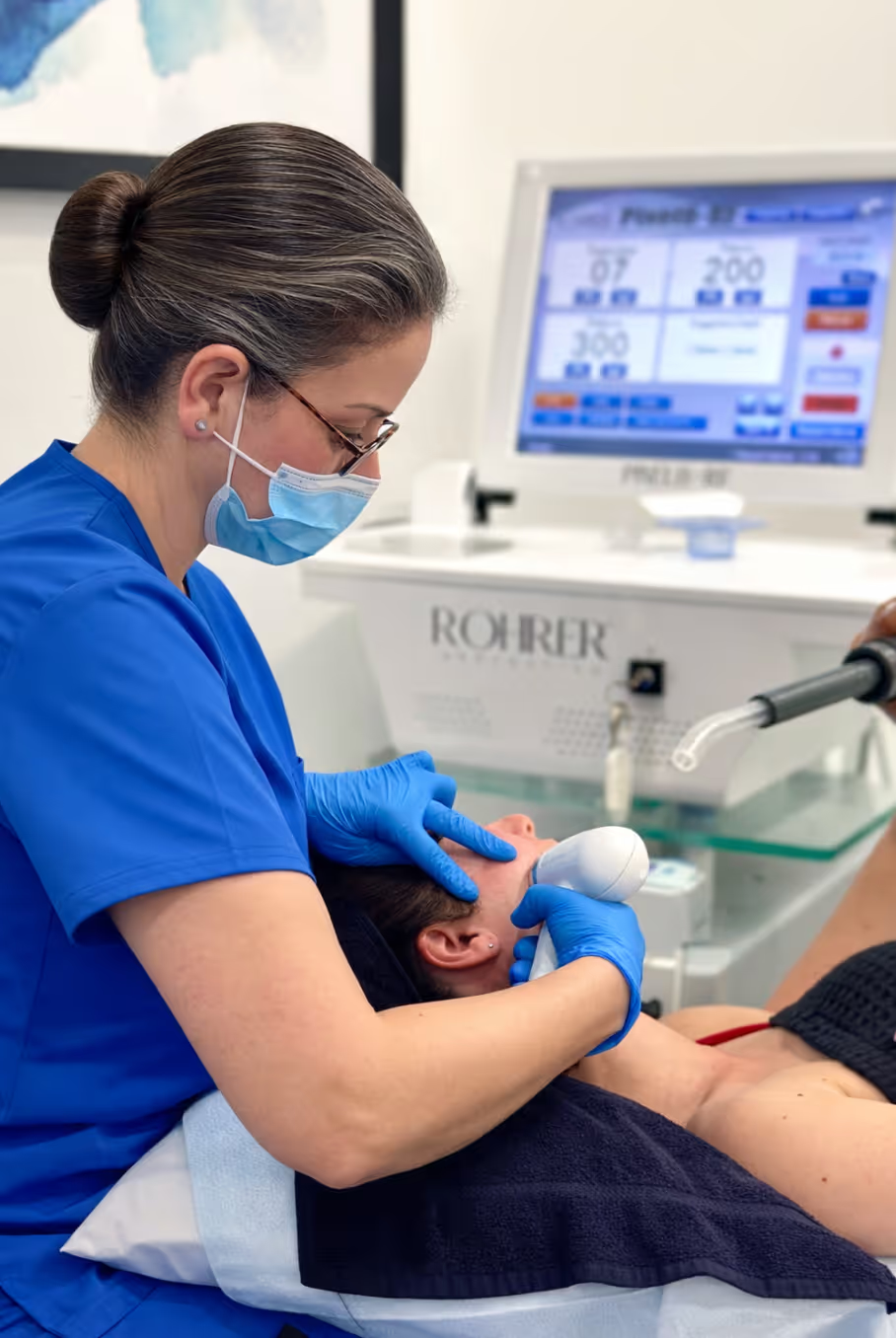
Clients managing sun damage alongside early signs of skin laxity may also wish to consider whether energy-based treatments such as Pixel8-RF Radiofrequency Microneedling address both concerns in a single protocol.
The Tysons Elite Approach to Hyperpigmentation
Effective pigmentation treatment is not a single appointment. It is a protocol, and that protocol must be built around an accurate diagnosis, the client's skin tone and history, and a realistic timeline.
At Tysons Elite Esthetics, every treatment plan is developed under the medical direction of Dr. Navin Singh, triple board-certified plastic surgeon and Johns Hopkins-trained physician. His surgical-level understanding of skin anatomy informs how our clinical team approaches even non-invasive interventions. Our Medical Estheticians hold Virginia's highest level of licensure, with advanced training in chemical resurfacing and medical-grade laser protocols.
Founder Luise Estelle built this practice around one principle: results that look like better skin, not skin that has been treated. That distinction matters particularly with pigmentation, where overcorrection is as visible as the original concern.
Tysons Elite Esthetics is located at 7777 Leesburg Pike, Falls Church, serving clients from Tysons Corner, McLean, Great Falls, Vienna, and the broader Northern Virginia and DC Metro area.
If persistent discoloration has reached the point where it affects how you present professionally, a private consultation is the appropriate next step. Contact our team to schedule a personalized assessment and protocol review.
Start your transformation
Schedule your consultation with our knowledgeable and friendly team.