Microneedling Before Summer Ends: Is August Too Late?

August in Northern Virginia is not the first month that comes to mind when most people think about microneedling. The humidity is thick, the sun is still relentless, and your social calendar probably has no shortage of outdoor events. So when a client asks whether August is too late to fit in a microneedling session before summer ends, the honest answer is: it depends — and the details matter more than the month.
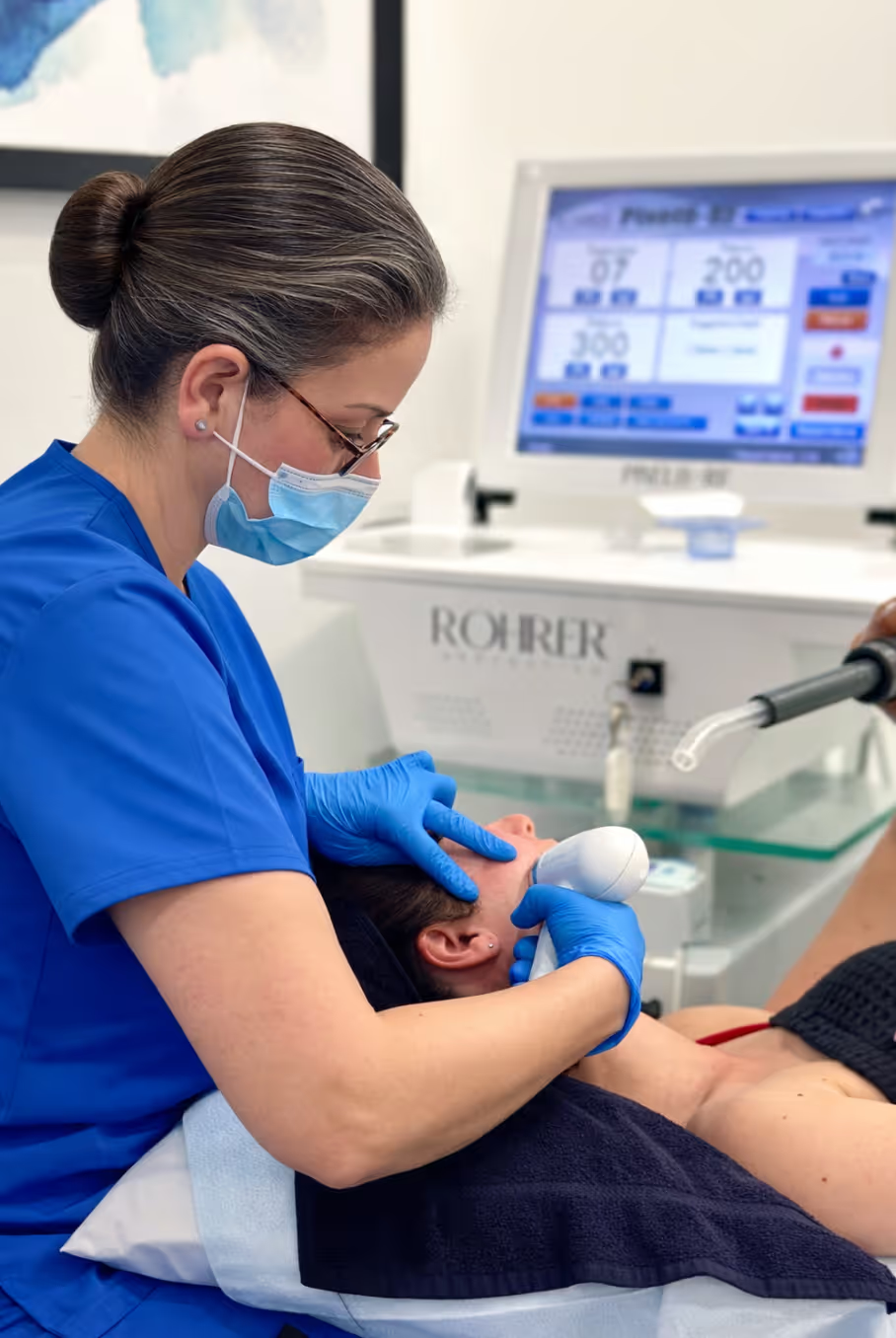
The first thing worth understanding is what microneedling actually does to your skin in the short term. The treatment creates thousands of controlled micro-injuries in the skin's surface, which triggers your body's natural wound-healing cascade and stimulates collagen production over time. That process is genuinely restorative. But in the days immediately following treatment, your skin will be in recovery mode — and how you manage that recovery, especially in summer heat, determines how smoothly things go. Traditional microneedling with a pen device typically involves 24 to 72 hours of noticeable redness and mild sensitivity, with most clients looking socially presentable by day three or four. Full skin barrier restoration generally takes about seven to ten days, though the deeper collagen remodeling continues for weeks and months beyond that. If you choose Pixel8-RF radiofrequency microneedling, which delivers RF energy simultaneously with the microneedles, microneedling downtime is somewhat longer — typically four to seven days of visible recovery, with skin that may appear bronzed or slightly crusted as it sheds and renews. The reward for that extended microneedling healing time is meaningfully more collagen stimulation and skin tightening than standard microneedling delivers, which is why it's the preferred option for clients with more pronounced laxity or textural concerns.
So why does August specifically raise questions about timing? Two reasons — and they're worth taking seriously. First, heat and sweat in the post-treatment window can introduce bacteria into freshly treated skin. In the 24 to 48 hours after microneedling, your skin's natural barrier is temporarily compromised, which makes it more vulnerable to irritation and infection if you're exposing yourself to heavy perspiration, pool water, or direct sun. Second, UV exposure post-treatment is a real risk. Fresh microneedling channels close within hours, but your skin remains more photosensitive than usual for seven to ten days afterward — meaning that an unprotected afternoon in the August sun could lead to post-inflammatory hyperpigmentation, the very problem many clients are trying to correct. Neither of these concerns makes August an automatic disqualifier. They make August a month that requires thoughtful scheduling and a strict commitment to aftercare.
Here is how to make August microneedling work. Book your appointment at the beginning of the week, giving yourself the weekend to recover out of the public eye. Plan your social calendar so that any outdoor events, beach days, or intense workouts fall at least seven to ten days after treatment — ideally longer if you're doing RF microneedling. Apply broad-spectrum SPF 30 or higher religiously starting the moment your provider clears you to do so, typically 24 to 48 hours post-treatment, and avoid direct midday sun during your microneedling recovery time period. Skip the gym for at least 48 hours, and stay out of pools, hot tubs, and open water until your skin has fully closed. These are not extraordinary precautions — they're the same instructions that apply year-round, simply with more intention in the summer months.
There's also a compelling strategic reason to go ahead with microneedling in August rather than waiting. The skin rejuvenation you're hoping to see — improved texture, refined pores, reduced fine lines, more even tone — does not happen the week after your appointment. Collagen remodeling is a slow process. A single session begins showing meaningful results around the four to six week mark, with the most visible improvement often appearing at the three-month point and continuing to develop for up to six months. Clients who complete a series of two to three sessions typically see far more significant results than those who do a single treatment. If you start in August, you are positioning yourself for noticeably improved skin by October or November — just in time for the fall social season, holiday events, and the kind of confident skin that makes getting dressed feel effortless. Clients who wait until September or October to start are often still mid-series when the holidays arrive. That's the real cost of hesitation.
If you've had microneedling before and responded well to it, August is entirely reasonable with the right scheduling. If this would be your first session, a brief consultation is worth your time before committing — particularly if you have active acne, a history of melasma, or naturally darker skin tones that require additional care around post-inflammatory hyperpigmentation risk. Your provider should assess your skin's current condition, ask about your summer activity level, and help you build a realistic post-treatment plan. At Tysons Elite Esthetics, that conversation happens before treatment, not after. Our team's 70+ combined years in medical aesthetics means we've navigated this question across every skin type and every season — and we'll tell you honestly whether your skin and your August calendar are aligned before we proceed.
One additional consideration for clients who want to go further than standard microneedling: pairing the treatment with exosome therapy can meaningfully accelerate healing and deepen regenerative results. Tysons Elite Esthetics is the only med spa in Northern Virginia authorized to use Human Progenitor-Derived Exosomes — applied topically immediately following microneedling, they flood the open channels and support cellular repair at a level that PRP simply cannot match. For clients managing summer skin stress — sun exposure, humidity, barrier disruption — the addition of exosomes to a microneedling session makes the August timing considerably more defensible. The enhanced healing support means shorter microneedling healing time and a more resilient skin response, which is exactly what you want when external conditions are less than ideal. You can also read more about how to choose between these add-ons in our detailed comparison of microneedling with PRP versus microneedling with exosomes.
If you're wondering how August microneedling fits into the bigger picture of fall skin preparation, it does — cleanly and strategically. The fall skin reset many Northern Virginia clients pursue in September and October often produces better outcomes when the skin has already been primed with a summer microneedling session. As the season shifts and UV intensity drops, you'll be layering treatments onto skin that has already begun its collagen renewal cycle, rather than starting from scratch. For those managing summer damage specifically — sun-induced texture changes, uneven tone, dullness — you might also find it useful to read about summer skin recovery treatments that pair well with microneedling as part of a more comprehensive approach. And if you're curious about whether RF microneedling might be the better option for your specific concerns, our post on Morpheus8 versus traditional microneedling for sagging skin after 50 walks through the differences in a way that applies broadly regardless of age.
August is not too late. But it is a month that rewards clients who plan carefully, follow aftercare without shortcuts, and think about their treatment not as a one-time event but as the beginning of a skin investment they'll see the returns on well into fall.
Start your transformation
Schedule your consultation with our knowledgeable and friendly team.