NAD+ IV Therapy Meets Aesthetic Medicine: Should Tysons Patients Care?

If you've been researching anti aging iv near me, you've likely noticed that NAD+ IV therapy has become one of the more talked-about wellness treatments of the past few years. The claims are ambitious — improved cellular energy, enhanced cognitive clarity, faster recovery, and skin that looks more vital and rested. Some patients arrive at consultations asking whether they should be doing it. Others have already started and want to know how it fits with what they're doing in the aesthetic chair. Both are fair questions, and they deserve a thoughtful answer rather than a reflexive yes or no.
NAD+ stands for nicotinamide adenine dinucleotide, a coenzyme found in every cell of the body. It plays a central role in mitochondrial function — the process by which your cells convert nutrients into usable energy. As we age, NAD+ levels decline, and that decline has been linked in research to reduced cellular repair capacity, increased oxidative stress, and diminished metabolic efficiency. Intravenous delivery bypasses the digestive system and delivers NAD+ directly into the bloodstream, which proponents argue produces a more meaningful systemic effect than oral supplements. The research is still maturing, but the mechanistic rationale has enough scientific grounding that serious longevity medicine practitioners take it seriously. It is not simply a wellness trend without substance.
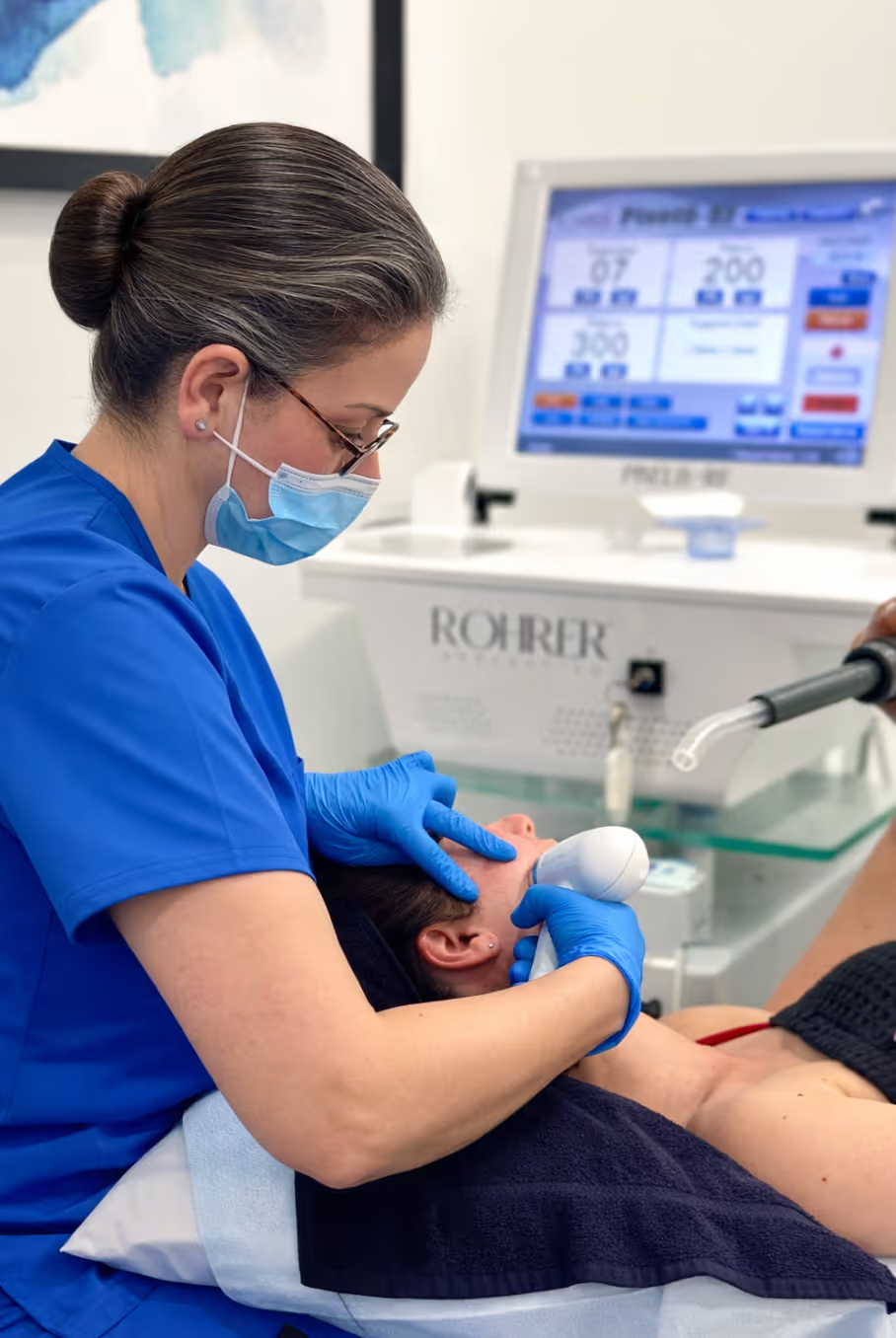
What does this have to do with aesthetics? More than you might initially expect — but not in the way that some wellness marketing would have you believe. NAD+ IV therapy does not replace what devices, injectables, and regenerative treatments accomplish at the tissue level. A well-placed filler restores structural volume. Pixel8-RF radiofrequency microneedling — available at Tysons Elite Esthetics — triggers real collagen remodeling at depths that no IV drip can reach. Pixel8-RF works on the architectural integrity of the dermis itself. NAD+ works upstream, at the cellular energy level. These are not competing interventions. They operate on different biological layers.
The more accurate framing is this: if NAD+ IV therapy does what its proponents suggest — improving mitochondrial efficiency and supporting cellular repair — then it may create a more receptive physiological environment for aesthetic treatments. Skin that is better rested at the cellular level, with improved antioxidant capacity and stronger DNA repair mechanisms, is skin that may respond more robustly to regenerative procedures. Patients who are already investing in treatments like exosome-enhanced microneedling or STEMEX exosome therapy are already thinking in terms of cellular communication and tissue regeneration. NAD+ fits conceptually into that same philosophy — not as a cosmetic treatment, but as a systemic support layer.
That said, there are practical considerations worth naming. NAD+ IV infusions are time-intensive — sessions typically run two to four hours — and the cost per infusion is meaningful. The frequency required to maintain elevated NAD+ levels is still debated among practitioners. Side effects during infusion, including nausea, flushing, and chest tightness, are common enough that they warrant proper clinical supervision. This is not a treatment to pursue at a spa that is primarily in the business of selling add-on services. If you are going to pursue it, do so through a provider with genuine clinical oversight and an understanding of how it interacts with your broader health picture. The question of whether NAD+ IV therapy is right for you individually — your stress load, sleep quality, existing health conditions, and the treatments you are already doing — is one that deserves a real conversation, not a booking link.
For patients at Tysons Elite Esthetics who are focused on comprehensive, long-term skin health, the more relevant question is often not whether to add NAD+ IV therapy, but whether the foundational aesthetic work is in place first. If you are experiencing the structural changes that accelerate after 40 — volume loss, skin laxity, declining collagen density — those issues respond most directly to targeted in-office treatments and a protocol built around your specific anatomy. Once that foundation is solid, systemic support therapies like NAD+ can play a meaningful complementary role.
There's also something worth acknowledging about the kind of patient who tends to ask about NAD+ IV therapy in the context of a facial tysons corner search. It is usually someone who is already thinking holistically — who understands that how they sleep, how they manage stress, what they put into their body, and what they do in the treatment room all contribute to the same outcome. That instinct is correct. Chronic stress accelerates the biological aging process in ways that show up visibly on the skin, and no amount of in-office treatment fully compensates for a body that is running on empty. If NAD+ therapy helps you sleep more deeply, recover more efficiently, and feel more like yourself, those effects will express themselves in how your skin looks and how well it responds to treatment. That is not trivial.
The honest answer to whether Tysons patients should care about NAD+ IV therapy is: it depends on where you are in your health and aesthetic journey, and it depends on what you are expecting it to do. As a standalone skin treatment, it is not the right tool. As one component of a thoughtfully managed longevity approach — one that includes the right energy devices, regenerative treatments, and a clinical team who knows your skin over time — it has a rational place. If you are curious whether it belongs in your protocol, that conversation starts with understanding your current skin health and what your aesthetic goals actually require. That is exactly the kind of conversation a virginia anti aging clinic with a team of this depth is built to have.
Start your transformation
Schedule your consultation with our knowledgeable and friendly team.