Polynucleotides for Skin Texture: Are Results Worth The Wait?

A client asked us recently, mid-consultation, "Is PDRN good for skin, or is this just the next trend everyone's going to forget about in a year?" It's a fair question, and one we don't answer with a sales pitch. Polynucleotides — the purified DNA fragments derived from salmon or trout sperm, known clinically as PDRN (polydeoxyribonucleotide) — aren't new. They've been used in wound healing and tissue repair in clinical medicine for decades before aesthetics caught up. What's changed is the precision with which we can now deliver them into the dermis to address texture, tone, and that specific kind of tired, crepey quality that filler was never designed to fix.
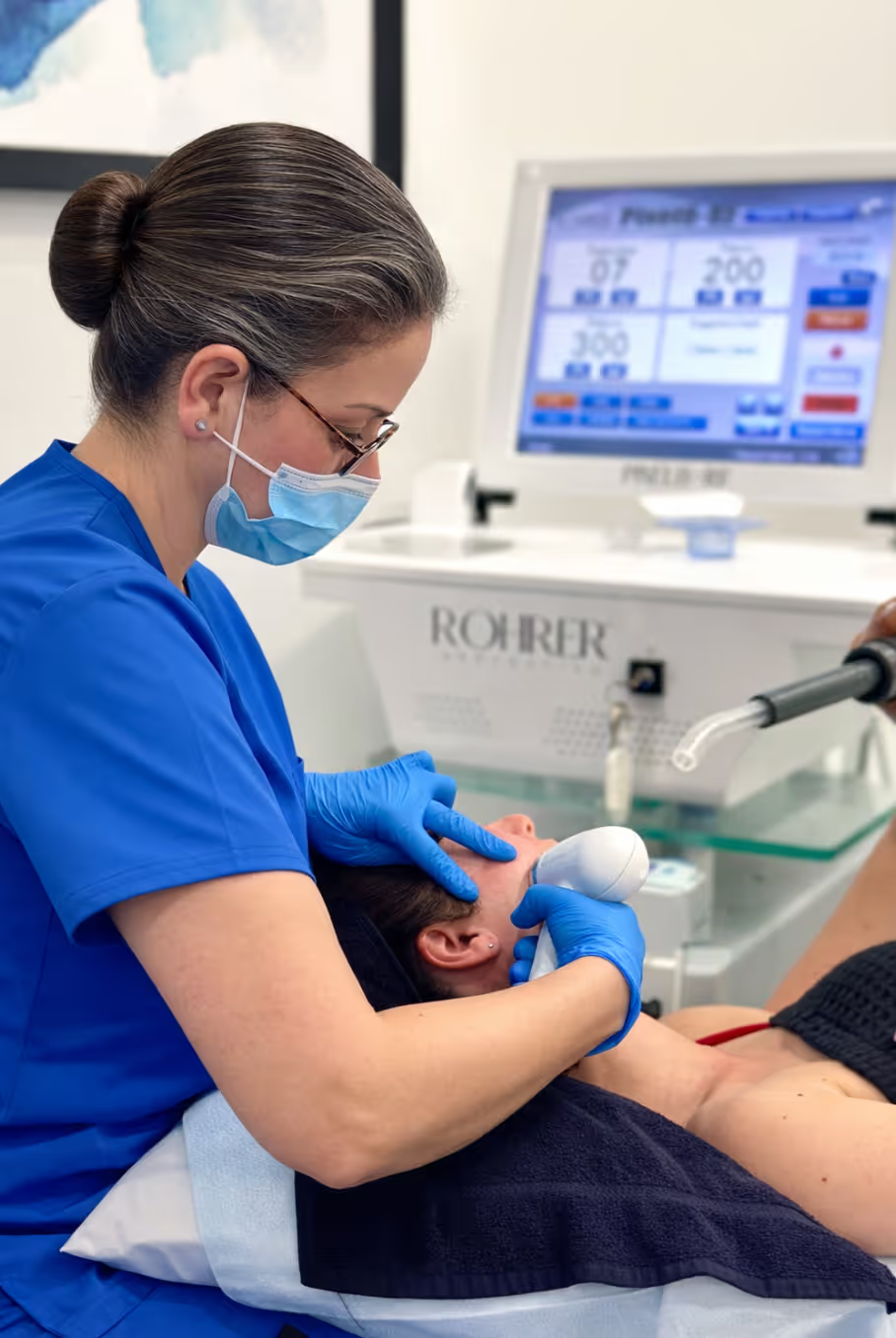
Here's what we tell clients honestly: polynucleotides don't work like filler, and they don't work like Botox. There's no "day three and you'll see it" moment. PDRN works by stimulating fibroblast activity and encouraging the skin's own repair mechanisms — improving hydration, elasticity, and microcirculation gradually, over a series of sessions, typically spaced two to four weeks apart. Most of our Tysons and McLean clients begin noticing a change in texture — that subtle smoothing, that "my skin looks rested" quality — around the third treatment, with fuller results settling in over two to three months. If you're comparing this to the overnight gratification of a neuromodulator, the timeline requires real recalibration. If you're comparing it to the patience required for Sculptra's biostimulatory buildup, it will feel familiar.
We've written before about how polynucleotides compare to Profhilo for skin remodeling after 45, and how they stack up against PRP and Sculptra for longer-term rebuilding. The short version: PDRN occupies a distinct lane. It's not trying to add volume or lift. It's working at a cellular level to restore what sun exposure, stress, and time have quietly eroded from the skin's own repair capacity — which is precisely why clients searching "polynucleotides injections near me" are often the ones who've already tried topical retinoids and peels and are ready for something that works from underneath.
What we won't do is promise this treatment to everyone who walks through our doors. Polynucleotides are best suited for clients dealing with fine texture irregularities, under-eye dullness and crepiness (we cover this specifically in our piece on PDRN for dark circles), and overall skin quality concerns rather than structural volume loss. If what you're really after is lift or contour, we'll tell you that directly in your consultation — this is where our team's combined 70+ years in medical aesthetics matters. We're not interested in selling you a series of sessions that won't deliver what you actually want to see in the mirror.
For clients searching "PDRN near me" across McLean, Vienna, and Falls Church, we'd gently push back on the idea that faster is always better. The reason polynucleotide results hold up well over time — often six months or longer between maintenance sessions — is precisely because the treatment is building something real within the tissue rather than filling a temporary gap. We often pair this protocol thoughtfully alongside our exosome therapies for clients looking to maximize regenerative results, and we'll walk you through exactly how that sequencing works and why, based on your skin's specific needs, during your consultation.
If you're weighing whether polynucleotides deserve a place in your skin's maintenance plan, we'd rather have that conversation in person — where we can actually look at your skin, talk through your timeline, and tell you honestly whether this is the right investment or whether something else in our offerings would serve you better first.
Start your transformation
Schedule your consultation with our knowledgeable and friendly team.