When Did Your Face Start Looking Tired Instead of Aged?

There's a particular moment many clients describe in consultation. They weren't thinking about wrinkles. They weren't worried about lines. They looked in the mirror and realized they looked tired — not older in the way they expected, but worn. Hollowed. Like something had quietly rearranged itself while they weren't paying attention. That shift — from aging to appearing perpetually fatigued — has a clinical explanation, and it responds to treatment differently than most people assume.
The tired look almost never comes from one thing. It's a convergence of changes happening simultaneously across different tissue layers. Volume depletes from the midface, causing the cheeks to flatten and shadows to deepen beneath the eyes. Skin loses structural support, so it begins to descend along the jawline and soften the definition between face and neck. The under-eye area grows hollow, not because of bags or swelling, but because the fat compartments that once filled that space have gradually diminished. Individually, none of these changes is dramatic. Together, they produce a face that reads as tired even after eight hours of sleep. If you've found yourself explaining to colleagues that you're fine, just a little run-down — your face may be sending a message your energy level isn't.
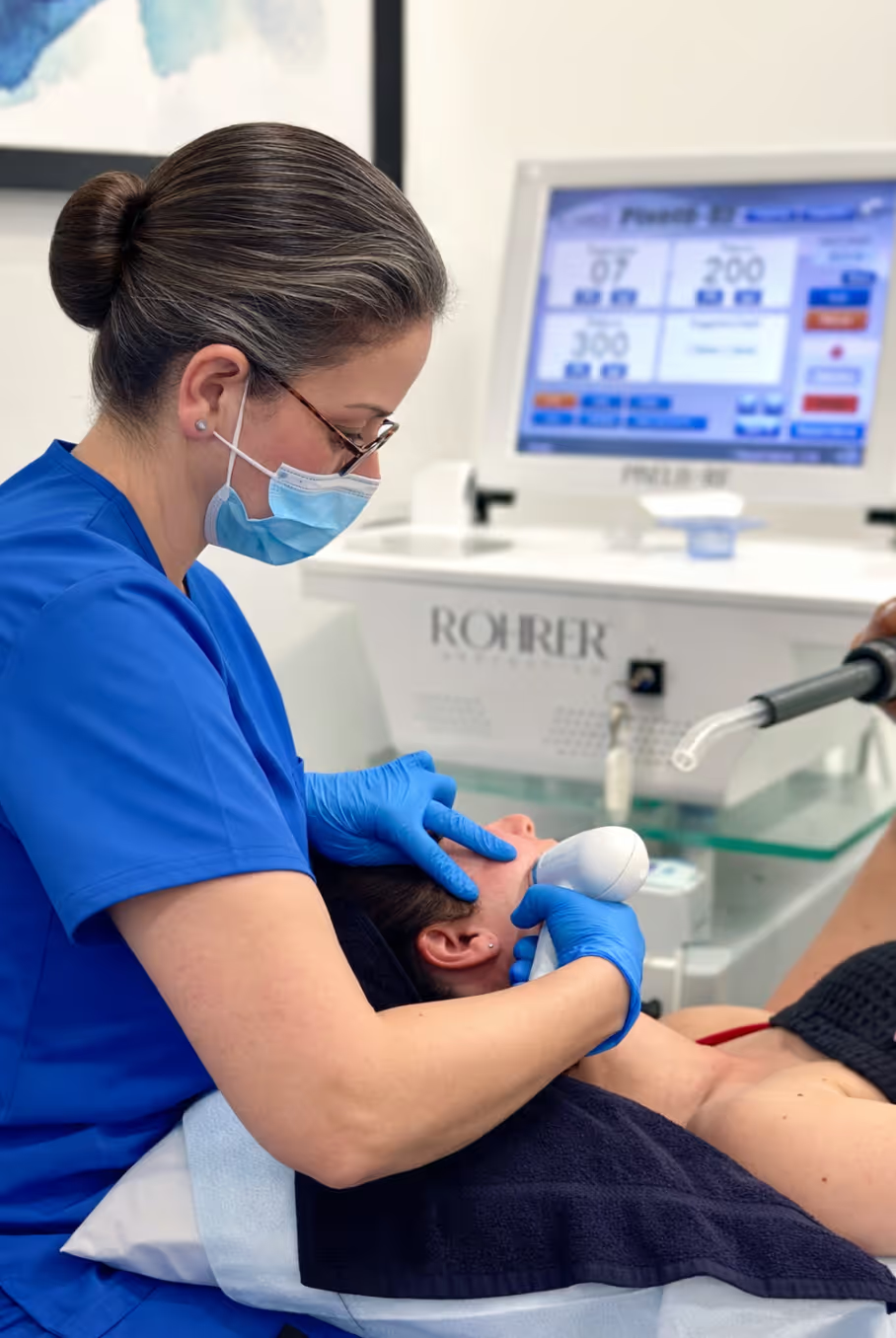
What makes this particularly worth addressing is that the tired look tends to accelerate once it starts. The same loss of structural collagen that hollows the midface also reduces skin resilience, which means the face loses its ability to recover from fatigue, stress, or even a difficult week the way it once did. At Tysons Elite Esthetics, our team — with more than 70 combined years in medical aesthetics — approaches this not as a cosmetic correction but as a structural conversation. We're looking at where volume has gone, where skin has lost its scaffolding, and where regenerative intervention will deliver the most meaningful change. That often means pairing a biostimulator like Sculptra with a skin-tightening treatment such as Pixel8-RF radiofrequency microneedling, rather than reaching for filler as a default. Filler placed into a face that has lost structural integrity doesn't look rested — it looks filled. The distinction matters enormously, and it's one our team navigates with care for every client.
The under-eye area is frequently where the tired look is most visible and most misunderstood. Dark circles, hollowing, and fine crepey skin beneath the eye can look identical from the outside but have entirely different causes — and require entirely different approaches. Polynucleotides, for example, work through tissue regeneration and have shown meaningful improvement in periorbital skin quality that tear trough filler alone cannot address. We've explored this distinction in depth in our piece on polynucleotides for dark circles versus tear trough filler, which is worth reading if the under-eye area is part of what's aging your appearance. For clients experiencing more generalized laxity and hollowing around the eye zone, we often look at the broader picture described in our guide to aging around the eyes and when filler stops being enough.
One area that accelerates the tired look more than most clients realize is the temples. As the upper face loses volume — which begins earlier than most people expect, often in the late thirties — the temples hollow, brows descend slightly, and the entire upper face takes on a gaunt, strained quality. Temple filler is among the least discussed but most transformative corrections available, particularly for clients who feel their brow position or eye area has changed without being able to name exactly why. Our breakdown of temple filler for hollow temples explains the anatomy and the approach in detail.
For clients experiencing this pattern of fatigue alongside weight changes — particularly those using GLP-1 medications for metabolic health — the acceleration of facial volume loss can be significant and rapid. The skin changes associated with this category of treatment require specific regenerative support, and we've written about this directly in our piece on Ozempic face and volume loss from GLP-1 treatments. The answer in these cases is rarely a single filler appointment — it's a structured plan that rebuilds collagen, restores architecture, and supports the skin's ability to adapt to a changed body.
What distinguishes a genuinely restorative outcome from one that simply looks "done" is sequencing. Which problem is addressed first, with which technology, and in what combination with other treatments — these decisions compound over time. Our team takes that sequencing seriously. If you're at the point where skincare isn't answering the question your mirror is asking, a conversation with someone who has spent decades making these decisions on behalf of discerning clients is the most useful next step you can take. We see patients from across McLean, Vienna, Falls Church, and greater Fairfax County, and we approach every consultation as the beginning of a long-term relationship — not a single appointment.
Start your transformation
Schedule your consultation with our knowledgeable and friendly team.