Filler vs. Biostimulators: Which Rebuilds Aging Skin Better?
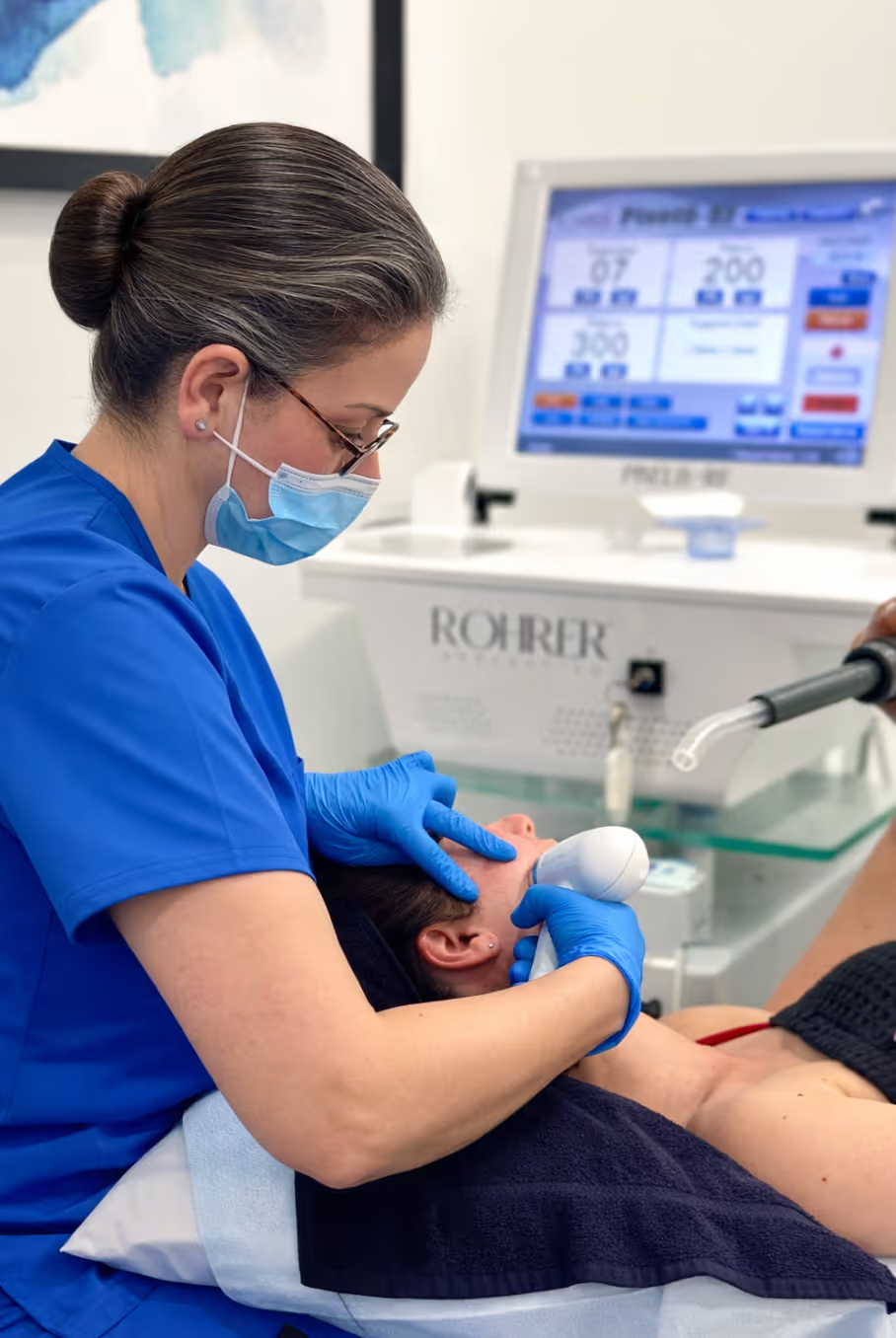
Every week, someone sits in our consultation room and asks us the same question in a dozen different ways: should I get filler, or should I do Sculptra? It's a fair question, and it's one that deserves more than a quick answer, because the two approaches solve different problems entirely.
Dermal fillers made from hyaluronic acid work immediately. They add volume exactly where it's placed, smoothing a fold, restoring a cheek contour, or softening a hollow under the eyes the moment the syringe is empty. What you see in the mirror after your appointment is very close to what you'll see for the months that follow. This is why hyaluronic acid remains the right choice for precise, structural corrections — the kind of targeted volume restoration we discuss in Sagging Skin or True Volume Loss? Knowing the Difference Changes Everything. If you're deciding between brands, our team also walks through the practical differences in Juvederm Versus Restylane: Picking the Right Filler in Tysons.
Biostimulators — Sculptra, Radiesse, and similar injectables — work on an entirely different timeline. Rather than adding volume directly, they stimulate your own dermis to produce new collagen over weeks and months. The results build gradually, and they don't just fill a line — they change the underlying quality and structural integrity of the skin itself. This is the distinction our team spends the most time explaining, because it's counterintuitive: the treatment that shows the least immediate change is often the one that produces the most meaningful long-term rebuilding. We go deeper into the science of why this matters, and why waiting too long changes the outcome, in Collagen Collapse Starts Earlier Than Tysons Patients Realize.
The honest answer to "which is better" is that it depends on what your skin has lost. If you're dealing with a specific area of deflation — hollow temples, thinning lips, a tear trough that shadows under office lighting — hyaluronic acid filler will give you the precise, immediate correction you're looking for. But if what you're really noticing is a broader loss of structure — skin that feels thinner, less resilient, slower to bounce back after a long week — that's a collagen problem, not a volume problem, and biostimulators are built to address exactly that. Our team explored this comparison directly in Collagen Stimulators vs. Dermal Fillers: How Sculptra and Radiesse Work Differently Than Hyaluronic Acid Fillers for Tysons Professionals Over 40, and it's a conversation we're happy to continue in person, because your skin's answer will be specific to you.
For many of our Tysons and McLean clients in their 40s, 50s, and beyond, the most effective plan isn't filler or biostimulators — it's both, sequenced correctly. Biostimulators laid down first can rebuild the structural foundation, and filler placed afterward has better tissue to sit on and tends to look more natural for longer. We've written specifically about how Sculptra and Radiesse can be layered together for patients who want both the immediate refinement and the long-term rebuilding in Sculptra and Radiesse Together: Does Combining Them Work?, and how to think about sequencing filler alongside our exosome protocols in Exosomes or Filler First? Sequencing Treatments for Lasting Results.
Timing matters here more than most patients realize. Because biostimulators work by triggering your body's own collagen response, starting earlier — before significant collagen loss has already occurred — tends to produce more dramatic, more durable results. We talk through this in detail in Sculptra Timing: How Early Should Tysons Patients Actually Start?, and for patients already navigating perimenopause or its aftermath, we've seen particular success pairing biostimulators with other regenerative treatments, outlined in Biostimulator Treatments for Skin Laxity After 50.
There is no universal right answer, and we'd be doing you a disservice if we pretended otherwise. What we can offer, after a combined 70+ years of doing this work together as a team, is an honest assessment of what your specific skin needs — not what's easiest to sell, but what will actually hold up over the next several years. That conversation happens during your consultation, where we look at your skin's structure, your goals, and your timeline before recommending anything. If you're already curious about how these treatments might layer with our exosome therapies, which is a question we get often, that's worth discussing at the same visit — the sequencing genuinely affects the outcome.
If you're ready to have this conversation properly, with a team that has spent decades watching how these treatments actually perform on real skin over real time, we'd welcome the chance to sit down with you.
Start your transformation
Schedule your consultation with our knowledgeable and friendly team.