Hidden Muscle Changes That Make Botox Work Differently After 50

Most of our clients who come to us after 50 have been getting Botox for years. They know their dose. They know their injector's hands. They know, give or take a few days, when they'll start to see movement soften. And then, one appointment, something feels different — the results come in slower, or softer, or uneven in a way that makes them wonder if the product itself has changed.
It hasn't. What's changed is the muscle underneath it.
This is one of the conversations we have most often in our Tysons Corner suite, and it's one we think deserves more honest explanation than most practices offer. After five decades of use, facial muscles don't simply wrinkle the skin above them the way they did at 30 — they thin, they lose tone, and they sit differently against bone that has also lost volume. Botox works by relaxing muscle contraction. When the muscle itself has changed in mass, fiber density, and resting tension, the same neuromodulator interacts with it differently. This is not a flaw in the treatment. It's biology catching up with the calendar.
**Why Muscle Mass Changes the Conversation**
Facial muscles, like muscles everywhere else in the body, undergo sarcopenia — a gradual loss of mass and function — as we age. In the forehead and glabella especially, this means the muscle fibers responsible for frown lines and brow movement are often thinner and less densely packed after 50 than they were two decades earlier. A dose that once produced four months of smooth, even relaxation might now behave differently: some clients find results arrive faster because there's simply less muscle to overcome, while others find the opposite, because thinner, weaker muscle fibers respond less predictably to neurotoxin binding.
This is part of why we rarely discuss Botox in terms of a single standard dose. A client who has been getting forehead and frown line treatment consistently since her 30s may need an entirely different approach by 55 — not because her goals have changed, but because her anatomy has.
**What "50 Units of Botox Before and After" Actually Looks Like Past 50**
We're often asked to explain what a 50-unit treatment should look like, because so much of what's visible online reflects younger patients with denser muscle and tighter underlying skin. On a client in her 50s or 60s, 50 units distributed across the upper face often produces a visibly different before-and-after than the same dose would on someone 20 years younger — not a worse result, but a different one. Skin that has lost elasticity doesn't snap back the same way skin with intact collagen does, so even a fully relaxed muscle may leave behind static lines that Botox alone was never designed to erase. This is precisely why so many of our long-term clients eventually layer in treatment for static lines alongside their neuromodulator, rather than increasing their Botox dose indefinitely in search of a smoothness that dose alone can't deliver.
We also see the opposite concern: clients who assume they need more units simply because they're older, when what they actually need is a different injection pattern that accounts for weaker muscle tone, particularly around the brow. More units isn't always the answer. Precision is.
**When Does Botox Take Full Effect After 50?**
This is one of the most common questions we hear from clients newer to injectables, and the honest answer has two parts. The first is the standard biology: Botox typically begins working within 3 to 5 days, with most clients seeing close to their full result by day 10 to 14. The second part is what changes after 50 — because muscle tissue with lower density and altered fiber composition can take slightly longer to show the full depth of relaxation, we often ask clients in this age group to wait the full two weeks before judging results, rather than the 7 to 10 days younger clients might expect.
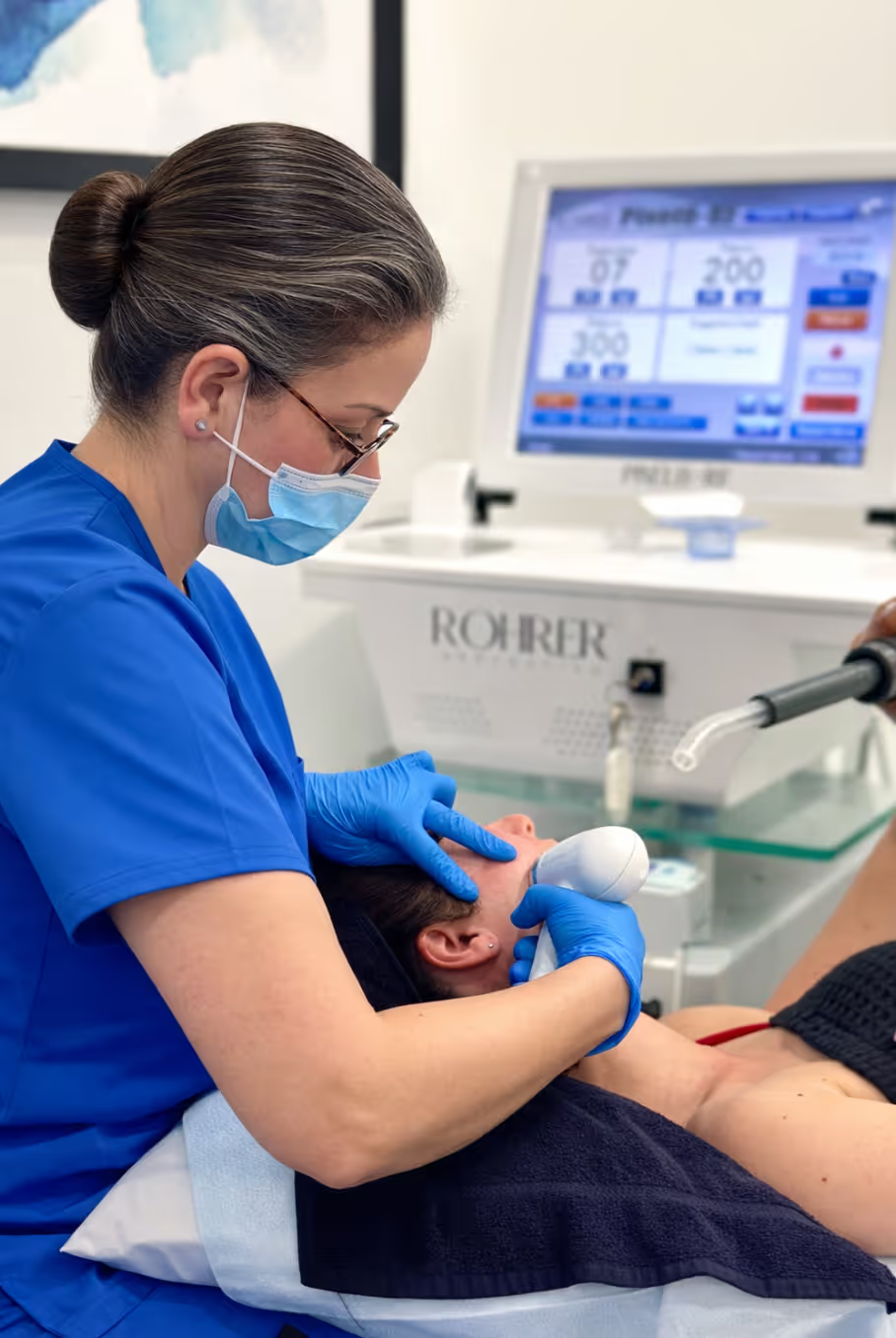
We also see more variability in how long it takes for results to visibly soften the skin above the muscle, simply because skin with reduced collagen and elastin doesn't reflect muscle relaxation as crisply as thicker, younger skin does. This is one reason we encourage clients to think of Botox and skin quality as two separate — but connected — conversations, and it's part of why treatments like Pixel8-RF radiofrequency microneedling are frequently paired with ongoing neuromodulator treatment for clients in this stage of life.
**Why Your Injector Should Be Reassessing, Not Repeating**
The biggest risk after 50 isn't an ineffective treatment — it's a repeated one. A client who has had the same unit count, same zones, and same technique for a decade may be due for a full reassessment, not because anything went wrong, but because the muscle and skin they're treating today isn't the muscle and skin from ten years ago. Our team's combined 70+ years in medical aesthetics means we're often having this exact conversation with clients who've been loyal patients elsewhere and are surprised no one flagged it sooner. We look at resting muscle tone, brow position, and skin elasticity together before adjusting dose or technique — never assuming last year's plan still fits this year's face.
For some clients, this reassessment opens the door to Daxxify or Xeomin as alternatives worth exploring, particularly if they've noticed their Botox results shortening in duration — a pattern we address in more depth in our piece on why neuromodulator longevity changes over time.
**A Note on Value, Not Just Price**
We understand that clients sometimes search for a "$65 Botox coupon" or similar promotions, especially when comparing options across Northern Virginia. We'd rather be transparent with you than quietly let that search go unanswered: per-unit discount pricing, particularly steep introductory offers, often signals a standardized, high-volume approach that doesn't account for exactly the kind of individualized muscle and skin assessment we've described above. At Tysons Elite Esthetics, pricing reflects a full consultation, a provider who knows your treatment history, and a plan built around how your muscles and skin are actually behaving today — not a one-size dose applied on autopilot. We do periodically offer loyalty pricing and seasonal consultation incentives for our established clients, and we're always happy to talk through what a thoughtful, long-term investment in your results looks like rather than chasing the lowest number per unit.
**The Bigger Picture**
Botox after 50 isn't a lesser version of Botox in your 30s — it's a more nuanced application of the same science, informed by muscle physiology that deserves real attention. If your results have started to feel unpredictable, or you're simply curious whether your current treatment plan still matches your current anatomy, we'd welcome the conversation. It's exactly the kind of long-term, detail-oriented care our clients have come to expect from this team.
Start your transformation
Schedule your consultation with our knowledgeable and friendly team.