Aging Lips Lose More Than Volume — Tysons Patients Miss This

There's a moment many patients describe during their consultation — usually somewhere in their 50s or early 60s — when they realize the lip filler they've been getting for years isn't quite doing what it used to. The lips look fuller for a few months, but the fine vertical lines above the upper lip are still there. Lipstick bleeds. The border between lip and skin seems less defined than it once was. Volume was never really the whole problem. And treating only volume, year after year, meant the rest of the picture was quietly getting worse.
What's actually happening in aging lips is a layered process, and understanding it changes the treatment conversation entirely. The lips themselves lose collagen and hyaluronic acid, just as the rest of the face does. But the perioral area — the skin surrounding the mouth — undergoes its own distinct set of changes. Bone resorption in the jaw and the area beneath the nose gradually reduces the structural support that once kept the lip in position. The orbicularis oris muscle, which encircles the mouth, weakens over time and contributes to the formation of those vertical lip lines that run from the lip edge upward. Meanwhile, the skin of the upper lip thins, loses elasticity, and becomes increasingly prone to fine crepiness that filler simply cannot address. For patients over 50, and certainly for those over 60, these changes are often happening simultaneously — which is exactly why a single-treatment approach consistently falls short.
The lip lines most patients are concerned about — sometimes called smoker's lines or perioral lines, even in patients who have never smoked — respond to a combination approach rather than volume alone. Small amounts of a neuromodulator like Botox or Daxxify placed precisely along the upper lip can relax the repetitive muscular contractions that deepen these lines over time. This is a treatment that requires real precision: too much relaxation in the orbicularis affects speech and movement in ways patients immediately notice and dislike. It's not a place to experiment. Our team, with 70-plus years of combined experience in medical aesthetics, treats this area with careful attention to dosing and placement — exactly the kind of nuanced work that separates a clinical relationship from a transactional appointment.
Alongside neuromodulation, the right filler for the perioral zone matters more than most patients realize. Not all fillers behave the same way in this area. The lips themselves require a soft, highly mobile product — something that moves naturally with expression and doesn't create stiffness or an overdone appearance. The lip border, where definition is often lost with age, benefits from careful linear threading technique to restore the vermillion edge. And the fine lines above the lip respond to very superficial placement of a low-viscosity product — a technique that takes experience to execute without creating lumps or irregularity. If you've ever read about the natural-looking approach that's replaced overfilled results, this is exactly the philosophy behind it. The goal isn't a bigger lip. It's a lip that looks like yours did ten or fifteen years ago — in proportion, defined, and at rest on your face.
For patients over 50 or 60 specifically, there's another layer that's often missed entirely: the quality of the skin itself. Volume and muscle relaxation address structure, but the crepey, thinned texture of the perioral skin is a separate problem. This is where regenerative treatments become genuinely valuable. Polynucleotides — which we've written about in other contexts, including their comparison with PRP — stimulate tissue repair and improve skin quality at a cellular level, making the skin around the mouth more resilient and better able to hold the results of other treatments. Profhilo, a highly fluid bioremodeling injection with an exceptionally high concentration of hyaluronic acid, can also be placed in the perioral area to restore hydration and elasticity to skin that has become dry and inelastic with age. Neither of these is a lip filler. Both address what filler cannot.
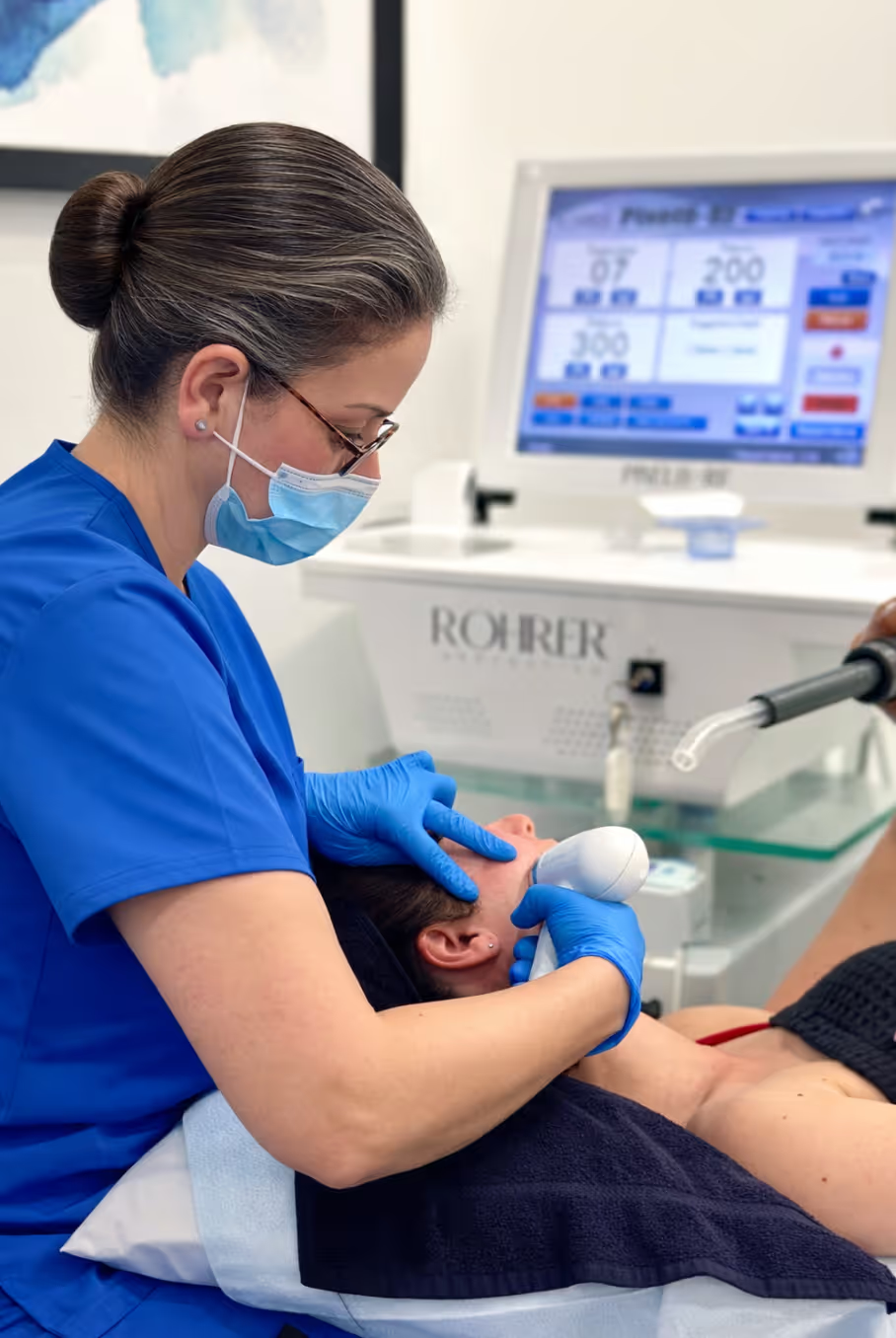
Skin resurfacing adds yet another dimension that many patients haven't considered. The vertical lines above the upper lip often have a textural component — actual grooves in the skin — that injectable treatments alone won't fully resolve. CoolPeel Fractional Laser Resurfacing in this area can significantly reduce the depth and visibility of these lines by stimulating collagen remodeling and tightening the surface of the skin. It requires a period of downtime and careful sun protection afterward, but for patients whose primary concern is those vertical lip lines, it's often the most impactful single treatment available. RF microneedling with Pixel8-RF can also improve texture and tighten the perioral skin for patients who prefer a less aggressive entry point. In either case, the sequencing matters — resurfacing is generally done before or after injectables, not at the same time, and getting that order right affects both safety and results.
There's also a structural conversation worth having that most practices skip. As we've discussed in the context of volume loss versus sagging, the lower face aging process involves bone and fat compartment changes that affect how the lips sit on the face. The nasolabial folds that frame the mouth deepen partly because the midface loses volume. The corners of the mouth can turn downward as structural support beneath them diminishes. Addressing only the lips while leaving the surrounding architecture untreated often produces results that look slightly off — technically fine, but not cohesive. A thoughtful treatment plan looks at the whole perioral region: the lips, the skin above them, the corners, and the supporting structures nearby. That's a different conversation than asking for a syringe of lip filler.
At Tysons Elite Esthetics, patients coming in for lip concerns — whether they're 52 and noticing their first perioral lines, or 65 and frustrated that previous treatments haven't held the way they hoped — begin with a consultation that's actually a conversation. We're not recommending a menu. We're looking at what's changed, what approach makes sense for where you are right now, and what a realistic treatment sequence looks like over the next several months. For some patients, that's a combination of neuromodulator, filler, and a resurfacing treatment. For others, it begins with improving skin quality first. Tysons Elite Esthetics is the only med spa in Northern Virginia authorized to use Human Progenitor-Derived Exosomes, which opens regenerative options for skin repair that most practices simply cannot offer.
If you've been addressing your lips for years and still feel like something isn't quite right, it's worth asking whether the full picture has been treated — or just one part of it.
Start your transformation
Schedule your consultation with our knowledgeable and friendly team.