Morpheus8 Downtime: An Honest Recovery Timeline for Busy Professionals

If you are researching Morpheus8, you have probably seen the radiofrequency microneedling before and after photos. The results are compelling — tighter skin, improved texture, softened lines — and they are real. But somewhere between the before and the after is a recovery window that is rarely discussed with the same clarity. That is the conversation most busy professionals actually need to have before booking.
This article gives you an honest, day-by-day picture of what Morpheus8 recovery time looks like so you can plan intelligently around your work schedule, your social calendar, and your life.
What Morpheus8 Actually Does to Your Skin
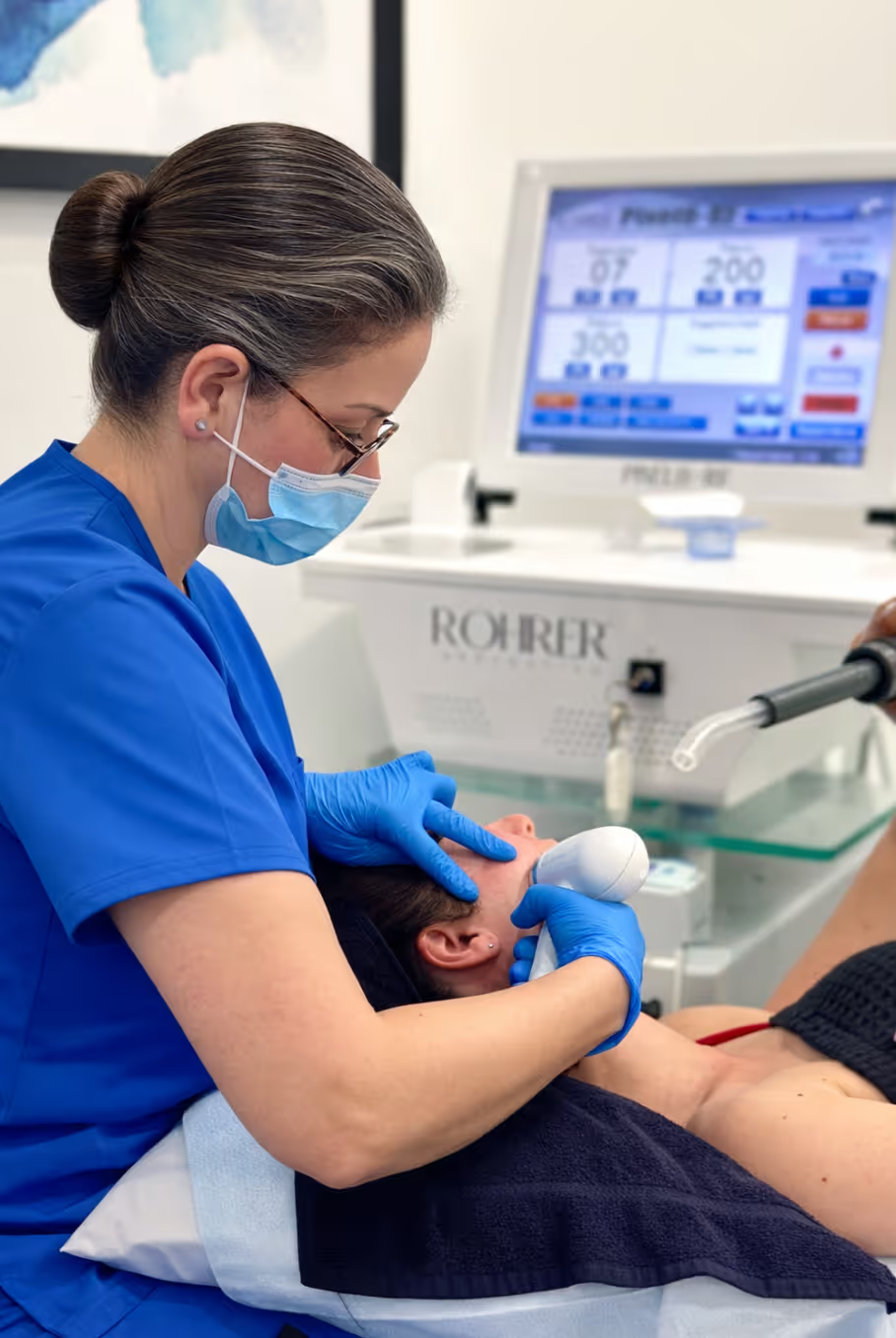
Morpheus8 combines microneedling with radiofrequency energy delivered deep into the dermis and subdermal tissue — reaching depths that standard microneedling simply cannot access. The RF energy heats tissue at a precise level, triggering a controlled wound-healing response that stimulates collagen remodeling, tightens lax skin, and improves surface texture over the following weeks and months.
Because the treatment works at depth and the needles physically penetrate the skin, there is a real recovery process. Understanding that process — rather than minimizing it — is what allows you to get the most from the treatment and avoid unnecessary disruption to your professional life.
If you want to understand how Morpheus8 compares to other energy-based approaches, our post on Morpheus8 vs. Ultherapy for facial tightening breaks down the clinical differences in detail.
The Honest Day-by-Day Recovery Timeline
Treatment Day
Your provider will apply a topical numbing cream approximately 30 to 45 minutes before the procedure begins. Most clients describe the sensation during treatment as manageable — pressure with warmth, particularly over bonier areas like the cheekbones and jawline. The procedure itself typically takes 30 to 60 minutes depending on the area being treated.
Immediately after, your skin will be pink to red — similar in appearance to a moderate sunburn — and there will be visible pinpoint marks from the microneedles. Some patients experience mild swelling, particularly around the under-eye area and lower cheeks. You will leave the appointment looking like you have had a significant treatment, and that is expected. Plan your day accordingly. Do not schedule a dinner meeting or an evening appearance for treatment day.
Day 1 — Day 2: The Peak of Visible Redness
The first 24 to 48 hours represent the most visible phase of recovery. Redness, warmth, and some degree of swelling are normal and anticipated. Pinpoint scabbing — tiny, superficial dots at each needle entry point — may become more visible during this window. Skin will feel tight and may feel rough to the touch.
For most clients at Tysons Elite Esthetics, this is the window where working from home or keeping appearances limited is genuinely advisable. If you are on camera for video calls or have in-person client-facing obligations, this is the period to protect. With the right post-care protocol — gentle cleansing, a recommended barrier-repair moisturizer, and strict sun avoidance — skin is kept calm and recovery is supported. Your provider will walk you through exactly what to apply and what to avoid.
Day 3 — Day 4: The Bronze, Sandpaper Phase
By day three, redness begins to transition into a bronzed, slightly tanned appearance. The pinpoint marks often look darker before they shed, which is a normal part of the process. Skin texture in this phase can feel rough or slightly textured — patients sometimes describe it as a fine sandpaper sensation. This is the skin beginning its natural exfoliation cycle.
Makeup can typically be worn starting around day three for many patients, depending on the depth settings used during your treatment. Your provider will confirm the appropriate timeline for your specific session. Many of our Tysons professionals return to in-person work during this window with light, mineral-based coverage. Avoid any active exfoliants, retinoids, or harsh cleansers — these are reintroduced gradually after the provider clears you.
Day 5 — Day 7: Micro-Exfoliation and Clearing
By the end of the first week, the bronzing begins to flake away naturally as the skin sheds. Do not pick or force exfoliation during this period — the process resolves on its own, and interfering can introduce irritation or post-inflammatory pigmentation. Most clients find this phase the easiest to manage socially, as it is subtle and easily concealed.
By day seven, the majority of clients feel comfortable in any professional or social setting. Redness has resolved for most, the skin is beginning to look clearer, and the underlying remodeling process is well underway. This is not when results are visible — that comes later — but the obvious signs of treatment are largely behind you at this point.
Week 2 and Beyond: The Quiet Work
The most meaningful results from Morpheus8 are not visible in week one. Collagen synthesis is a process that unfolds over weeks to months. Most patients begin noticing meaningful improvement in skin texture and firmness between four and six weeks post-treatment. The more significant lifting and tightening associated with deeper RF settings typically becomes apparent at the three-month mark and continues to develop for up to six months.
This is the part of the timeline that the before and after photos capture — but rarely explain. When you see dramatic radiofrequency microneedling before and after comparisons and wonder when those results actually appear, the answer for most patients is around the three-month point following a full treatment series.
What Affects Your Recovery Window
Not every Morpheus8 session is the same, and not every recovery is the same. Several variables influence how visible and how long your downtime will be:
- Treatment depth and energy settings: Deeper settings used for more significant laxity or body contouring produce more pronounced downtime than lighter, maintenance-level settings. A provider with extensive experience adjusts these parameters based on your specific anatomy, skin quality, and goals — not a one-size-fits-all protocol.
- Treatment area: The face typically recovers faster than the neck or body. Thinner-skinned areas around the eyes and lips may show more swelling initially.
- Your skin's baseline: Clients with more sensitive or reactive skin may experience a more pronounced initial response. Darker skin tones require particular expertise in energy calibration to avoid post-inflammatory hyperpigmentation — a consideration our team takes seriously and accounts for in every treatment plan.
- Aftercare compliance: The post-treatment protocol your provider gives you is not optional. Patients who follow instructions closely — especially around sun protection, gentle cleansing, and avoiding actives — consistently have smoother recoveries.
Planning Your Schedule Around Morpheus8
For the professionals we work with in Tysons, McLean, and Vienna — executives, attorneys, physicians, entrepreneurs — the question is rarely whether to do the treatment. It is how to time it strategically.
Here is how most thoughtful clients plan it:
- Book on a Thursday or Friday when possible. This allows the first 48 to 72 hours — the most visibly active recovery window — to fall over a weekend.
- Clear your calendar of in-person appearances for days one through three. Video calls are manageable with camera adjustments; in-person meetings are where clients feel most self-conscious.
- Do not plan treatments within three weeks of a major event. Weddings, galas, board presentations, and significant social obligations should be preceded by at minimum three weeks of healing time, and ideally longer if you are completing a series.
- Coordinate with your provider on timing for a series. Many patients complete two to three sessions spaced four to six weeks apart. Building a full-series timeline into your calendar at the outset — rather than booking session by session — allows you to plan your professional life around the recovery windows proactively.
Our article on glowing skin before your holiday party walks through a broader timeline framework for planning treatments around signature events — the same logic applies to any high-stakes date on your calendar.
Morpheus8 Recovery Versus Other Energy Devices
Context matters. Compared to ablative laser resurfacing — such as CoolPeel fractional laser — Morpheus8 downtime is significantly more manageable. CoolPeel resurfacing can require one to two weeks of more significant social downtime with peeling and redness that is difficult to conceal. Morpheus8 occupies a middle ground: more effective than surface-level treatments, considerably more socially forgiving than full ablative options.
If you are weighing Morpheus8 against other energy-based approaches, our comparison of RF microneedling vs. laser resurfacing covers the clinical trade-offs in detail. For clients specifically considering skin laxity after 50, the post on Morpheus8 vs. traditional microneedling for sagging skin after 50 is also worth reading before your consultation.
Enhancing Your Results: What We Layer With Morpheus8
At Tysons Elite Esthetics, Morpheus8 is rarely treated as a standalone protocol. For clients seeking accelerated recovery and enhanced regenerative outcomes, we have the ability to pair RF microneedling with exosome therapy — a combination that supports faster tissue recovery while amplifying the skin's natural repair response. As the only med spa in Northern Virginia authorized to use Human Progenitor-Derived Exosomes, this is a pairing that is not available everywhere, and our clients notice the difference in how their skin heals and responds.
For clients managing concerns like skin laxity alongside overall facial rejuvenation, Morpheus8 often works best as part of a broader treatment plan that may include neuromodulators and biostimulators. Our post on combination skin tightening treatments explains how stacking these approaches works for full-face rejuvenation.
What the Before and After Photos Don't Show
The most honest thing we can tell you about RF microneedling before and after results is this: the images capture a destination, not the journey. They do not show what day four looked like, or the patience required to trust a process that unfolds over months. They do not show the consultation where your provider reviewed your skin, your health history, and your goals before recommending a specific treatment depth. And they do not show the follow-up appointments where results are assessed and the next phase is planned.
What makes the difference between a dramatic result and a disappointing one is not just the device — it is the experience of the team using it, the precision of the protocol, and the quality of the ongoing relationship between provider and patient. Our team brings over 70 years of combined experience in medical aesthetics to every treatment room, and that depth of knowledge shows in how treatments are calibrated, how recoveries are managed, and how results develop over time.
If you are ready to have an honest conversation about whether Morpheus8 is the right treatment for your concerns and your timeline, we would welcome the opportunity to sit down with you.
Start your transformation
Schedule your consultation with our knowledgeable and friendly team.