Sagging Skin After 50: Does Morpheus8 Outperform Traditional Microneedling?

There's a question that comes up often in consultations here in Tysons, and it usually sounds something like this: "I had microneedling done somewhere else, and my skin looked great for a few months — but now I'm back to where I started. Is Morpheus8 actually different, or is it just more expensive?"
It's a fair question. And the honest answer is: they are fundamentally different treatments, targeting different layers of the skin, through different mechanisms, for different concerns. Understanding that distinction is the difference between choosing a treatment that fits your goals and spending money on something that was never designed to address what's actually bothering you.
What Traditional Microneedling Actually Does
Standard microneedling — performed with a device like a microneedling pen — works by creating controlled micro-injuries in the uppermost layers of the skin. Tiny needles puncture the epidermis and the superficial dermis, triggering a wound-healing response that stimulates collagen and elastin production. The result, over a series of treatments, is improved skin texture, reduced pore size, softer fine lines, and a more even tone.
For the right concerns, traditional microneedling is genuinely effective. It is an excellent treatment for surface-level texture, early fine lines, mild acne scarring, and overall skin quality. If those are your primary goals, a well-performed microneedling session — especially when paired with a regenerative add-on like exosomes or PRP — can deliver meaningful results.
What it was not designed to do is address structural skin laxity. The needles reach the superficial dermis, but they do not deliver energy into the deeper tissue layers where the real architectural support of the skin lives. When the concern is sagging — along the jawline, beneath the chin, across the neck, or on the body — surface-level collagen stimulation alone rarely moves the needle in the way most patients over 50 are hoping for.
Why Skin After 50 Requires a Different Approach
After 50, the changes happening in your skin are not primarily textural. Yes, surface quality declines. But the more significant shift is structural: collagen production has slowed substantially, elastin fibers have lost their resilience, and the scaffolding that once held everything in place has begun to loosen. The result is skin that doesn't just look older — it moves differently, sits differently, and responds differently to treatment.
This is why the question of how to tighten face skin after 50 is genuinely different from the question of how to refresh skin in your 30s. A 35-year-old seeking improved texture and glow is working with skin that still has significant regenerative capacity. A 52-year-old dealing with jowling, neck laxity, or loose skin following weight loss is working against a physiological shift that requires deeper intervention.
The same principle applies to the body. Patients asking about how to tighten skin on legs after 50 — particularly after weight loss, which removes the fat volume that once supported the overlying skin — are dealing with a combination of reduced collagen density, diminished elasticity, and skin that has been physically stretched. Surface stimulation does not reach the tissue depth where meaningful tightening can occur.
Understanding what skin laxity actually is and why it develops the way it does after 40 and 50 is an important first step before committing to any treatment plan.
How Morpheus8 Works Differently
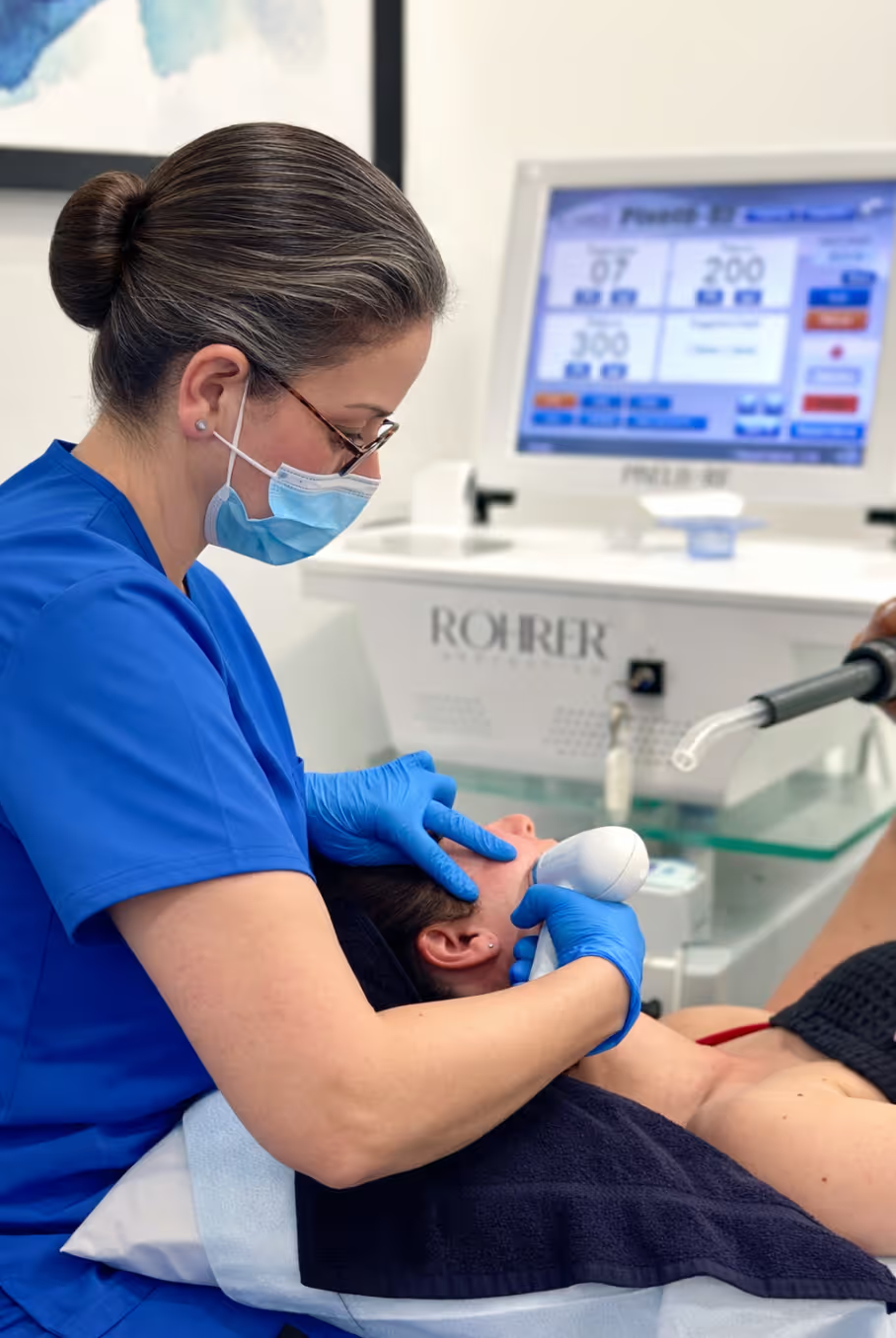
Morpheus8 is a radiofrequency microneedling device — a category that operates on an entirely different mechanism than traditional microneedling. The needles still penetrate the skin, but they also deliver radiofrequency energy directly into the subdermal tissue at precise, programmable depths. Depending on the treatment settings and the area being addressed, RF energy can be delivered as deep as 8mm — well into the fibromuscular layer where the foundational architecture of the face and body actually lives.
That energy heats the deep tissue to a carefully controlled temperature. The heat causes immediate contraction of existing collagen fibers — which is why some patients notice a tightening effect within the first few weeks — and simultaneously triggers a robust, prolonged collagen remodeling response that continues for three to six months after treatment. This is not a surface stimulation. It is a structural intervention.
The distinction matters particularly for:
- Jowling and lower face laxity — where tissue has descended below the jawline and surface treatments cannot lift or reposition it
- Neck and submental skin — where crepey, loose skin requires deep tissue heating rather than epidermal stimulation
- Skin tightening after weight loss — where the skin has lost its underlying volume support and needs deep remodeling to adapt
- Body laxity on areas like the inner arms, abdomen, and legs — where traditional microneedling devices are rarely used at all, and surface treatments have limited effect
For patients asking specifically about skin tightening after weight loss — including those who have lost significant weight through diet, exercise, or GLP-1 medications — the structural depth of Morpheus8 is frequently the deciding factor. GLP-1-related volume and skin changes present a particularly complex set of concerns that require treatments reaching beyond the epidermis. Similarly, patients exploring non-surgical body contouring after weight loss often find that RF microneedling is a cornerstone of any effective treatment plan.
Morpheus8 vs. Traditional Microneedling: A Direct Comparison
It helps to think of traditional microneedling and Morpheus8 not as competing treatments, but as tools designed for different jobs — the way a fine paintbrush and a wide-blade spatula are both useful in a kitchen, but not interchangeable.
Depth of action: Traditional microneedling reaches the superficial dermis (approximately 0.5–2mm). Morpheus8 delivers energy to the deep dermis and subdermal tissue (up to 8mm, depending on settings and treatment area).
Primary mechanism: Traditional microneedling relies on wound healing and surface collagen stimulation. Morpheus8 combines mechanical stimulation with RF-induced thermal remodeling at depth.
Best suited for: Traditional microneedling excels at texture, tone, pore refinement, and mild early lines. Morpheus8 is purpose-built for structural laxity, sagging, and skin tightening — particularly in patients over 50 and in post-weight-loss scenarios.
Results timeline: Traditional microneedling results are often visible within four to six weeks. Morpheus8 results continue to develop for three to six months as deep collagen remodeling progresses, with the most significant changes typically visible at the three-month mark.
Treatment areas: Traditional microneedling is primarily a facial treatment. Morpheus8 is FDA-cleared for both face and body, making it one of the few devices that can address leg skin laxity, abdominal looseness, and inner arm crepiness alongside facial concerns.
Downtime: Traditional microneedling typically involves one to three days of mild redness. Morpheus8 involves more significant post-treatment redness and swelling — typically three to five days — reflecting the greater depth and intensity of the intervention.
For a broader look at how RF microneedling compares to laser resurfacing as a category, the comparison between RF microneedling and laser resurfacing is worth reading before your consultation.
When Traditional Microneedling Is Still the Right Choice
None of this is meant to suggest that traditional microneedling is outdated or inferior. For the right patient and the right concern, it remains one of the most versatile and well-supported treatments in medical aesthetics.
If you are in your 30s or early 40s, primarily dealing with texture, early fine lines, enlarged pores, or mild acne scarring — and you do not yet have significant structural laxity — standard microneedling may be the more appropriate starting point. It involves less downtime, a lower cost per session, and when paired with a regenerative add-on, can produce genuinely impressive improvements in skin quality. The combination of microneedling with exosomes is a particularly strong option for patients who want surface-level rejuvenation with an enhanced healing response.
The question becomes more nuanced after 50, when surface concerns and structural concerns often coexist. In many of these cases, the most thoughtful treatment plan isn't a choice between one or the other — it's a sequenced protocol that uses each treatment for what it does best.
The Case for Combination Treatment After 50
Many of our patients over 50 benefit from a layered approach that addresses both the structural and surface dimensions of aging skin. Morpheus8 handles the deep remodeling — the tightening, the lift, the fundamental structural work. Traditional microneedling, chemical peels, or laser treatments can then be used to refine texture and tone at the surface level once the deeper foundation has been addressed.
Biostimulators like Sculptra and Radiesse add another dimension to this picture. Where Morpheus8 tightens and remodels existing tissue, biostimulators work by stimulating new collagen production over time, adding structural support and restoring subtle volume to areas that have deflated. Used together, these treatments address the three distinct drivers of facial aging — laxity, collagen loss, and volume loss — in a way that no single modality can.
For patients interested in a comprehensive approach, the combination skin tightening treatment guide outlines how RF microneedling, biostimulators, and neuromodulators can work together as a full-face rejuvenation protocol. Neuromodulators play a role here too — particularly for the neck and lower face, where treatments like the Nefertiti lift can complement the tightening effects of Morpheus8 for more defined jaw and neck contour.
What to Expect From a Morpheus8 Consultation at Tysons Elite Esthetics
The most important thing to understand about Morpheus8 — or any treatment for that matter — is that the device is only part of the equation. The depth settings, the energy levels, the pattern of coverage, the number of passes, and the way different zones of the face or body are treated all require clinical judgment built from years of hands-on experience.
Our team brings over 70 combined years in medical aesthetics to every consultation. We do not use a template. When a patient comes in asking about skin tightening after 50, we want to understand the full picture: how long the laxity has been developing, whether there has been significant weight change, what treatments have been tried before and how the skin responded, and what the patient's realistic goals and timeline look like. That conversation shapes everything that follows.
If you're new to the practice and want to understand what a first consultation typically involves, this overview of what to expect from your first med spa appointment may be helpful before you come in.
The treatments we recommend will reflect what your skin actually needs — not what is most popular or most heavily marketed. If traditional microneedling is the right tool, we will tell you that. If your concerns require the structural intervention of RF microneedling, we will walk you through exactly why, what to expect, and what a realistic outcome looks like.
That kind of conversation — honest, specific, and built around your skin rather than a treatment menu — is what this practice has always been built on.
Start your transformation
Schedule your consultation with our knowledgeable and friendly team.