Polynucleotides for Skin Tightening: Worth It After Menopause?

Menopause doesn't gradually dial down your skin's structure — it often drops off a cliff. Estrogen receptors live throughout the dermis, and when estrogen declines, collagen production can fall by as much as 30% in the first five years after menopause alone. That's not a marketing statistic we use to scare you into an appointment; it's the reason so many of our longtime clients come in around this stage asking the same question: why does my skin suddenly feel different, even though my routine hasn't changed?
Polynucleotides — often labeled PDRN or PN depending on their source and purification — are fragments of DNA, typically derived from salmon sperm, that signal fibroblasts to get back to work producing collagen and elastin. Unlike hyaluronic acid fillers, which add volume, or neuromodulators, which relax muscle activity, polynucleotides work at a cellular repair level. They calm inflammation, improve micro-circulation, and give the skin's own regenerative machinery a reason to re-engage — which is exactly the kind of support that menopausal skin, running on a fraction of its former estrogen signaling, actually needs.
Here's the honest answer to whether it's worth it: for most of our Tysons and McLean clients in perimenopause or post-menopause, yes — but with a caveat we always discuss during consultation. Polynucleotides are a remodeling treatment, not an instant lift. You won't walk out looking tighter the way you might after a well-placed filler. What you will notice, typically over a series of three to four sessions spaced two to three weeks apart, is skin that feels more resilient, texture that looks less crepey, and a kind of foundational firmness that makes everything else you do — your retinol, your SPF, your biostimulators — perform better. We've written in more detail about how this compares to other remodelers in Profhilo vs. Polynucleotides: Which Skin Remodeler Wins After 45?, which is a useful read if you're trying to decide where to start.
Where polynucleotides tend to disappoint is when they're used alone to address structural laxity that's already advanced — true jowling, significant neck banding, or deep static folds. In those cases, we're usually combining PN with a biostimulator or energy-based device rather than relying on it in isolation. If you've already explored what estrogen loss does structurally to the lower face and neck, our piece on Menopause Skin Changes That Fillers Alone Cannot Fix walks through why filler alone often isn't the right first move, and how sequencing changes the outcome.
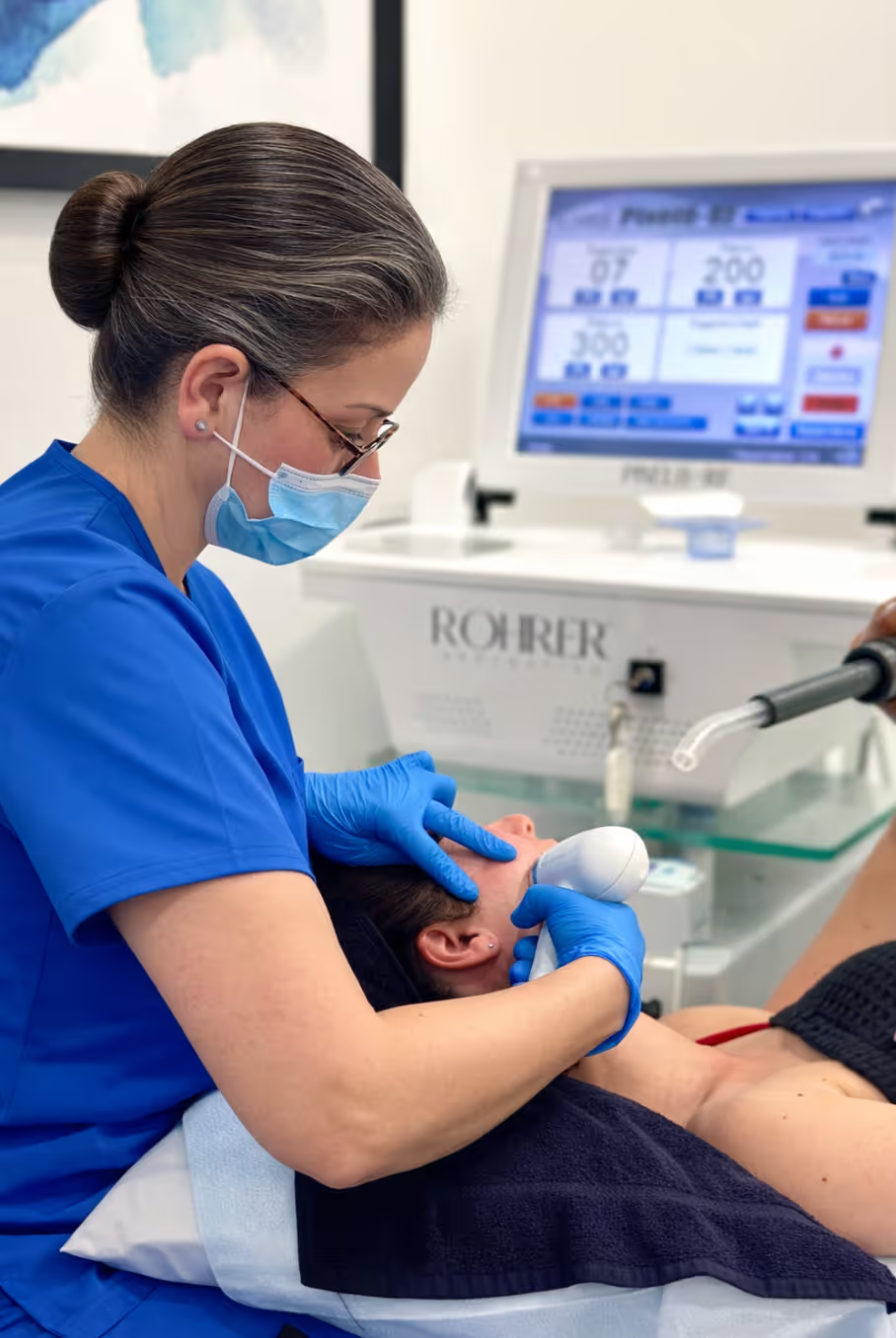
A question we hear often from clients who've had RF microneedling is whether polynucleotides make sense as a follow-up. In most cases, yes — the micro-channels created during a Pixel8-RF session allow for deeper absorption, and timing it correctly matters more than people expect. We cover that sequencing in detail in Pixel8-RF Maintenance: How Often Do Tysons Patients Actually Need It?, and it's a conversation we have at nearly every consultation involving both treatments.
What makes this decision genuinely personal is that menopausal skin doesn't age on a universal timeline. Some of our clients at 48 have the dermal density of someone a decade younger; others at 52 are dealing with pronounced laxity because of genetics, sun history, or how abruptly their hormone shift happened. That's why we don't sell polynucleotides as a blanket solution — we evaluate your skin's collagen reserve, your goals, and what else is already in your routine before recommending a protocol. If structural sagging is your primary concern rather than texture and tone, it's worth reading Sagging Skin After Menopause Responds to This Treatment Combination, which outlines when PN makes sense as part of a layered plan rather than a standalone fix.
The short answer, if you want one: polynucleotides are worth it for menopausal skin that's losing elasticity and resilience, not necessarily for skin that's already sagging structurally. The honest answer, the one our team of estheticians with 70-plus combined years in this field would actually give you in a consultation, is that the real value comes from knowing exactly where your skin sits on that spectrum — and building a plan that doesn't waste your time or your budget on the wrong first step.
Start your transformation
Schedule your consultation with our knowledgeable and friendly team.