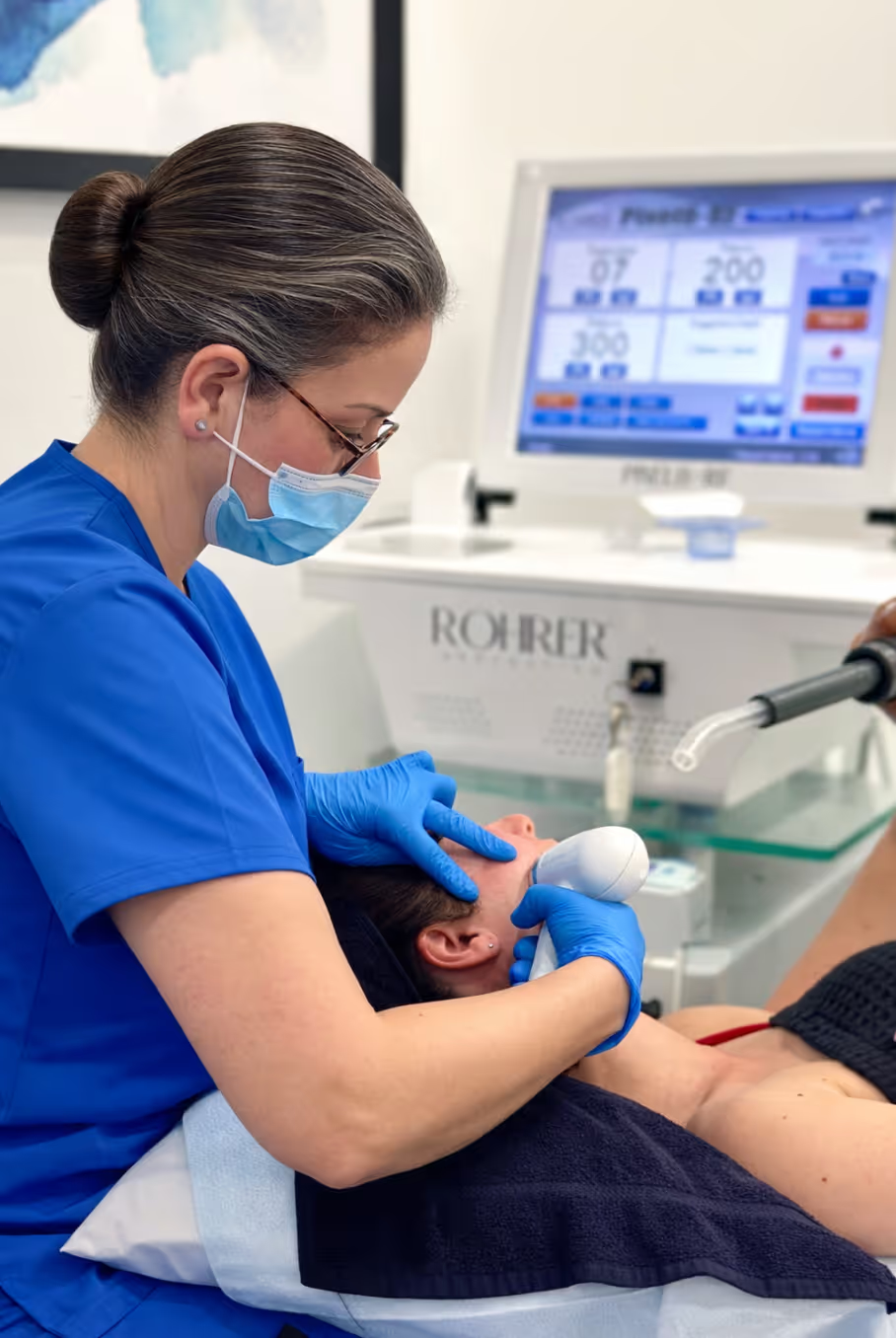
Pixel8-RF Maintenance: How Often Do Tysons Patients Actually Need It?

Somewhere around the third or fourth month after their first Pixel8-RF session, almost every patient asks us the same question: "So when do I come back?" It's a fair question, and it deserves a more thoughtful answer than a generic timeline pulled from a brochure.
The truth is, how often should microneedling be done isn't a question with one universal answer — and anyone who gives you a flat "every six weeks" or "twice a year" without asking about your skin, your goals, and your lifestyle is oversimplifying a genuinely personalized process. At Tysons Elite Esthetics, we've spent years — collectively, over 70 — watching how different skin types, ages, and treatment histories respond to radiofrequency microneedling, and the maintenance cadence that actually works looks different for nearly every person who sits in our chair.
For most of our clients in their late 30s through 50s using Pixel8-RF for general collagen support and early skin laxity, we typically recommend an initial series of three sessions spaced four to six weeks apart, followed by a single maintenance session every four to six months. That said, we've had clients whose skin structure, sun exposure history, or hormonal changes call for adjustments — sometimes more frequent sessions in the first year, sometimes an extended interval once the skin has meaningfully rebuilt its collagen architecture. This is part of why we've built what we call the Pixel8-RF Extended Repair Program for patients who want a more structured, long-term approach rather than booking single sessions reactively. The program maps out your treatment calendar in advance, taking into account your skin's healing pace and your personal calendar, so maintenance never feels like guesswork.
A few factors genuinely change the equation. Patients using GLP-1 medications, for example, often see faster collagen depletion and may benefit from a tighter maintenance schedule — something we discuss in detail in our piece on Ozempic and skin tightening timing. Skin type and depth of initial laxity matter too; we've written specifically about how results vary after 50 depending on skin type, and how lifestyle factors like sleep, hydration, and sun habits can quietly shorten or extend the gap between sessions.
Aftercare plays a bigger role in maintenance frequency than most patients expect, too. Skipping key post-treatment steps doesn't just slow your results — it can mean needing another session sooner than necessary to catch back up, which is exactly what we cover in our breakdown of aftercare and fading results. And for clients layering in regenerative treatments, timing between Pixel8-RF and exosome therapy matters quite a bit — we walk through that sequencing in this piece on pairing exosomes after Pixel8-RF.
If you're planning treatments around Tysons's social calendar — galas, weddings, or that trip to the Vineyard house in June — seasonal timing also factors into how we space sessions. Our guide to microneedling timing around your social calendar covers this in more depth, and if you're specifically wondering about warm-weather scheduling, Pixel8-RF timing in summer is worth a read before you book.
Ultimately, the honest answer to "how often" is: it depends on what your skin is doing, not on a calendar reminder. That's why every maintenance plan we build starts with a real conversation, not a standard protocol. If it's been a while since your last Pixel8-RF session, or you've never had one, we'd rather sit down, look at your skin, and tell you exactly what makes sense for you — not what's easiest to schedule.
Start your transformation
Schedule your consultation with our knowledgeable and friendly team.