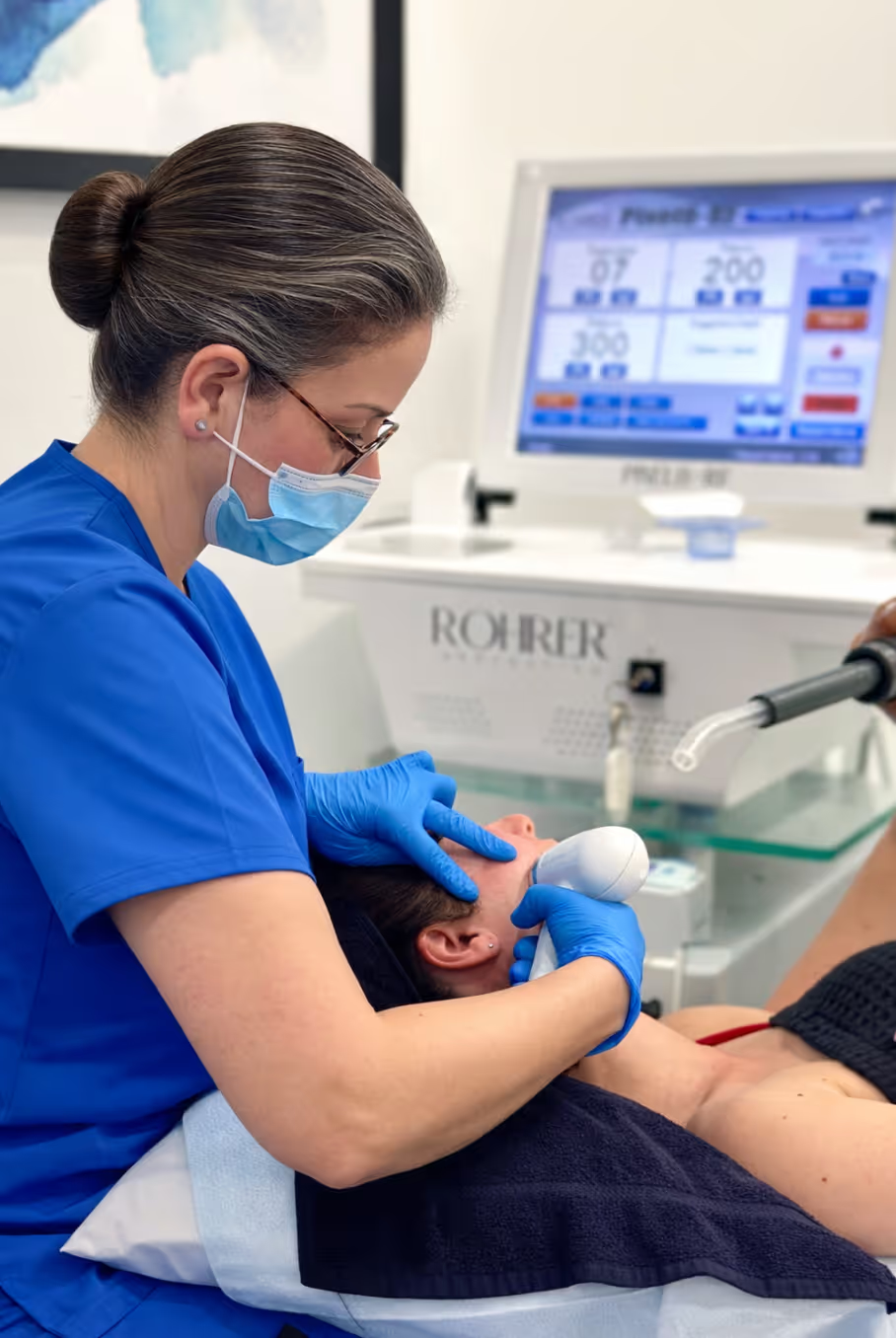
Pixel8-RF in Summer: Safe Timing for Tysons Skin Types
There's a persistent belief in aesthetic medicine that radiofrequency microneedling is strictly a fall and winter treatment — something you schedule once the humidity breaks and sun exposure drops. For some devices and some skin types, that caution is entirely warranted. But Pixel8-RF operates differently, and when it's in the hands of a team with genuine clinical depth, summer treatments are possible for the right candidates with the right protocol in place.
If you've been wondering whether you have to wait until September to address skin laxity, texture, or early structural loss, the honest answer is: it depends on your skin type, your lifestyle, and how seriously you take sun protection. What it doesn't depend on is a blanket calendar rule.
Why Summer RF Microneedling Has a Reputation Problem
The hesitation around summer RF microneedling isn't unfounded — it comes from real clinical concerns. Any treatment that creates controlled injury to the skin to stimulate collagen remodeling will leave the skin temporarily more vulnerable to UV exposure. Post-inflammatory hyperpigmentation (PIH) is the primary risk: if fresh post-treatment skin is exposed to significant sun before it has recovered, melanocytes can overreact and deposit uneven pigment that takes months to resolve.
This risk is not equal across all skin types. Fitzpatrick I and II skin — fair to light complexions that burn easily — carries lower PIH risk. Fitzpatrick III through VI — medium, olive, brown, and deeper skin tones — carries meaningfully higher risk, and the Northern Virginia patient population reflects that range. Tysons serves a genuinely diverse community of clients from McLean, Vienna, Falls Church, and across Fairfax County, and a provider who treats every skin tone identically is a provider who isn't paying enough attention.
The secondary concern is downtime during peak social season. RF microneedling recovery isn't invisible — there's redness, some swelling, and a few days of skin sensitivity that require real aftercare discipline. In summer, that means no beach days, no outdoor afternoon events, and rigorous SPF compliance for at minimum two weeks post-treatment. For clients who travel frequently or have outdoor commitments in July and August, the timing simply may not work. For clients whose summer is more controlled — primarily working, spending time in air-conditioned environments, and protecting their skin diligently — summer treatments are clinically reasonable.
What Makes Pixel8-RF Different From Other RF Microneedling Platforms
Pixel8-RF is a fractional radiofrequency microneedling device that delivers energy through insulated needles directly into the dermis, bypassing the epidermis with significantly more precision than non-insulated systems. This distinction matters in summer for two reasons.
First, insulated needles protect the outer skin layer — the layer most directly affected by UV exposure and most prone to PIH — while still delivering the dermal heat that drives collagen contraction and neosynthesis. This technical advantage doesn't eliminate summer risk, but it reduces the epidermal disruption that makes other platforms more problematic in warmer months.
Second, Pixel8-RF allows precise depth and energy control, which means our team can calibrate treatments for individual skin types rather than applying a standardized protocol across every client. A fair-skinned client in their late 40s with minimal sun exposure in their daily routine is not treated identically to a client with Fitzpatrick IV skin who travels regularly for work. That level of individualization is exactly what a 70+ year combined clinical team brings to these conversations — and it's what makes the difference between a treatment that delivers results and one that creates complications.
If you're comparing devices and wondering how Pixel8-RF fits into the broader landscape of energy-based treatments, this comparison between RF microneedling and laser resurfacing is worth reading before your consultation.
Summer Candidacy: Who Is a Realistic Candidate Right Now
The clients best positioned for Pixel8-RF this summer share a few consistent characteristics. They tend to have Fitzpatrick I–III skin tone, work or spend most of their time indoors, have a concrete plan for post-treatment sun avoidance, and are using — or willing to use — medical-grade SPF daily without exception. They've typically already addressed surface concerns like active tan lines, recent sunburn, or active rosacea flares before scheduling. And they understand that rf microneedling downtime requires real accommodation, not a dismissive "I'll just wear more sunscreen."
Clients with Fitzpatrick IV–VI skin aren't automatically excluded, but the conversation changes. The risk-benefit calculation shifts, the pre-treatment preparation requirements increase, and the post-treatment protocol becomes more demanding. In some cases, the right clinical recommendation is to wait — not because summer is categorically off-limits, but because protecting a specific skin type from PIH is worth more than any flexibility in scheduling. Skin type significantly influences RF microneedling results, and this is never more true than in peak UV season.
Clients with active skin conditions — a current rosacea flare, significant sun damage from recent travel, active acne, or open wounds — are not candidates until those conditions are addressed. Similarly, clients who cannot commit to daily SPF 50 broad-spectrum application, reapplication throughout the day, and meaningful sun avoidance for two weeks post-treatment should either reschedule or reconsider the summer window entirely.
How Long Does RF Microneedling Last — and Why Summer Timing Still Makes Sense for Some Clients
One of the most common questions we hear: how long does RF microneedling last? The honest answer is that Pixel8-RF doesn't produce results that appear overnight and disappear quickly. Collagen remodeling — the mechanism that creates improvement in skin laxity, texture, and tightness — continues for three to six months after treatment. The skin you see in October reflects work that began in July or August.
This is precisely why summer treatments make strategic sense for clients who are planning ahead. If you want refined skin for fall events, holiday gatherings, or professional visibility in Q4, a July or early August Pixel8-RF session positions you well ahead of peak demand and delivers results right when you want them most. Fall is genuinely one of the strongest seasons for skin response to treatments — and the clients who arrive at fall already mid-remodeling are the ones seeing the most significant improvement by November.
A standard treatment series typically involves two to three sessions spaced four to six weeks apart. Starting in late July means completing a series through September, with peak collagen output arriving in late fall. For clients who've been considering treatment but waiting for the "right" time, the math often works in favor of starting sooner than instinct suggests.
It's also worth noting that RF microneedling is increasingly being paired with biostimulators and neuromodulators for comprehensive rejuvenation — a strategy that may begin in summer and build through fall for clients who want full-face structural improvement rather than isolated texture correction.
Pre-Treatment Preparation for Summer Sessions
Preparation for summer Pixel8-RF is more involved than a winter session, and clients who take it seriously get meaningfully better outcomes. The core requirements in the weeks before treatment include consistent daily SPF use (broad-spectrum SPF 50 minimum), discontinuation of active exfoliants including retinoids and medical-grade retinol for at least five to seven days prior, avoidance of significant sun exposure for two weeks before treatment, and arriving with skin that is calm, non-irritated, and free of active breakouts or sensitivity.
If you're currently using a prescription retinoid or medical-grade retinol as part of your daily routine, your provider will advise you on the appropriate pause period. Stopping these too late increases the risk of post-treatment sensitivity; stopping them unnecessarily far in advance sacrifices the skin-priming benefit they provide. This calibration is something our team walks clients through specifically during the pre-treatment consultation — it isn't a one-size-fits-all pause, and it's the kind of detail that distinguishes a team with real clinical experience from a practice running clients through standardized protocols.
For clients with a history of melasma, post-inflammatory hyperpigmentation, or sun spots, additional pre-conditioning with brightening agents may be recommended before proceeding. Treating a skin type prone to pigment irregularity without that preparation increases risk that can be easily avoided with a few weeks of targeted care.
Post-Treatment Protocol in Summer: What Strict Actually Means
Post-treatment care in summer requires genuine discipline. The skin after Pixel8-RF is actively remodeling — it's more permeable, more reactive to external stressors, and more susceptible to UV damage than at baseline. "Being careful" in winter might mean wearing SPF when you remember. In summer, after RF microneedling, it means SPF every morning, reapplication every two hours if you're near windows or outdoors at all, and complete avoidance of direct midday sun for a minimum of two weeks.
This also means no swimming pools (chlorine disrupts healing skin), no significant outdoor exercise in peak heat, and no saunas or steam rooms for at least a week post-treatment. The July heat that Northern Virginia residents know well — the kind that arrives in the morning and doesn't break until after sunset — is not your friend during the healing window. July heat accelerates skin stress under ordinary circumstances; in the two weeks following RF microneedling, it demands real avoidance.
Patients who build these commitments into their calendar before scheduling — not as an afterthought — are the ones who report the cleanest healing and the most satisfying results. Our team reviews post-treatment expectations in detail at every consultation, not as a legal disclaimer, but because we're invested in your outcome and a complication from inadequate sun protection is entirely preventable.
What Northern Virginia Summers Specifically Require
Tysons and the surrounding area — McLean, Vienna, Falls Church, Fairfax County broadly — has a summer climate that deserves specific mention in any conversation about energy-based treatments. Humidity routinely sits above 70 percent from June through August, temperatures regularly reach the mid-90s, and UV index values of 9 or 10 are common in peak afternoon hours. This is not a mild coastal summer or a dry Western climate. UV exposure here is aggressive, and skin that is post-treatment is not in a position to negotiate with it.
Northern Virginia's humidity has documented effects on skin structure over time, and the post-treatment healing environment reflects that. A client walking from an air-conditioned office to a parking garage is experiencing different UV conditions than the same client in a less intense climate. Our team accounts for local environmental conditions when advising on treatment timing — because what works in practice in San Diego or Seattle doesn't automatically translate here.
This is also why SPF recommendations from our team are specific and product-driven, not generic. Mineral-based sunscreens with zinc oxide and titanium dioxide are preferred for post-treatment skin; chemical SPF formulations introduce unnecessary sensitization risk during healing. Tinted SPF options offer the additional benefit of iron oxide protection, which matters particularly for clients prone to melasma or hyperpigmentation.
The Consultation Is Where Summer Timing Gets Decided
There is no universally correct answer to whether your summer is the right time for Pixel8-RF — there is only the right answer for your skin type, your lifestyle, your history, and your goals. That determination happens in a real consultation with a provider who is willing to say both "yes, this makes sense for you right now" and "I'd rather see you in September" without defaulting to whichever answer is easier or more convenient.
The team at Tysons Elite Esthetics brings more than 70 years of combined experience to these conversations, and that depth shows in the specificity of the guidance clients receive. We're not running through a checklist — we're making individualized clinical decisions with people we've often known for years. If you've been told by a client who trusts us that "I truly wouldn't trust anyone else with my skin," that trust was built exactly in these moments: when the honest recommendation mattered more than the easy one.
If you're considering Pixel8-RF and wondering whether summer timing works for your specific situation, the conversation starts with a consultation. Come in with your questions — about your skin tone, your sun exposure, your social calendar, your goals. That's where timing decisions get made correctly.
Start your transformation
Schedule your consultation with our knowledgeable and friendly team.