July Heat Is Accelerating Skin Aging Faster Than You Think
Most people think about sun protection in terms of sunburns. A bad beach day, a forgotten SPF application, a few hours in direct Virginia sun. What gets far less attention is the slower, more insidious process happening every single July day — the kind that doesn't announce itself until you're looking at photographs from two summers ago and wondering what changed. Heat itself, independent of UV exposure, is a significant driver of skin aging. Infrared radiation penetrates deeper than UV rays, disrupting collagen architecture and triggering enzymes that break down the structural proteins responsible for firmness and elasticity. And in Northern Virginia, where July routinely pushes into the upper 90s with high humidity, that exposure is relentless. You don't have to be at the pool for it to accumulate. A commute, a walk to the car, a lunch outside — it adds up across every day of the month.
What makes July particularly damaging isn't any single exposure — it's the compounding. Heat accelerates oxidative stress in skin cells, disrupting the mitochondrial function that supports cellular repair. Humidity causes chronic low-grade inflammation, especially in skin that's already dealing with environmental pollution, makeup, and the disrupted barrier function that comes with repeated sweating and cleansing. Sun damage often doesn't surface visibly until years after it occurs, which means the discoloration and texture changes you're noticing now may actually reflect summers past — and the damage you're accumulating this July won't fully appear until you least expect it. For clients over 35, whose collagen production is already declining at roughly one percent per year, this seasonal acceleration is meaningful. The skin you'll see in October is being written right now.
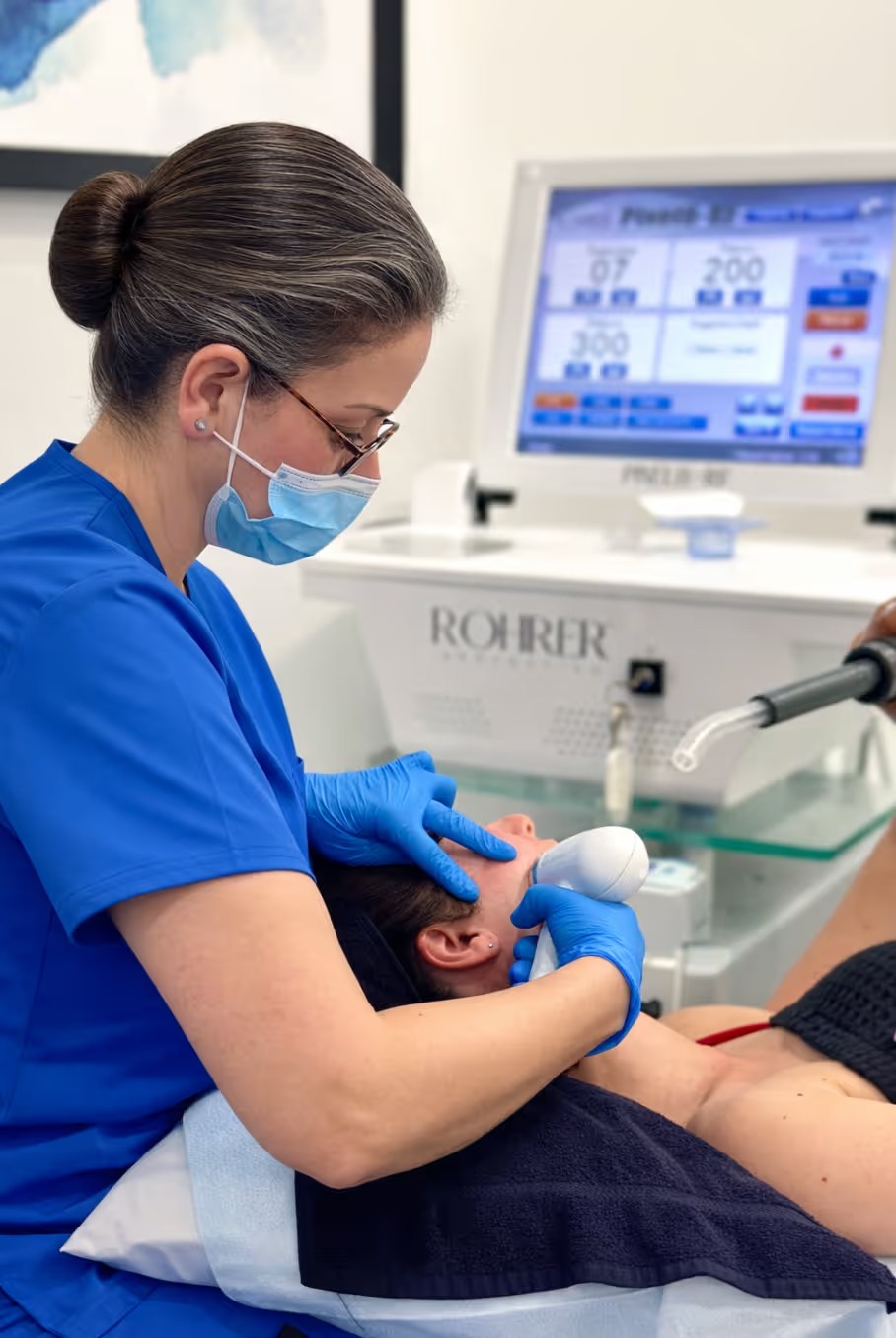
The good news is that heat damage repair is one of the areas where professional medical aesthetics has genuinely outpaced anything available at home. The most impactful intervention at this stage is cellular — and that means regenerative treatments, not just topical products. Tysons Elite Esthetics is the only med spa in Northern Virginia authorized to use Human Progenitor-Derived Exosomes, a category of treatment that works at the level of cellular communication. Exosomes don't simply hydrate or resurface — they signal the skin's own repair mechanisms to activate, reducing inflammation, stimulating collagen synthesis, and supporting tissue recovery in ways that even the best at-home skincare cannot replicate. Paired with precise energy-based treatments like Pixel8-RF radiofrequency microneedling, which rebuilds the deeper dermal matrix without extended downtime, the approach targets heat damage where it actually lives — beneath the surface, in the collagen and elastin networks that give skin its resilience.
For clients dealing with visible pigmentation changes after a month of sun and heat exposure, IPL photofacial treatments remain one of the most effective tools for clearing uneven tone and addressing the melanin irregularities that accumulate across a Virginia summer. IPL works selectively, targeting pigmented lesions without disrupting surrounding tissue — and when timed correctly in late summer or early fall, it can meaningfully reset the tone and clarity that July tends to erode. For clients concerned about the texture changes that come with heat-related collagen breakdown, CoolPeel Fractional Laser Resurfacing is the most thorough resurfacing option available — a treatment that addresses both the surface irregularities and the deeper structural changes that accumulate with age and seasonal damage. The fall skin reset window is the natural time to pursue these treatments, but beginning a consultation now means your plan is in place the moment the heat breaks.
It's also worth examining what you're reaching for at home. The market for heat damage repair products is enormous, and most of it is noise. Antioxidant serums containing stabilized vitamin C, niacinamide, and resveratrol can provide meaningful daily support against oxidative stress — but the concentrations required for clinical effect are rarely found in retail formulations, and the delivery systems that ensure penetration are even rarer. Medical-grade topicals, prescribed and monitored as part of a professional skin health protocol, work in ways that shelf products simply don't. If your current routine feels like it stopped working, it's worth reading about the signs that your skin has moved beyond what retail products can address. The answer isn't always a new serum — sometimes it's the recognition that your skin needs a different category of support entirely.
For clients in McLean, Vienna, Falls Church, and the broader Fairfax County area who are thinking seriously about what this July is doing to their skin, the team at Tysons Elite Esthetics brings more than 70 combined years of medical aesthetic experience to exactly this kind of conversation. A consultation here isn't a sales appointment — it's an honest assessment of where your skin is, what's driving the changes you're seeing, and which treatments will actually move the needle. The approach is always individualized. As one long-term client put it: "Every treatment feels thoughtfully selected and tailored specifically for my skin." That kind of precision is what separates a treatment plan that works from one that simply sounds good. July is doing its damage. The question is whether you'll address it before it compounds further — or wait until fall wondering why it got harder to fix.
Start your transformation
Schedule your consultation with our knowledgeable and friendly team.