When Did Skincare Stop Working? Signs You Need Professional Treatments

There's a moment most people can't quite pinpoint — somewhere between turning a product over in their hands and staring at their reflection under unforgiving lighting — when they realize their skincare routine just isn't doing what it used to. The serum that once left skin glowing now feels unremarkable. The moisturizer that plumped and softened for years seems to sit on the surface without absorbing the way it once did. Nothing has gone wrong, exactly. Everything just feels… flat.
This isn't a failure of discipline or a sign that you've been using the wrong products. It's a signal — a biological one. As skin matures, the mechanisms that once responded readily to topical ingredients become less efficient. Collagen production slows. Cell turnover extends. The skin barrier thickens and then, paradoxically, weakens. Products that delivered real results in your thirties were formulated for skin that could still do most of the work itself. When those mechanisms slow, the products stop being enough — not because the formulas changed, but because the skin did. If you've been wondering why your Virginia skin care routine has plateaued despite staying consistent, the answer is rarely the products themselves.
Knowing when to make that shift — from maintenance to intervention — is where most people hesitate. The signs are often subtle enough to explain away: a little more dullness, a little less bounce, deeper shadows under the eyes at the end of a long week that used to disappear with a good night's sleep. These aren't cosmetic overreactions. They're structural changes that no topical product can reverse, because topical products don't reach the dermal layer where collagen, elastin, and volume actually live. At-home skincare can maintain and protect — but it cannot rebuild. That distinction matters enormously when you're deciding whether to spend another six months rotating serums or finally have a real conversation with someone who can assess what your skin actually needs.
What "Not Working" Actually Looks Like
The signs that your routine has hit its ceiling tend to cluster in predictable ways. Fine lines that used to look softened after moisturizing now stay visible regardless of what you apply. Texture — the small bumps, rough patches, and uneven tone that feel almost indistinguishable under your fingertips — becomes more resistant. Hyperpigmentation from past sun exposure or hormonal shifts deepens rather than fades, even with dedicated brightening actives. Skin that was once resilient after a stressful month or a disrupted sleep schedule now seems to take longer to recover — or doesn't fully recover at all.
For many people, the tell-tale shift is in the quality of their skin's surface — specifically, how light hits it. Healthy, well-structured skin has a natural reflectiveness that comes from even texture and intact hydration. When that changes, skin takes on a flatter, more matte appearance that no highlighter fully corrects and no serum fully restores. This is often the first visible consequence of slowing cell turnover and reduced collagen density — two things that medical-grade treatments address directly and topical products cannot. Skin laxity, which begins subtly and progresses without intervention, is another sign that the conversation has moved beyond what any jar or bottle can meaningfully address.
If any of this sounds familiar, it doesn't mean you've done anything wrong. It means your skin has reached a stage where it needs more than maintenance — it needs targeted support at the level where the real changes are happening.
The Gap Between Products and Results
Medical aesthetics exists precisely because there are results that topical skincare simply cannot produce — not because the products are inadequate by their own standards, but because they were never designed to work at the depth where structural skin changes occur. A retinol can accelerate surface cell turnover. A peptide serum can signal collagen production in a limited way. A vitamin C can protect against oxidative damage and mildly brighten existing pigmentation. These are meaningful contributions to a well-maintained complexion. But they operate within a ceiling that the skin's biology sets, and that ceiling gets lower with each passing year.
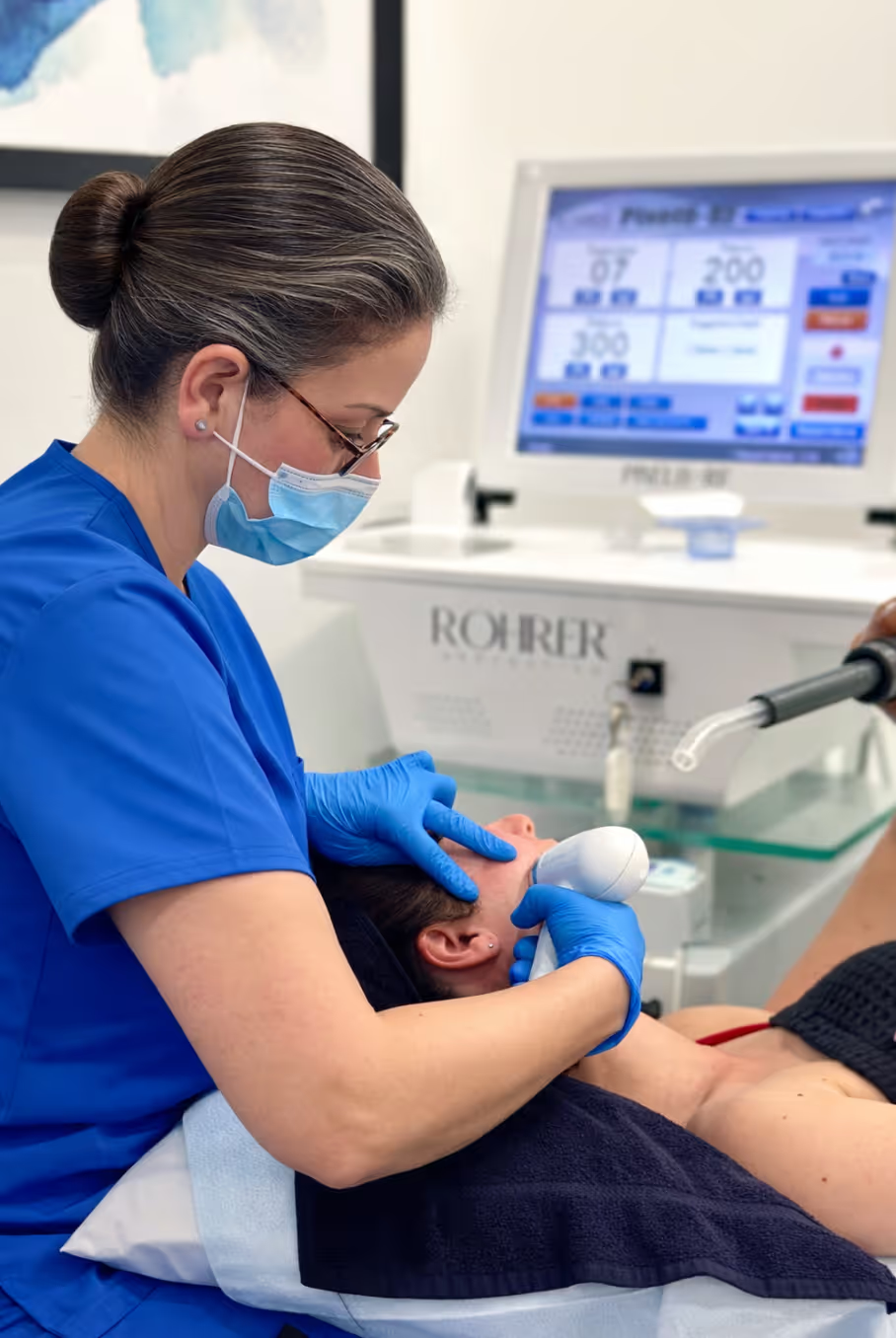
Professional treatments work differently — and not just in degree, but in kind. Radiofrequency microneedling creates controlled thermal energy in the dermis, triggering a wound-healing response that generates new collagen where the skin has stopped producing it on its own. CoolPeel Fractional Laser Resurfacing removes damaged surface layers while stimulating deep structural remodeling that takes months to fully express. Exosome therapy introduces regenerative signals at the cellular level — a category of treatment that has no parallel in any topical product currently on the market. These aren't stronger versions of what you're already doing at home. They're entirely different categories of intervention, operating through biological mechanisms that products cannot access.
At Tysons Elite Esthetics, this distinction shapes every consultation. The team — with a combined 70+ years in medical aesthetics — approaches each client not as someone who needs "more" of what they're already doing, but as someone whose skin has entered a new phase that requires a genuinely different strategy. The goal is never to replace a thoughtful at-home routine; it's to give that routine something meaningful to support. Understanding when to introduce professional treatments — and which ones — is the conversation that changes outcomes.
Common Signs It's Time for a Professional Consultation
There's no single threshold that signals the right moment — but there are patterns worth paying attention to. If you're noticing persistent dullness that doesn't respond to exfoliation, that's often the first sign that cell turnover has slowed beyond what a topical can correct. If fine lines have deepened into something that moisturizer no longer softens, that's a structural change — not a hydration problem. If you're seeing early jowling, a softening of the jawline definition you used to have, or a heaviness around the lower face that wasn't there two years ago, those are signs of volume redistribution and tissue laxity that require professional assessment.
Hyperpigmentation that has resisted multiple brightening products over more than one full product cycle is another clear signal. Most surface-level pigment responds to consistent use of vitamin C, niacinamide, and targeted acids. Pigmentation that doesn't is often seated deeper in the skin — sometimes in the dermis — and requires energy-based treatments or medical-grade chemical intervention to address. Getting the right diagnosis before choosing a treatment is critical here, because the wrong approach to deeper pigmentation can make it worse before it gets better.
Texture changes — particularly the kind that makes foundation or concealer look uneven no matter how carefully it's applied — are another indicator that the skin's surface architecture has shifted in ways that resurfacing treatments address directly. Aging skin under makeup behaves very differently than skin that has undergone professional resurfacing, and the difference is something clients notice within weeks of their first serious treatment.
Loss of firmness is perhaps the most significant sign, and the one people most often try to solve with the wrong tools. No topical tightens skin — not in any clinically meaningful way. Firmness requires collagen, and collagen requires stimulation at the dermal level. Whether that stimulation comes from radiofrequency microneedling, biostimulators like Sculptra or Radiesse, or a combination approach depends on the individual's skin, age, and treatment history. Combining treatments thoughtfully is often what separates a modest improvement from the kind of result that prompts genuine comments from people who see you regularly.
What a Professional Assessment Actually Offers
One of the most consistent things clients say after their first real consultation at Tysons Elite Esthetics is that it changed how they thought about their skin entirely. Not because they were told what they were doing wrong, but because they finally had a framework for understanding what their skin actually needed — and why. A thorough assessment doesn't just identify problems; it reveals the underlying causes and maps a realistic path forward that accounts for lifestyle, budget, timing, and personal goals.
The team at Tysons Elite Esthetics takes a genuinely individualized approach — one that clients describe as feeling "thoughtfully selected and tailored specifically for my skin," rather than a menu of treatments pushed at a first appointment. That kind of experience matters especially for clients who have been making their own decisions about their skin for years and arrive with well-formed opinions and real questions. The consultation isn't a sales process. It's a clinical conversation — the kind that helps someone who has been investing in z skin care products and routines understand exactly where professional intervention picks up where those products leave off.
For clients newer to the world of medical aesthetics, knowing where to start makes all the difference. The landscape of treatments can feel overwhelming without guidance — but with the right team, it becomes a clear, confident plan rather than a set of options to navigate alone. If your skin has been telling you something has changed, it's worth listening — and worth having that conversation with people who have spent decades understanding exactly what the skin needs at every stage.
Start your transformation
Schedule your consultation with our knowledgeable and friendly team.