Fall Is When Skin Finally Starts Responding to Real Treatments

There's a reason the most experienced aesthetics professionals in Northern Virginia treat fall as their most important season. It's not about marketing cycles or seasonal promotions. It's biology. After months of UV exposure, humidity, and heat — all of which compromise the skin's barrier, worsen pigmentation, and slow the penetration of active ingredients — your skin in September and October is finally in a position to absorb, respond, and repair in a meaningful way.
If you've ever felt frustrated that your skincare routine wasn't delivering, or that in-office treatments weren't producing the change you expected, there's a reasonable chance the timing was working against you. Summer is genuinely one of the harder seasons to treat skin effectively. Sun exposure creates a moving target for pigmentation. Heat and sweating can interfere with post-treatment healing. And UV risk following any resurfacing or laser treatment is elevated, which limits what responsible clinicians are willing to do. Fall removes most of those obstacles at once.
At Tysons Elite Esthetics, this is the time of year when the team — with 70 or more years of combined experience across the practice — starts having the most productive conversations with clients about what actually needs to happen. Not what looks good on a treatment menu, but what your skin specifically needs based on what summer did to it, where you are in your aging process, and what you're trying to accomplish before the year ends.
What Summer Actually Did to Your Skin
Most people notice the obvious: maybe a tan that's fading unevenly, some new sun spots across the cheeks or chest, or a general dullness that wasn't there in spring. What's less visible is the cumulative UV damage that's already embedding itself into deeper layers of the skin — the kind that shows up as textural changes, accelerated collagen loss, and hyperpigmentation months or years later.
As covered in Sun Damage Shows Up Years Later — Here Is Why, the damage from a single summer often doesn't become visible until well after the fact. That delayed appearance creates a false sense of security — a feeling that summer wasn't that bad for your skin — when in reality the injury is already underway. Fall is the window to interrupt that process before it compounds.
For patients who spent time outdoors, traveled, or simply lived through another Virginia summer, this is also when post-inflammatory hyperpigmentation tends to be at its most pronounced. Treating pigmentation that's sitting at the surface is meaningfully more effective when sun exposure has stopped for the season. The skin isn't fighting new UV damage while trying to resolve old pigmentation, and treatments like IPL Photofacial and CoolPeel Fractional Laser Resurfacing carry a substantially lower risk of triggering rebound pigmentation when UV exposure is minimal.
Why Collagen-Building Treatments Work Better Now
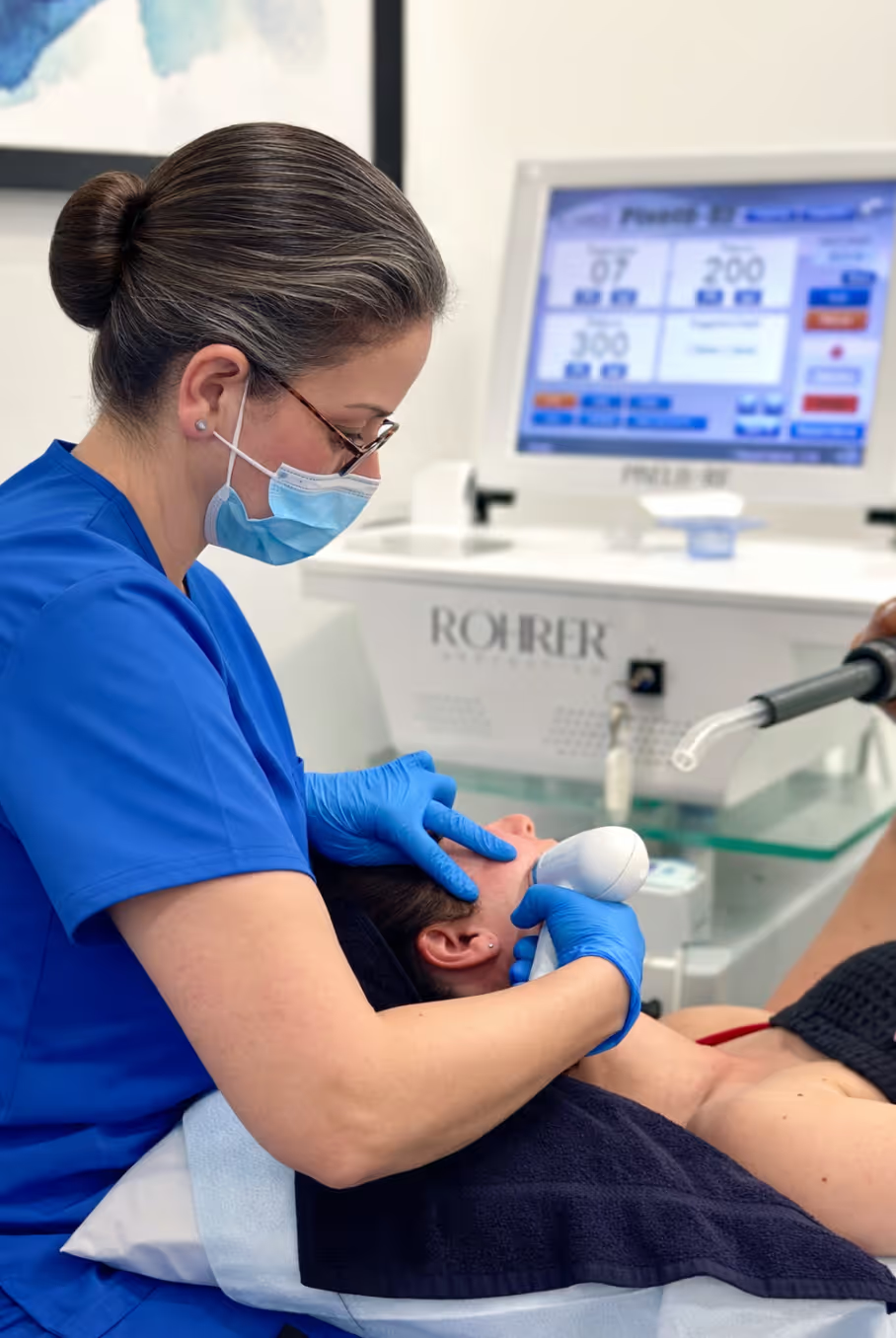
Collagen stimulation — whether through Pixel8-RF Radiofrequency Microneedling, biostimulators like Sculptra, or energy-based devices — requires consistent follow-through over several months. That's not a limitation of the treatments; it's how collagen biology works. New collagen doesn't appear overnight. It builds gradually over eight to twelve weeks, and in some cases continues improving for up to six months.
This timeline is one of the strongest arguments for starting in fall. Patients who begin collagen-building protocols in September or October are well into their results by the time the holidays arrive — and seeing the most pronounced improvement right when it matters socially. The logic behind timing is explored in more detail in Fall Filler Appointments: Timing Your Treatment for Holiday Results, and the same principle applies across virtually every treatment category that works through progressive biological response rather than immediate volumization.
For patients who have already tried individual treatments and felt underwhelmed, the fall season is also when the team at Tysons Elite Esthetics most often recommends a combination approach. A single modality rarely addresses the full picture of aging skin — laxity, texture, pigmentation, and volume loss are distinct problems that respond to different inputs. Combination Skin Tightening Treatments that stack RF microneedling, biostimulators, and neuromodulators are among the most effective protocols available, and fall provides the uninterrupted time needed to sequence them properly.
Resurfacing Treatments Are Finally Back on the Table
For patients interested in laser resurfacing, fractional treatments, or deeper chemical peels, fall is not just preferable — it's when these treatments make the most clinical sense. Resurfacing removes compromised surface layers of skin, stimulates new cell turnover, and triggers a healing response that produces smoother, more even, more luminous skin over the following weeks. But because resurfacing creates a period of photosensitivity, sun exposure after treatment is one of the primary concerns that keeps responsible practitioners cautious during the summer months.
In October and November in Northern Virginia, UV index drops significantly, outdoor time naturally decreases, and the post-treatment window of required sun protection becomes much easier to manage. If you've been considering a CoolPeel Fractional Laser Resurfacing treatment for sun damage, texture, or scarring, or wondering whether radiofrequency microneedling would meaningfully improve your skin's surface quality, this is the season your clinician can say yes without significant reservation.
The same applies to patients treating acne scarring, surgical scars, or stretch marks. The most effective protocols for acne scar correction often involve a series of treatments spaced four to six weeks apart, which means starting in September or October produces completed series results by year's end.
Skin Tightening for the Lower Face and Neck
One of the most consistent observations the team at Tysons Elite Esthetics makes is that laxity concerns — jowls, neck looseness, crepey texture under the chin — often become more visible to patients when the distractions of summer fade. There's something about cooler, more covered months that draws attention back to the skin beneath the jawline and along the neck. These are also the areas that respond exceptionally well to fall treatment timing.
For patients considering non-surgical lifting options, the combination of device combinations for serious skin tightening has advanced significantly in recent years. The rare European medical aesthetic devices available at Tysons Elite Esthetics — not commonly found in U.S. practices — allow for skin tightening protocols with a precision and depth that standard platforms cannot replicate. Consultations during this season are particularly productive because there's adequate runway before spring to complete multi-session protocols fully.
Patients who have been following the conversation around neuromodulators for the neck — including the Nefertiti lift technique using Botox along the platysmal bands — may find fall the ideal time to address this area, particularly before holiday gatherings where they'll be photographed. More on that treatment approach is available in the guide to platysmal band Botox for jawline definition.
Pigmentation, Tone, and What Fall Makes Possible
Hyperpigmentation is one of the most complex skin concerns to treat — partly because there are multiple underlying causes, and partly because the wrong treatment for the wrong type can make things worse before they get better. As detailed in Melasma vs. Sun Spots vs. Post-Inflammatory Hyperpigmentation, getting the diagnosis right before selecting a treatment isn't optional — it's what separates a result that improves the skin from one that creates new problems.
Fall creates a controlled environment for this work. Whether the concern is melasma that flared through summer heat and UV, residual post-inflammatory hyperpigmentation from summer acne, or sun spots that accumulated over years of Virginia summers, the months between September and December offer the lowest-risk conditions for treatment and the best environment for recovery.
IPL, chemical peels, and topical brightening protocols all perform more predictably when sun exposure is managed — and the Vi Peel Precision Plus, available at Tysons Elite Esthetics, is particularly well-suited to this season for patients who have struggled with stubborn pigmentation that hasn't responded to lighter peels in the past.
Exosomes and Regenerative Treatments in Fall
For patients interested in the leading edge of regenerative aesthetics, fall is also the right moment to have a serious conversation about exosome therapies. Tysons Elite Esthetics is the only med spa in Northern Virginia authorized to use Human Progenitor-Derived Exosomes — a distinction that matters because exosome quality and sourcing directly impact clinical outcomes. These treatments accelerate healing, improve skin quality at a cellular level, and complement virtually every energy-based or resurfacing protocol.
When paired with RF microneedling or following a CoolPeel fractional laser treatment, exosomes reduce downtime and amplify the regenerative response — which makes fall the ideal season for patients who want meaningful results but cannot afford extended recovery time. For patients exploring this area, the guide to exosome therapy for skin rejuvenation and the comparison of microneedling with PRP versus microneedling with exosomes are useful starting points.
What a Fall Treatment Plan Actually Looks Like
For most patients, fall skin planning at Tysons Elite Esthetics starts with a consultation that looks honestly at three things: what summer did, what has been bothering you for longer than one season, and what you realistically want to accomplish before spring. The team doesn't take a one-size-fits-all approach — every treatment is thoughtfully selected based on what your skin actually needs, not what's most popular at the moment.
A typical fall protocol for a patient in their mid-40s to early 60s might include a series of RF microneedling sessions spaced four to six weeks apart, a biostimulator like Sculptra to address volume and structure, neuromodulator maintenance, and targeted pigmentation treatment where needed. Patients with more significant laxity concerns may incorporate energy devices and neck-specific protocols. Those focused on surface quality — texture, pores, tone — may emphasize resurfacing and exosome-enhanced recovery. The sequence matters, and so does the spacing.
If you've been waiting for the right time to address what hasn't been working, the answer is almost certainly now. Fall Skin Reset: How to Repair Summer Damage and Prepare Your Skin for Winter covers the full scope of what this season makes possible — and what your skin is finally ready to receive.
Tysons Elite Esthetics is located in Tysons, Virginia, serving clients from McLean, Vienna, Falls Church, and throughout Fairfax County. If you've been wondering when does Tysons Elite Esthetics open for new patient consultations, the answer is that the practice welcomes consultations year-round — but this season, with fall approaching, is when those conversations tend to produce the most thoughtful, results-driven plans.
Start your transformation
Schedule your consultation with our knowledgeable and friendly team.