Why Serious Skin Tightening Starts With the Right Device Combination

There's a version of the non surgical facelift conversation that happens in a lot of practices: a client asks which device is "the best," the provider picks one, and that's the plan. It's a reasonable approach when you're working with a limited menu. But when your team has spent years working with both radiofrequency microneedling and CoolPeel Fractional Laser Resurfacing — and has access to the clinical depth to use them strategically — the more accurate answer is that the question itself changes. It's not about which device wins. It's about understanding what each one does at the tissue level, and where their effects compound rather than overlap.
Tysons Elite Esthetics serves clients across McLean, Vienna, Falls Church, and Fairfax County who aren't looking for a single-device fix. They're looking for a thoughtful plan — one built around their skin, their timeline, and their goals. That's the kind of conversation our team, with over 70 years of combined experience in medical aesthetics, is built for.
What RF Microneedling and CoolPeel Fractional Laser Actually Do — and Why It Matters to Know the Difference
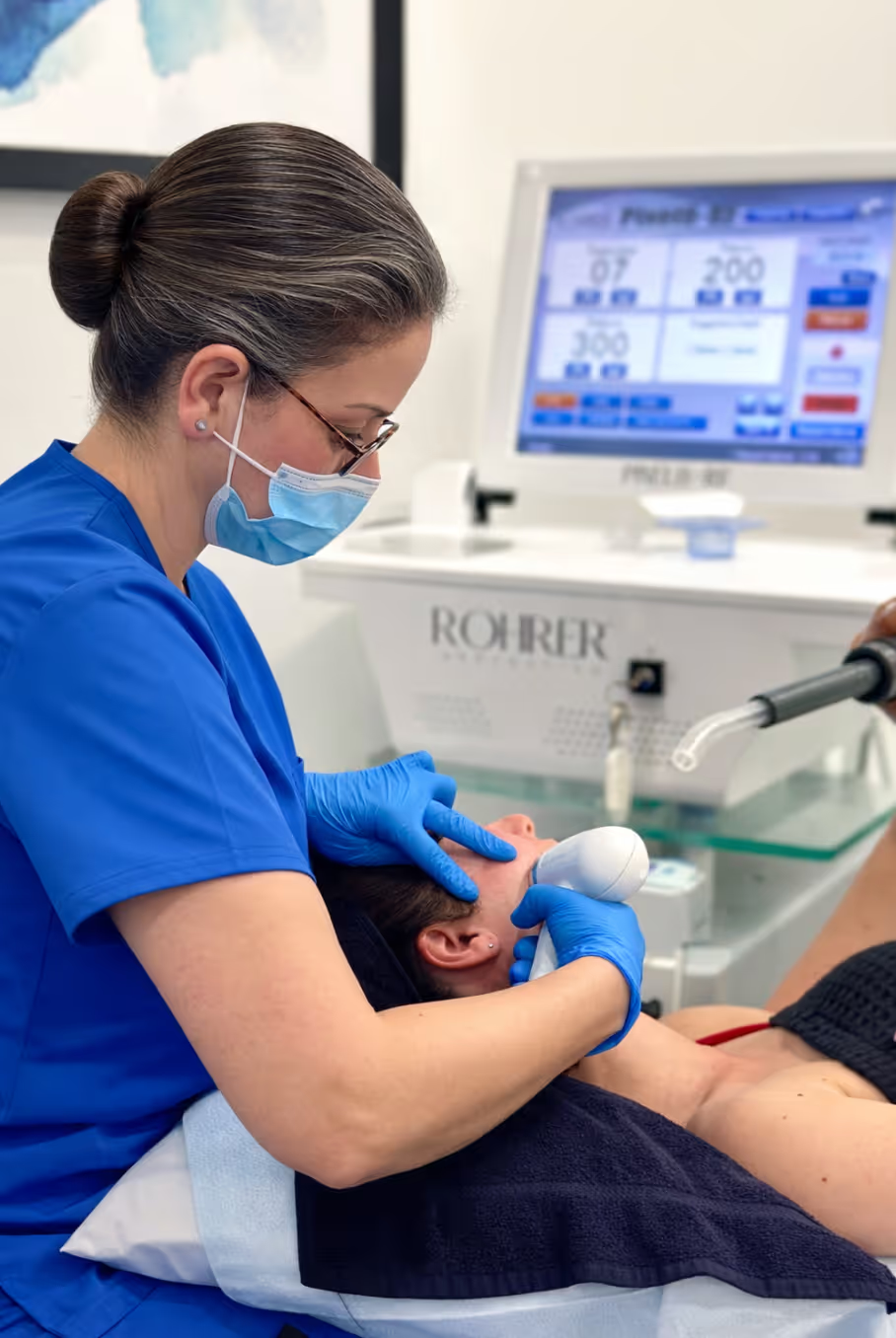
Radiofrequency microneedling works primarily in the dermis. The needles create microchannels in the skin while simultaneously delivering controlled thermal energy into the dermal tissue. That heat triggers the contraction of existing collagen and — over the weeks and months that follow — stimulates the production of new collagen and elastin. The result is progressive tightening, improvement in skin laxity, and visible lifting that develops gradually. Our Pixel8-RF radiofrequency microneedling platform is the device we use for this work, and it's particularly well-suited for patients dealing with loosening skin along the jawline, neck, and lower face — areas where volume loss and structural laxity tend to show up first.
CoolPeel Fractional Laser Resurfacing works at the surface and into the upper dermis. It removes damaged outer layers of skin, addresses texture irregularities, tightens the superficial dermis, and triggers collagen remodeling from a different angle than RF energy alone. The thermal effect of CoolPeel Fractional Laser Resurfacing creates measurable skin contraction and stimulates new dermal architecture — but it also visibly improves tone, tackles sun damage, softens fine lines, and addresses the surface-quality concerns that deep RF alone doesn't touch. If a patient's skin shows years of UV exposure, crepiness at the surface, and loss of overall luminosity alongside structural laxity, CoolPeel resurfacing addresses the layer of the problem that RF microneedling is less focused on.
Understanding the distinction between these two technologies is one of the things that separates a well-constructed treatment plan from a generic one. If you've explored the broader question of how these two modalities compare, our post on RF microneedling vs. laser resurfacing for skin rejuvenation covers that decision in clinical detail.
When Combining These Devices Produces Results Neither Can Achieve Alone
The reason device combination matters for serious non surgical facelift candidates comes down to biology. Laxity is not a single-layer problem. Skin that has lost its youthful firmness typically shows changes across multiple tissue depths — the surface has texture changes and pigmentation from cumulative sun exposure, the mid-dermis has lost collagen density and elastin integrity, and the deeper dermal structures have begun to relax. A single device that works well in one of these depths will produce real improvement. But when a patient's goals include lifting, tightening, resurfacing, and overall rejuvenation together — which is what most people actually want when they ask about skin tightening non surgical face lift before and after transformations — the combination approach is what generates the most comprehensive results.
RF microneedling and CoolPeel fractional laser are not redundant. They deliver thermal energy through different mechanisms, at different tissue depths, with different wound-healing cascades that each stimulate collagen through distinct pathways. Used in sequence — typically CoolPeel resurfacing for surface correction and upper dermal remodeling, and Pixel8-RF for deeper structural tightening — the combined treatment plan addresses the full spectrum of what's changed in aging skin. Patients who see the kinds of before and after results that actually look like a non surgical facelift are almost always patients whose providers treated multiple tissue layers, not just one.
The sequencing and timing of these treatments matters as much as the selection itself. Some patients benefit from staging the treatments several weeks apart to allow full healing and avoid overlapping recovery periods. Others, depending on skin type, laxity level, and specific goals, may have both integrated into a broader rejuvenation plan that includes neuromodulators and biostimulators. Our post on combination skin tightening treatments explores how stacking RF microneedling with biostimulators and neuromodulators fits into a full-face rejuvenation strategy.
What Patients in Tysons Are Actually Asking About When They Search for Skin Tightening
When someone searches for skin tightening non surgical face lift before and after results, what they're really asking is: does this actually work, and will it work for me? Those are fair questions — and they're questions that deserve an honest answer rather than a curated gallery of best-case outcomes.
The honest answer is that real results from device-based skin tightening depend on several factors that a thorough consultation surfaces: the degree of existing laxity, skin quality and thickness, age-related volume changes, and what combination of treatments a provider recommends based on all of those factors together. For patients in their 40s with early-to-moderate laxity and meaningful surface changes from sun exposure, combining CoolPeel Fractional Laser Resurfacing with Pixel8-RF radiofrequency microneedling typically produces results that clients describe as looking five or six years younger — a description we hear regularly from patients who have gone through this kind of sequenced treatment plan.
For patients with more advanced laxity, those same devices often work alongside biostimulators like Sculptra to address the volume dimension of aging that no energy device can replace. Our post on biostimulator treatments for skin laxity after 50 is worth reading if you're over 50 and wondering whether devices alone will be sufficient. And if you're curious about how RF microneedling specifically performs on skin that has already crossed into the post-50 range, our post on Pixel8-RF after 50 covers what skin type means for your outcomes.
The Device Is Only as Good as the Person Using It
This is the part of the conversation that doesn't get said often enough. RF microneedling and CoolPeel fractional laser are both sophisticated technologies that require significant clinical experience to use well. The depth of needle penetration, the RF energy settings, the laser fluence and pass technique, the patient selection criteria — these are not variables that any device sets automatically. They require judgment built from years of hands-on experience across a wide variety of skin types, concerns, and treatment goals.
Our team's 70+ years of combined experience isn't a number we mention for marketing purposes. It's the practical reason why patients who come to us after underwhelming experiences elsewhere consistently tell us they wish they'd started here. A provider who has treated hundreds of patients with these specific devices develops a clinical intuition for dialing in protocols that produces meaningfully better outcomes than a provider who is two years in with a device they were trained on once. That depth of experience is what separates a non surgical facelift that genuinely looks like a facelift from a treatment that produces modest improvement.
We've also written extensively about what makes the natural-looking result more technically demanding than it might appear — our post on whether the natural look trend actually requires more skill addresses exactly this dynamic if you're the kind of person who wants to understand the clinical nuance before you walk in.
How to Know Whether This Combination Is Right for You
Not every patient is the ideal candidate for both RF microneedling and CoolPeel Fractional Laser Resurfacing in the same treatment plan. Some patients' primary concern is structural — they need the deeper tightening that Pixel8-RF delivers and don't have significant surface damage to address. Others have extensive pigmentation and texture concerns that make CoolPeel resurfacing the clear priority. The combination approach is most powerful for patients who show both — and that's a determination that comes from an actual consultation, not a website.
What we can say with confidence is that if you've been researching non surgical facelifts and you're looking at before and after results with skepticism — wondering whether the outcomes are real, whether they'll translate to your skin, whether the technology your provider uses actually matters — those instincts are correct. The technology matters. The sequencing matters. The experience of the person using the device matters enormously. And the willingness of your provider to have a detailed, honest conversation about what is and isn't possible for your specific skin is the first indicator of whether you're in the right place.
If you're new to navigating these decisions and want a place to start, our post on where Tysons patients should start is a practical overview of how to approach your first conversation with a medical aesthetics team. And if you're already familiar with these treatments and wondering whether this fall is the right time to begin, our post on skin tightening after summer speaks directly to that timing question.
The right device combination, in the right hands, with a plan built around your actual skin — that's what serious skin tightening looks like. We'd be glad to show you what that means for you specifically.
Start your transformation
Schedule your consultation with our knowledgeable and friendly team.