Menopause Skin Changes That Fillers Alone Cannot Fix
Somewhere between the first hot flash and the fifth, most women notice their skin has quietly changed in ways filler was never designed to address. It isn't just fine lines settling in around the mouth or a little extra fullness lost in the cheeks. It's the skin itself — thinner, less elastic, slower to bounce back after a long day — because estrogen decline during menopause accelerates collagen loss at a rate that outpaces almost anything else in the aging process. Research places collagen loss at roughly 30% in the first five years after menopause begins, and that loss doesn't show up as a single wrinkle you can fill. It shows up everywhere at once: the jawline, the neck, the décolletage, even the thighs and upper arms.
This is where so many well-meaning treatment plans fall short. Filler restores lost volume in specific zones — it plumps, it lifts, it contours. But filler cannot rebuild the structural collagen and elastin network that gives skin its resilience. If you've had beautiful filler results on your face but still notice crepiness along your jawline or looseness you didn't have five years ago, you're not imagining it, and you're not doing anything wrong. You're simply asking a volumizing treatment to do a job it was never built for. We wrote about this distinction in more detail in Sagging Skin or True Volume Loss? Knowing the Difference Changes Everything, and it's a conversation we have almost daily with clients in this exact stage of life.
The good news is that the skin changes menopause brings — thinning, laxity, dullness, and that particular crepey texture on the legs and arms that no amount of moisturizer seems to fix — respond remarkably well to the right combination of regenerative treatments. At Tysons Elite Esthetics, we typically build a menopause skin treatment plan around biostimulators like Sculptra or hyperdilute Radiesse, which signal the body to produce its own new collagen rather than simply occupying space the way traditional filler does. Paired with our Human Progenitor-Derived Exosomes — a regenerative treatment we remain the only med spa in Northern Virginia authorized to offer — this approach addresses the actual cellular slowdown behind menopausal skin changes, not just its visible symptoms. We've outlined this specific combination in Sagging Skin After Menopause Responds to This Treatment Combination, which many of our long-term clients reference before their own consultations.
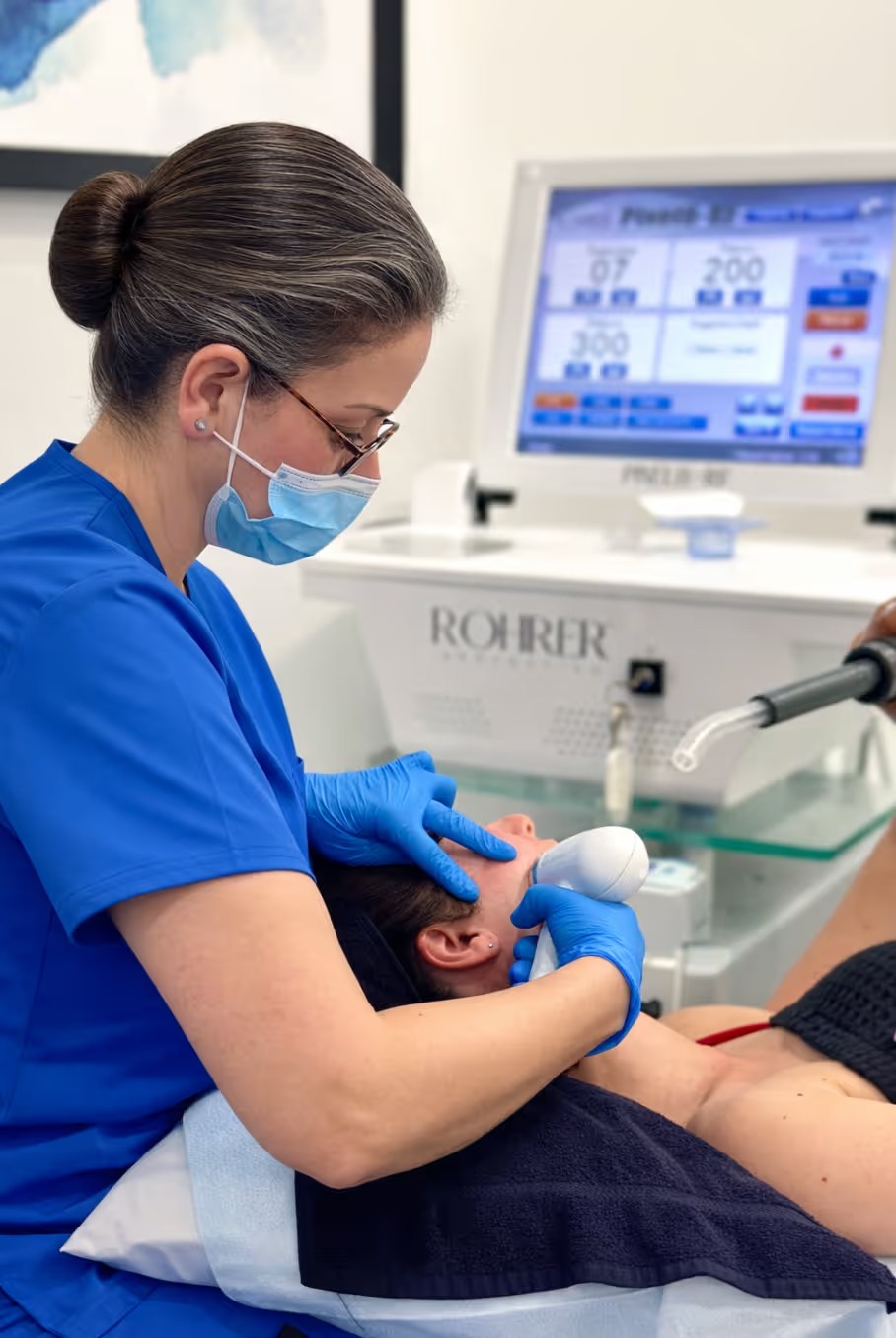
If you're wondering how to tighten skin on legs after 50, the honest answer is that this area requires patience and the right device, not a quick fix. RF microneedling with Pixel8-RF paired with a series of non-surgical tightening treatments designed for the arms and legs can meaningfully improve elasticity over a course of sessions, especially when we sequence them alongside biostimulators. Clients often ask whether Ultherapy still works after menopause — a fair question given how much the skin's baseline collagen has shifted — and we address that directly in Does Ultherapy Still Work After Menopause? The short answer is yes, but timing and technique matter more than they did a decade earlier.
Nutrition and internal support matter here too. We're asked often about menopause skin supplements, and while no capsule replaces in-office regenerative treatment, targeted vitamin D repletion and IV-based nutrient support can measurably improve how your skin responds to the treatments we're doing in-office. We see this most clearly in clients who come in during winter months, when vitamin D deficiency compounds the collagen loss already underway — a pattern we explored in Vitamin D Deficiency Is Wrecking Tysons Skin This Winter. For clients managing hot flashes alongside these skin concerns, our Cool Down IV is often part of a broader wellness conversation we have during consultation, alongside the aesthetic plan itself.
What we've learned over 70+ combined years treating this exact life stage is that menopausal skin doesn't respond to a single treatment — it responds to a sequence, built specifically around what your skin has actually lost. That's a conversation best had in person, where we can assess your skin's elasticity, density, and hydration alongside your goals, rather than guessing from a list of symptoms. If filler alone hasn't given you the results you expected, it likely isn't the filler that was wrong — it's that your skin was asking for something filler was never meant to provide.
Start your transformation
Schedule your consultation with our knowledgeable and friendly team.