Sagging Skin on the Arms: Non-Surgical Tightening Options That Work

The Arms Are Often the Last Thing We Treat — and the First Thing We Notice
There's a particular kind of frustration that comes with arms that no longer reflect how you actually feel about yourself. You've taken care of your face, your neck, your décolletage — but the moment you wear a sleeveless dress or reach across a conference table, the loose, crepey skin along the inner arms draws attention you didn't invite. For many of the patients we see at Tysons Elite Esthetics, the arms are the last area they address, not because they don't care, but because they assumed surgery was the only real option.
It isn't. Non-surgical arm tightening has become one of the more meaningful advances in body aesthetics over the past several years, and for the right candidates, results can be genuinely significant — not a subtle suggestion of improvement, but a visible, lasting change in skin texture, firmness, and loft. The key is understanding what's actually causing the laxity, which technologies address it effectively, and what a realistic treatment plan looks like before you commit to anything.
This guide is written for patients who are serious about results and want honest, specific information — not a brochure. We'll walk through the biology of arm skin aging, the treatments that work, what they cost, and how to think about combining them for the best outcome.
Why Arm Skin Loses Firmness: The Biology Behind the Sag
The inner upper arm is one of the most structurally vulnerable areas of the body when it comes to skin aging. Several factors converge here in a way that doesn't happen as dramatically in other locations.
First, the skin on the inner arm is naturally thinner and has fewer sebaceous glands than skin on the torso or thighs. This means it produces less natural oil, ages drier, and has a diminished capacity to retain moisture — which accelerates the development of crepey texture over time. Second, the underlying muscle mass in this area, particularly the triceps, tends to atrophy with age and reduced activity. When the structural support beneath the skin shrinks, the skin above it loses its anchor and begins to descend and fold.
Third — and this is the factor most patients don't think about until it's already happened — collagen and elastin loss in this region is compounded by gravity in a uniquely relentless way. The inner arm hangs. Gravity works on it continuously, pulling at skin that has already lost much of its tensile strength. Unlike the face, where muscle movement and daily expression provide some ongoing stimulation to the underlying tissue, the inner arm is largely passive. It doesn't get the incidental mechanical stimulation that might slow the thinning process elsewhere.
For patients who have experienced significant weight loss — whether through lifestyle changes, GLP-1 medications, or bariatric procedures — the situation is more complex. When fat volume decreases rapidly, the skin that was stretched to accommodate it doesn't simply snap back. The result is a combination of excess skin and loss of underlying volume that requires a layered approach to treat. If this describes your situation, our post on body contouring after weight loss covers the broader picture in detail.
Sun exposure also plays a longer role than most people realize. Many patients in our practice are surprised to learn that the UV damage they accumulated in their twenties and thirties is continuing to manifest in their skin now — degrading collagen fibers and elastin networks that were already under stress. We've written about this phenomenon in depth in our post on why sun damage shows up years later, and it applies as much to the arms as it does to the face.
RF Microneedling for Arm Tightening: How It Works and Why It's Effective
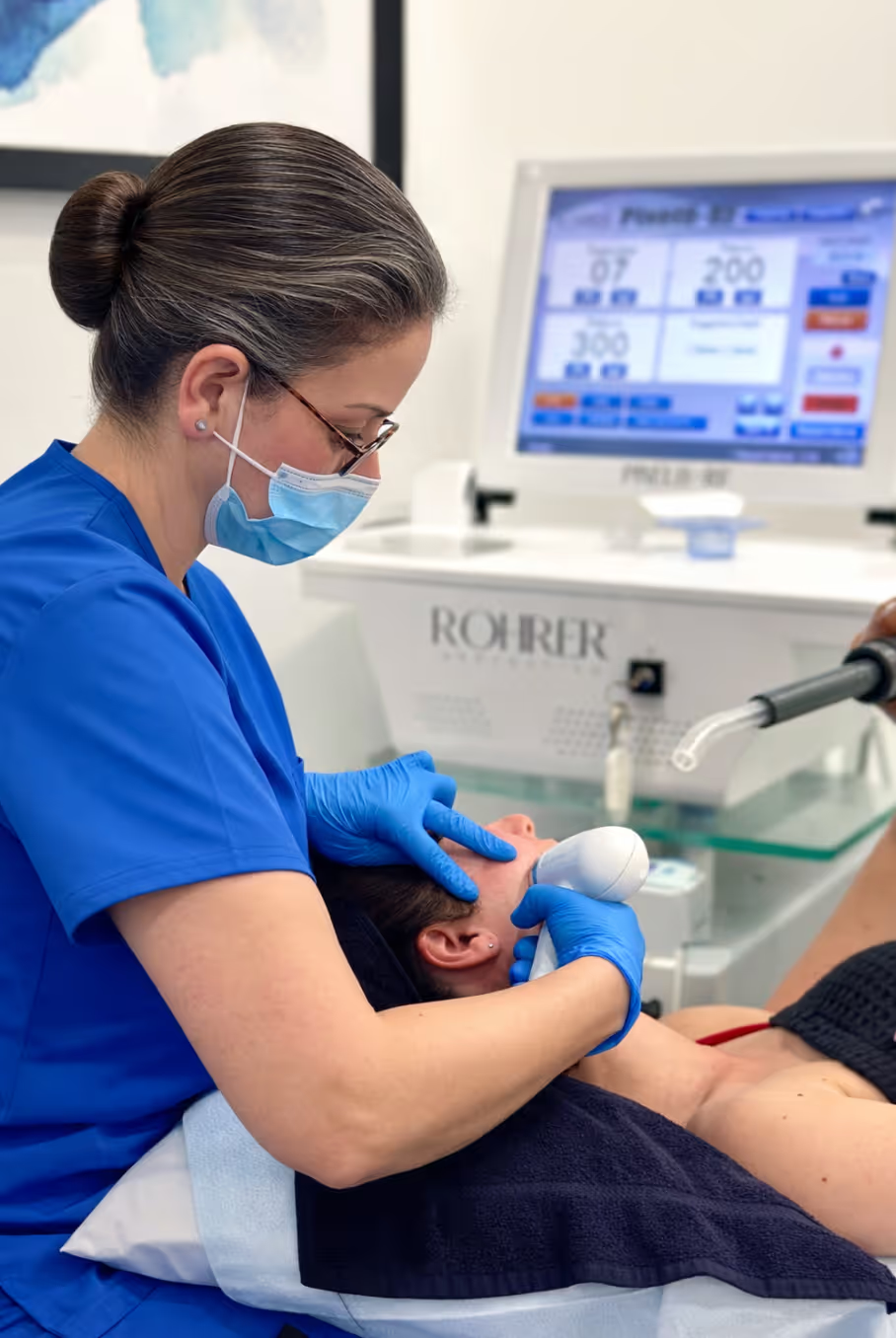
Radiofrequency microneedling has become one of the most clinically validated non-surgical tools for skin tightening — on the face and increasingly on the body. At Tysons Elite Esthetics, we use the Pixel8-RF radiofrequency microneedling system, a device that delivers precise RF energy through insulated microneedles directly into the dermis, at controlled depths, without heating the surface of the skin.
Understanding why this matters requires a brief look at the mechanism. Traditional microneedling creates micro-injuries that stimulate a wound-healing response, triggering collagen and elastin production over time. RF microneedling does this and adds a second layer of thermal injury deep within the dermis — the layer of skin where collagen fibers live. The heat delivered by the RF energy causes immediate contraction of existing collagen fibers (which is why some patients notice tighter-looking skin within days of treatment) and, more importantly, activates fibroblasts to produce new collagen and elastin over the following three to six months.
The RF microneedling benefits for arm skin specifically include:
- Dermal remodeling: Stimulates new collagen scaffolding within the skin, improving structural integrity from the inside out
- Skin surface refinement: Reduces the crepey, creased texture that develops as elastin degrades
- Tightening of lax tissue: The thermal component creates measurable contraction in the treated zone, visibly lifting and firming the skin
- Scar and stretch mark improvement: For patients with stretch marks along the upper arm, RF microneedling can significantly reduce their appearance — as we discuss in our post on stretch mark treatment options
- Minimal disruption to the skin surface: Because the RF energy is delivered through insulated needles that spare the epidermis, there is less visible downtime compared to ablative laser resurfacing
For patients who want to understand how RF microneedling compares to other energy devices in more detail, our post on RF microneedling versus laser resurfacing breaks down the clinical differences clearly. And for a direct comparison between Morpheus8 and traditional microneedling on lax skin, our post on whether Morpheus8 outperforms traditional microneedling after 50 is worth reading — the principles apply to body skin as much as facial skin.
What to Expect From RF Microneedling on the Arms
Treatment on the arms follows a similar protocol to facial RF microneedling, with some modifications for body skin, which tends to be thicker and more resilient than facial tissue.
Prior to treatment, topical numbing cream is applied to the area for approximately 30 to 45 minutes. The treatment itself typically takes 30 to 60 minutes for both arms, depending on the extent of the area being addressed. Most patients describe the sensation as a deep warmth with occasional sharp pressure — manageable and significantly reduced by the numbing. Immediately after treatment, the skin will appear red and feel warm, similar to a mild sunburn. Small puncture marks from the needles may be visible for 24 to 48 hours.
The recovery is far more forgiving than surgical alternatives. Most patients return to their normal routine within two to three days. There is no compression garment required, no activity restriction beyond avoiding submerging the area in water or applying active skincare products for the first 48 hours, and no meaningful social downtime for most patients. For a more detailed picture of what the recovery period involves, our post on Morpheus8 downtime and recovery offers a comparable timeline that gives a realistic sense of what to plan for.
Results develop gradually. Most patients begin to notice meaningful improvement at the six-to-eight-week mark, with continued improvement through the three-to-six-month window as new collagen matures. A series of two to three treatments, spaced four to six weeks apart, is typically recommended for optimal outcomes on the arms — more so than for facial treatments, because body skin requires slightly more cumulative stimulation to achieve comparable results.
Beyond RF Microneedling: Other Non-Surgical Options for Arm Tightening
RF microneedling is the cornerstone of most non-surgical arm tightening protocols, but it is rarely the only tool worth considering. The most effective treatment plans are layered — combining modalities that address different aspects of the problem simultaneously or sequentially.
Biostimulators: Sculptra and Radiesse
For patients with significant volume deflation beneath the skin of the arms — particularly those who have experienced weight loss — injectable biostimulators can address something RF microneedling alone cannot: the loss of structural support beneath the skin. Sculptra (poly-L-lactic acid) and Radiesse (calcium hydroxylapatite) both work by stimulating the body's own collagen production from within the tissue, gradually restoring the scaffolding that gives skin its lifted, supported appearance.
Used on the body, these treatments are delivered in a diluted formulation and spread across a wider area than typical facial injection protocols. Results are gradual — the full effect builds over three to six months — but they can be transformative for patients whose arm laxity is driven primarily by volume loss rather than pure skin laxity. Our post on biostimulator treatments for skin laxity after 50 covers the clinical distinction between these two agents in detail.
Combination Protocols: Stacking for Better Outcomes
At Tysons Elite Esthetics, we consistently find that patients who combine RF microneedling with biostimulators — treating both the skin and the underlying tissue — achieve outcomes that neither modality could produce alone. The RF microneedling remodels and tightens the dermis from above; the biostimulator rebuilds structural support from below. The result is more complete, more durable, and more visually satisfying than either approach in isolation.
We've written about the logic behind combination protocols in our post on combination skin tightening treatments, which explains how stacking these approaches leads to full-tissue rejuvenation rather than surface-level improvement.
Plasma Pen for Crepey Texture
For patients whose primary complaint is severe crepey texture rather than gross skin laxity, the plasma pen offers a targeted option. Plasma pen treatment works by creating a controlled arc of plasma energy at the skin surface, which triggers immediate tissue contraction and a wound-healing response. It is particularly effective for fine, crepey skin and can be used in areas where RF microneedling alone may not fully address the surface texture concern.
CoolPeel Fractional Laser Resurfacing for Advanced Laxity
For patients with more significant skin laxity who want a non-surgical option with stronger tissue contraction, CoolPeel Fractional Laser Resurfacing on the arms is worth discussing during a consultation. Ablative laser treatment removes the outer layers of the skin while delivering deep thermal energy that triggers significant collagen remodeling. The tradeoff is a more involved recovery — typically one to two weeks of visible healing — but the degree of tightening can be substantially greater than what RF microneedling achieves in a single treatment series. For patients who want to understand where CoolPeel fractional laser fits relative to RF microneedling, our post on RF microneedling versus laser resurfacing covers this comparison directly.
Non-Surgical Arm Lift Cost: What to Realistically Expect
Cost is a reasonable and important part of any treatment decision, and we believe in giving patients accurate information rather than numbers that evaporate the moment they sit down for a consultation. Non-surgical arm lift cost varies considerably depending on the treatments included, the number of sessions required, and whether combination protocols are used — but the following ranges reflect what patients at our practice typically invest.
RF microneedling on the arms: A single session typically ranges from $800 to $1,400 per treatment, depending on the size of the area being addressed and the device used. Most patients require a series of two to three sessions for optimal results, which brings the typical course investment to $1,600 to $4,200.
Biostimulator injections (Sculptra or Radiesse for the arms): Body biostimulator treatments are priced by the number of vials required, which varies based on the area and degree of volume loss. For the arms, patients typically require two to four vials per session across one to three sessions. Vials are generally priced in the range of $800 to $1,000 each at a quality practice, which places the total investment for a biostimulator arm protocol in the range of $1,600 to $6,000 or more.
Combination protocols: Patients pursuing a layered approach — RF microneedling plus biostimulators — should budget accordingly for both. While this represents a more substantial upfront investment, the results are meaningfully better and more durable than single-modality treatment, and many patients find that maintenance treatments are required less frequently.
It's also worth placing this in context. The average surgical arm lift (brachioplasty) in the United States costs between $6,000 and $12,000 before anesthesia, facility fees, and recovery-related expenses — and carries the risks and downtime of a surgical procedure, including a permanent scar running the length of the inner arm. For many patients, a well-designed non-surgical protocol achieves 60 to 80 percent of the visual improvement at a fraction of the cost, with no surgery, no scar, and no extended recovery.
We discuss the broader question of surgical versus non-surgical options — and why more of our patients are choosing to skip the operating room entirely — in our post on why more Tysons patients are choosing non-surgical treatments.
Who Is the Right Candidate for Non-Surgical Arm Tightening?
Non-surgical arm tightening works best for patients with mild to moderate skin laxity — those who are bothered by softness, crepiness, and early sagging but who have not yet reached the point where the volume of excess skin is the dominant concern. For patients with severe, hanging skin that has resulted from significant weight loss or dramatic changes in body composition, a frank conversation about the limits of non-surgical options is important. In those cases, surgery may produce a more complete correction — though non-surgical treatment can still meaningfully improve texture and firmness even when it cannot fully address excess skin volume.
Ideal candidates are generally in the 35 to 65 age range, are at or near a stable weight, are in good general health, and have realistic expectations about a gradual improvement arc rather than an overnight transformation. Patients who are actively losing significant weight — particularly those on GLP-1 medications — are typically advised to stabilize their weight before beginning a tightening protocol, since continuing to lose volume during treatment makes it difficult to assess results accurately and plan the treatment series appropriately.
RF Microneedling in Boston vs. Tysons: Why Location Matters More Than You'd Think
Patients searching for RF microneedling in Boston or other major metro areas often find themselves weighing options across a wide range of practices — from medical spas with limited clinical oversight to dermatology offices where body treatments are an afterthought. The search term "rf microneedling Boston" returns a predictable mix of chain med spas, boutique studios, and clinical practices, and the variation in experience, device quality, and protocol sophistication is significant.
For patients in the greater Washington metro area — including McLean, Vienna, Falls Church, and Fairfax County — Tysons Elite Esthetics offers something genuinely different: a team with more than 70 years of combined experience in medical aesthetics, rare European devices not commonly found in U.S. practices, and a clinical culture built around long-term relationships rather than transactional appointments. Our patients don't come to us for a single session and disappear. They come because they trust the team, they understand the results, and they value the continuity of care that comes from working with practitioners who know their skin, their history, and their goals.
If you are considering traveling for RF microneedling from a neighboring market — including Northern Virginia commuters from D.C. or Maryland — we welcome consultations and are happy to design a treatment plan that works within your schedule and travel preferences.
What a Consultation at Tysons Elite Esthetics Actually Looks Like
We don't believe in consultations that feel like sales presentations. When you come in to discuss arm tightening — or any treatment — you'll sit with a member of our clinical team who will take time to understand your actual concerns, examine the tissue, and give you an honest assessment of what non-surgical treatment can and cannot accomplish for your specific presentation.
There is no pressure, no package upsell, and no one-size-fits-all protocol. Some patients leave with a straightforward RF microneedling series. Others benefit from a more layered approach combining RF microneedling with biostimulators. A small number are advised that surgery would serve them better — and when that's the case, we'll tell you directly, because that's what a team that genuinely cares about your results does.
If you've never visited a med spa before and aren't sure what to expect from your first appointment, our post on what actually happens at your first med spa appointment offers a clear, honest walkthrough. And if you're weighing where to start among a range of concerns, our guide on where Tysons patients should begin may help you orient your thinking before you come in.
The arms are treatable. The results are real. And the right place to start is a conversation with a team that will tell you the truth about what's possible — and then help you get there.
Start your transformation
Schedule your consultation with our knowledgeable and friendly team.