Vitamin D Deficiency Is Wrecking Tysons Skin This Winter

There is a particular kind of skin complaint that surfaces every winter in Tysons, McLean, and the broader Northern Virginia area — and it is one that even diligent clients with solid skincare routines cannot seem to resolve on their own. The skin looks flat. It feels rough even after moisturizing. Radiance disappears. Breakouts that cleared up in summer return. And no amount of serum layering or hydration-focused facials seems to move the needle the way they did in warmer months. What many people do not realize is that vitamin D deficiency — genuinely common in this region during winter — is frequently the underlying variable no one is addressing.
Virginia sits far enough north that meaningful UVB exposure — the kind that triggers your skin to synthesize vitamin D — drops dramatically from October through March. For the professionals who make up so much of the Tysons community, add commuting, long hours indoors, and the natural tendency to cover up in the cold, and you have a population that arrives at winter already running low. Vitamin D is not simply a bone-health supplement. It plays a documented role in keratinocyte differentiation, the process by which your skin cells mature and turnover properly. When levels fall, that turnover slows. The barrier function weakens. Inflammatory responses become harder to regulate, which is why winter often triggers rosacea flares, increased sensitivity, and stubborn dullness that refuses to respond to topicals alone. If you have been reading about sluggish, dull skin in winter and wondering why standard treatments feel less effective this time of year, this is frequently part of the answer.
The first step is knowing where you actually stand. A simple blood panel will tell you your 25-hydroxyvitamin D level — and the result often surprises people who assume they eat well and spend reasonable time outside. Supplementation recommendations vary based on individual baseline, body weight, and absorption factors, which is why a one-size-fits-all approach rarely works. Our team, with over 70 combined years in medical aesthetics and wellness, approaches this as part of a broader skin health picture rather than a single-variable fix. For clients who want to support their skin from the inside out while also addressing what is visible at the surface, we often discuss IV nutrient therapy as a complement to oral supplementation — particularly formulations that combine vitamin D support with cofactors like magnesium and zinc, which are necessary for D3 to be properly utilized. Our Myers' Cocktail IV is a particular favorite for clients who want targeted micronutrient delivery during winter months when absorption through diet and sun is at its lowest.
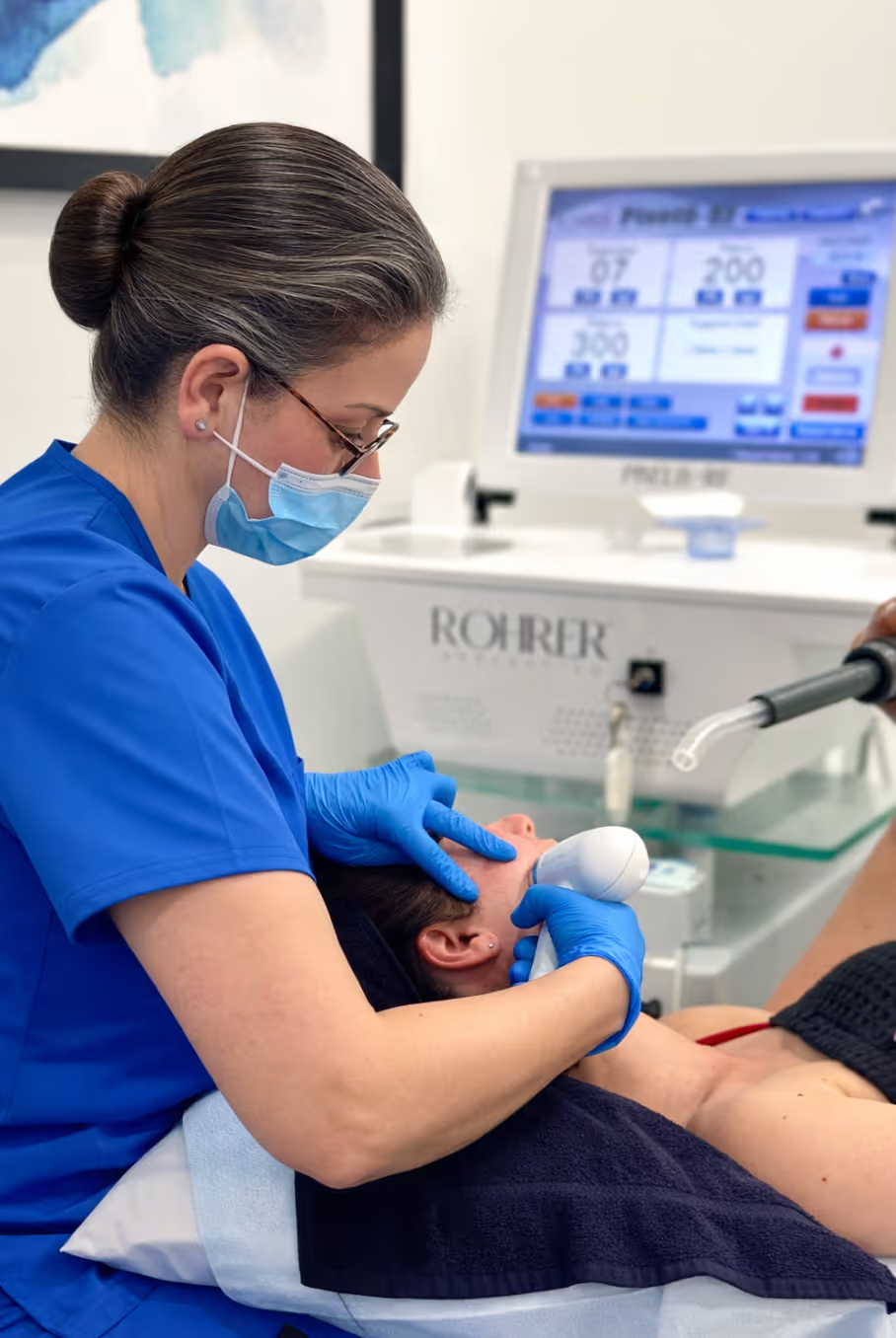
What makes this conversation worth having now — in winter, specifically — is timing. The skin treatments that deliver the best results for dullness, texture, and barrier compromise work more effectively when your internal environment is optimized. We see this consistently: clients who address their nutritional gaps alongside their in-office treatments respond faster, heal better, and hold their results longer. If you are planning a winter Pixel8-RF session or considering barrier-repair preparation before the cold season fully sets in, knowing your vitamin D status is a genuinely useful piece of information to bring to your consultation. It changes how we sequence your care.
It is also worth noting what vitamin D deficiency looks like in skin terms, because the signals are easy to dismiss as seasonal inevitability rather than a correctable problem. Persistent dryness that does not resolve with topical hydration. A grayish or sallow tone that no highlighter fully corrects. Increased reactivity — products that worked fine in summer now causing irritation. Slower healing after treatments. Breakouts that feel more inflammatory than they used to. These are not simply winter facts of life. They are often the skin telling you something is off at a systemic level. The clients who take this seriously and course-correct early tend to arrive at spring looking noticeably better than those who waited for the season to change on its own. If you are also navigating concerns about heightened skin sensitivity and reactivity, deficiency-related barrier compromise is worth factoring into that picture.
If you would like to discuss where your skin is right now and whether nutritional optimization belongs in your winter treatment plan, we are happy to have that conversation. A consultation with our team is not a sales appointment — it is a genuine assessment of what is happening with your skin and what combination of internal and in-office support makes the most sense for you specifically. Reach out to schedule a time, and we will take it from there.
Start your transformation
Schedule your consultation with our knowledgeable and friendly team.