Hypersensitive Skin After Summer: Calming Treatments That Still Deliver Results

By late July, skin that felt manageable in May often tells a different story. Heat, UV exposure, humidity, sweat, and the cumulative stress of spending summer in Northern Virginia — where temperatures hold in the high 80s and 90s for weeks — leave even resilient skin in a compromised state. For clients who already trend toward sensitivity, rosacea, or a disrupted barrier, summer can push things to a tipping point. Products that worked fine in April suddenly sting. Redness that was barely noticeable in June now flares with almost anything. Skin that used to tolerate treatments with ease feels unpredictable in a way that's frustrating, particularly when you know your fall appointments are approaching and you want your skin ready to respond.
What's actually happening beneath the surface is worth understanding before you book anything or change anything in your routine. Prolonged UV exposure degrades the skin barrier by breaking down the lipid matrix that keeps moisture in and irritants out. Heat triggers vasodilation repeatedly over months, which over time makes reactive redness harder to calm between flares. Sweat — particularly when it mixes with sunscreen residue, makeup, or environmental pollutants — disrupts the skin's microbiome and pH, setting the stage for sensitivity that can persist well after the weather cools. The result is skin that isn't broken in any dramatic way, but is operating with significantly less resilience than it should be. That's the state we're working with when clients come in saying their skin just feels off. If you've noticed your skin reacting to things it never did before, our post on spring and seasonal skin sensitivity offers additional context on how environmental stressors cumulatively compromise barrier function — much of which applies equally in summer.
The good news: hypersensitive, post-summer skin is very treatable. The mistake most clients make is either pushing through with aggressive treatments before the barrier is ready, or doing nothing at all under the assumption that "gentle" means passive. Neither approach is right. The goal in this window — particularly in late July and into August — is to calm the inflammatory response, restore barrier integrity, and select treatments that deliver measurable results without further stressing compromised skin. That sequence matters. Treatments chosen in the wrong order, or without accounting for current skin state, can amplify sensitivity rather than resolve it.
At Tysons Elite Esthetics, the first step with any reactive-skin client is always a thorough assessment before a single device is turned on or product is applied. Our team brings over 70 years of combined experience in medical aesthetics, and a significant portion of that experience involves navigating the nuance between what skin needs and what skin can tolerate at a given moment. Those aren't always the same thing. A client with persistent redness after a summer in the sun may need barrier restoration before they're a good candidate for even mild resurfacing. Another client with sensitivity concentrated around the cheeks and nose may actually be presenting with rosacea that summer heat has triggered into an active flare — a condition that requires accurate diagnosis before treatment, not a general "sensitive skin" protocol. Our post on distinguishing rosacea from flushing is a useful primer on why getting the diagnosis right first changes everything about what you should and shouldn't do next.
For clients whose skin barrier is primarily compromised — reactive, tight, flaky in some areas while oily in others, and stinging with products that used to be fine — the priority is restoration before treatment. This means focusing on deeply hydrating, barrier-supportive modalities that also deliver clinical results. The Oxifusion Facial is one of our most requested options for this exact presentation. It infuses concentrated oxygen with skin-nourishing actives in a delivery system that bypasses the need for any mechanical trauma, making it appropriate even for skin that can't tolerate microneedling or peels at this stage. Results are immediate in terms of hydration and luminosity, and the treatment sets the skin up to receive more active interventions with better tolerance and better outcomes a few weeks later.
Exosome therapy is another tool we reach for with post-summer sensitivity, particularly for clients dealing with redness, uneven texture, and early signs of sun-induced collagen breakdown that they want to address before fall. Tysons Elite Esthetics is the only med spa in Northern Virginia authorized to use Human Progenitor-Derived Exosomes — a distinction that matters clinically. These exosomes carry signaling molecules that communicate with the skin at a cellular level, supporting repair, reducing inflammatory signaling, and stimulating regenerative activity without introducing the mechanical stress that traditional resurfacing involves. For skin that is simultaneously compromised and in need of structural repair, exosome therapy offers a rare combination: genuine results without the downtime or risk of worsening reactivity. You can read more about this treatment approach in our dedicated piece on exosome therapy for skin rejuvenation.
For clients whose skin has stabilized enough to tolerate a gentle chemical exfoliation — typically those whose sensitivity is mild and whose barrier feels reasonably intact — a carefully selected peel can accelerate the clearance of sun damage, uneven pigmentation, and dull texture accumulated over the summer months. The Vi Peel Precision Plus is formulated specifically for hyperpigmentation and sun damage with a tolerability profile that makes it appropriate earlier in the post-summer recovery window than more aggressive resurfacing options. The key is timing and patient selection, both of which our team assesses before recommending anything. Peels applied to a severely compromised barrier will cause more harm than benefit — but for the right client at the right moment, they're one of the most efficient ways to address the visual consequences of a full summer of UV exposure.
Clients managing sensitivity that has a vascular component — flushing, diffuse redness, visible capillaries exacerbated by heat — may also be candidates for IPL Photofacial as summer light levels begin to decrease and treatment timing becomes more favorable. IPL targets the hemoglobin in dilated vessels and the melanin in sun spots with wavelengths of light calibrated to specific chromophores, reducing both redness and pigmentation in the same session. The caveat is that this treatment requires skill in parameter selection for sensitive or reactive skin types, and it should not be attempted when the skin is actively inflamed. Our post on how many IPL sessions it takes to see results gives a realistic overview of what clients should expect from this treatment pathway.
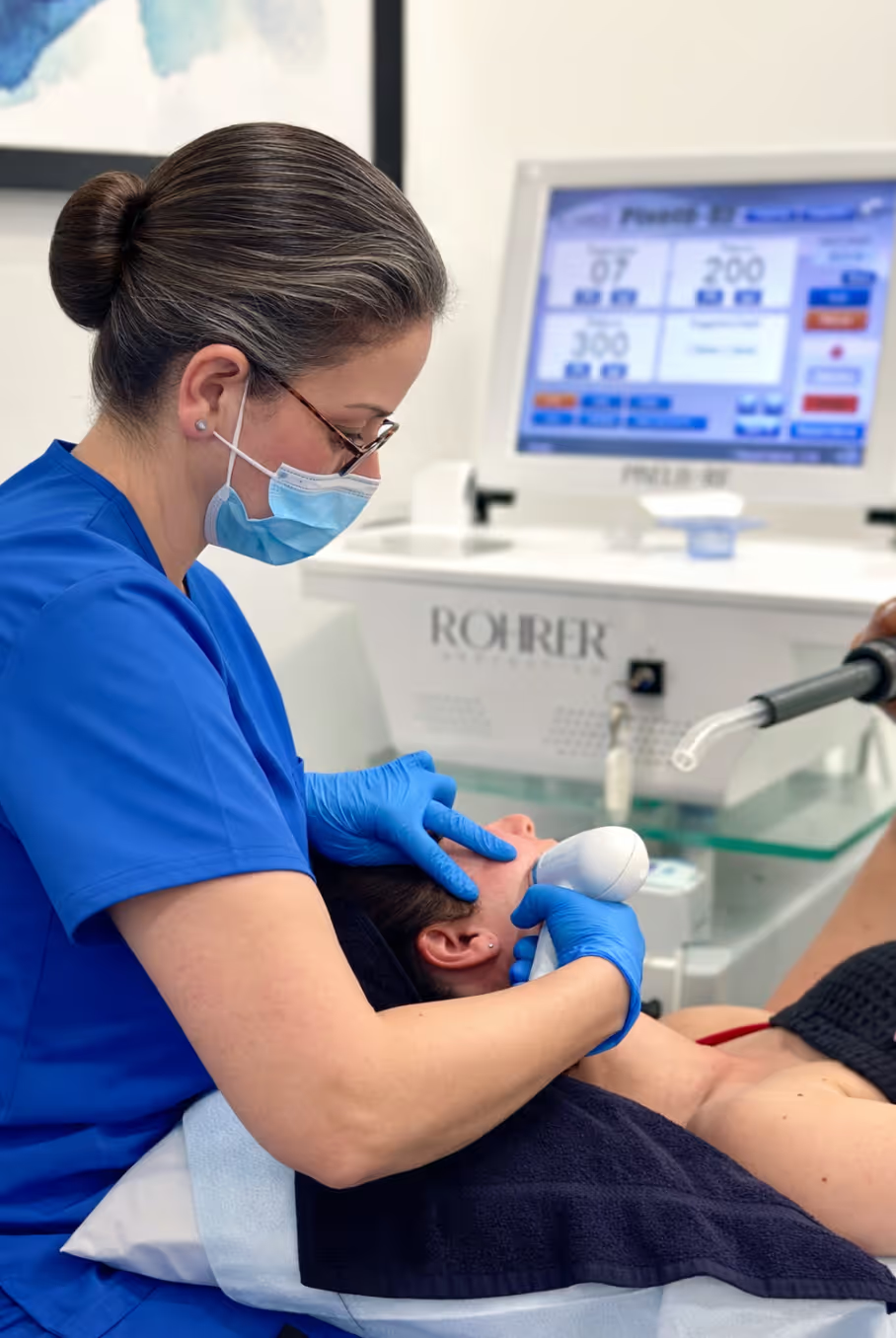
One question that comes up often in this context is whether post-summer sensitivity rules out RF microneedling entirely until fall. The answer is nuanced. For clients with intact barriers and minimal active reactivity, Pixel8-RF radiofrequency microneedling can be approached carefully even in late July — provided the treatment protocol is adjusted appropriately for current skin condition and the client is not actively tanned or inflamed. Our team has written in detail about summer timing for Pixel8-RF across different Tysons skin types, and that guidance applies equally to hypersensitive skin: the technology works, but the assessment beforehand determines whether now is the right moment or whether a few weeks of barrier restoration first will produce a meaningfully better outcome.
What ties all of this together is the principle that compromised skin is not skin to avoid treating — it's skin that requires a more precise sequence and a more thoughtful hand. At Tysons Elite Esthetics, we don't separate the calming phase from the results phase the way a generic protocol might suggest. Our approach is to select treatments that accomplish both simultaneously where possible, and to build a short-term plan that reflects where your skin actually is right now — not where a protocol assumes it should be. That level of individualization is what clients mean when they say every treatment here feels "thoughtfully selected and tailored specifically" to their skin, and it's what makes the difference between a treatment that sets your fall results back and one that sets them up.
If your skin has been reactive, unpredictable, or frustrating to manage since the heat of early summer, this is the right time to come in — not to wait until October when everything has had time to compound. A focused consultation will clarify whether your sensitivity is barrier-related, vascular, triggered by a specific product change, or something that warrants a closer diagnostic look before any treatment begins. From there, the path forward is specific, not generic. That specificity is what separates a good outcome from a great one.
Start your transformation
Schedule your consultation with our knowledgeable and friendly team.