Flushing, Redness, or Rosacea? Getting the Diagnosis Right First
You've noticed it for a while now. The redness across your cheeks and nose that shows up after a glass of wine, a hot shower, or a stressful afternoon. Maybe it lingers longer than it used to. Maybe it's there most mornings before you've done anything at all. You've wondered whether it's rosacea, whether it's just sensitive skin, or whether something else entirely is happening beneath the surface.
The answer matters — not as a formality, but as the single most important factor in determining whether any treatment will help you or hurt you. Flushing, diffuse redness, rosacea, and conditions like perioral dermatitis or contact dermatitis can look almost identical in the mirror. They respond very differently to treatment. Choosing an aggressive IPL or laser session for what turns out to be reactive flushing driven by a vascular disorder can worsen the problem. Using rosacea-specific topicals on skin that's simply sensitized from product overuse accomplishes nothing. This is exactly why, at Tysons Elite Esthetics, we start every redness concern with a thorough clinical evaluation before recommending a single thing.
Understanding the Spectrum: What's Actually Causing Your Redness?
Redness on the face is not a diagnosis — it's a symptom. Several distinct conditions produce facial redness, and each has a different underlying mechanism, a different pattern of presentation, and a different treatment pathway.
Rosacea is a chronic inflammatory skin condition affecting the central face — cheeks, nose, chin, and forehead. It presents in four recognized subtypes. Erythematotelangiectatic rosacea (ETR) causes persistent background redness and visible blood vessels, often accompanied by flushing episodes. Papulopustular rosacea looks similar to acne but without comedones. Phymatous rosacea involves skin thickening, most commonly on the nose. Ocular rosacea affects the eyes. True rosacea is progressive if untreated, tends to worsen with heat, sun, spicy food, alcohol, and stress, and typically becomes more persistent over time rather than episodic.
Flushing disorders are different. Flushing is a transient redness caused by dilation of blood vessels near the skin's surface. In some people, this is entirely normal — exercise-induced, heat-induced, or alcohol-induced flushing that resolves quickly. In others, frequent or prolonged flushing can indicate underlying vascular reactivity, hormonal shifts (particularly during perimenopause and menopause), carcinoid syndrome, mastocytosis, or medication side effects. The distinction between rosacea-associated flushing and primary flushing disorders changes the treatment approach significantly.
Sensitive or compromised skin barrier is frequently misread as rosacea. When the skin's protective barrier is disrupted — through over-exfoliation, aggressive retinoid use, fragrance exposure, or environmental stress — it becomes reactive, red, and easily irritated. This is not rosacea. It's a damaged barrier, and the treatment is restoration, not laser energy or vascular-targeting devices. If you've been on a retinol or tretinoin regimen and your skin has become more reactive rather than less, this is worth discussing — our blog post on retinol purging versus breakouts covers how to distinguish product-related skin responses from structural skin conditions.
Contact or perioral dermatitis can also produce redness that looks like rosacea to the untrained eye. Contact dermatitis is an inflammatory reaction to a specific irritant or allergen — a new moisturizer, an SPF ingredient, a fragrance. Perioral dermatitis is a distinct inflammatory condition typically clustered around the mouth and sometimes the nose, often triggered or worsened by topical steroids. Both require entirely different management. Our page on sunscreen ingredients that harm sensitive skin is particularly relevant here — some SPF formulations actively aggravate redness-prone skin.
Why the Pattern of Redness Changes Everything
One of the first things our team assesses is the pattern and chronology of your redness. A few questions that shift the clinical picture considerably:
Is your redness episodic or persistent? Episodic redness that resolves fully between triggers leans toward flushing or reactive skin. Persistent redness that's always there to some degree — even without a clear trigger — is more consistent with rosacea or chronic vascular dilation.
Where on the face does it appear? True rosacea concentrates on the central face. Redness confined to one area, or redness that appears in an asymmetrical pattern, is worth investigating differently. Redness around the nose and mouth specifically, without central cheek involvement, may indicate perioral dermatitis rather than rosacea.
Are there visible vessels? Telangiectasia — those small, thread-like red or purple vessels visible just under the skin — are a hallmark of ETR rosacea and can also appear with chronic sun damage. Their presence helps confirm the vascular component of what's happening and helps guide device selection, since visible vessels respond well to targeted IPL photofacial treatments when rosacea is properly confirmed.
Has it progressed? Rosacea, by definition, tends to progress if left unaddressed. If your redness has gradually become more constant, if your skin takes longer to calm down after a flush, or if you're starting to notice more broken capillaries than you had two years ago, that trajectory matters clinically.
Are there associated symptoms? Burning, stinging, or a sensation of heat in the skin is common with rosacea and barrier disruption. Eye irritation, grittiness, or lid inflammation may suggest ocular rosacea — a subtype that's underdiagnosed and requires specific attention. Raised, pustular lesions without blackheads point toward papulopustular rosacea. The full symptom profile, not just the redness itself, shapes the diagnosis.
The Problem With Self-Diagnosing and Self-Treating
We see this regularly: someone has been managing what they believe is rosacea for years using over-the-counter redness-relief products, green-tinted color correctors, and advice from online forums. What they've actually been doing is managing the appearance of redness while the underlying condition either persists unchanged or, in some cases, worsens because the products themselves are aggravating the skin.
The risk of self-treating without a proper diagnosis runs in both directions. Someone with true rosacea who assumes they just have sensitive skin may skip the treatments — including prescription topicals, targeted energy devices, and specific lifestyle adjustments — that could meaningfully reduce their disease burden over time. Someone who assumes they have rosacea and begins using harsh, rosacea-focused active ingredients may actually be inflaming a compromised barrier further. And someone pursuing aggressive in-office treatments without a confirmed vascular diagnosis may experience post-treatment flaring that worsens their redness rather than improving it.
This is not a reason to avoid treatment. It's a reason to start with the right conversation. Rosacea, when properly diagnosed and managed, responds well to a combination of clinical treatment and thoughtful home care. Many of our clients with long-standing redness concerns have seen significant, lasting improvement — the kind that reads as your skin finally calming down, looking more even, and feeling less reactive day to day. But that outcome depends on getting the foundation right.
What a Proper Redness Evaluation Looks Like
When a client comes to us with redness concerns, the evaluation is not a quick look in bright light and a recommendation. It's a conversation. We want to understand your full skin history — what products you've used, what treatments you've had, what triggers you've identified, how long the redness has been present, and how it's changed. We assess the pattern and distribution of redness, the presence or absence of telangiectasia, whether any pustules or papules are present, and the condition of your skin barrier overall.
We also think carefully about your lifestyle and health history. Hormonal changes — particularly the perimenopause transition — can trigger or significantly worsen rosacea-like flushing. Certain medications, including calcium channel blockers and niacin, are known to cause or intensify flushing. A thorough intake means we're not recommending a laser treatment for a medication side effect, or treating vascular reactivity while ignoring an underlying hormonal driver.
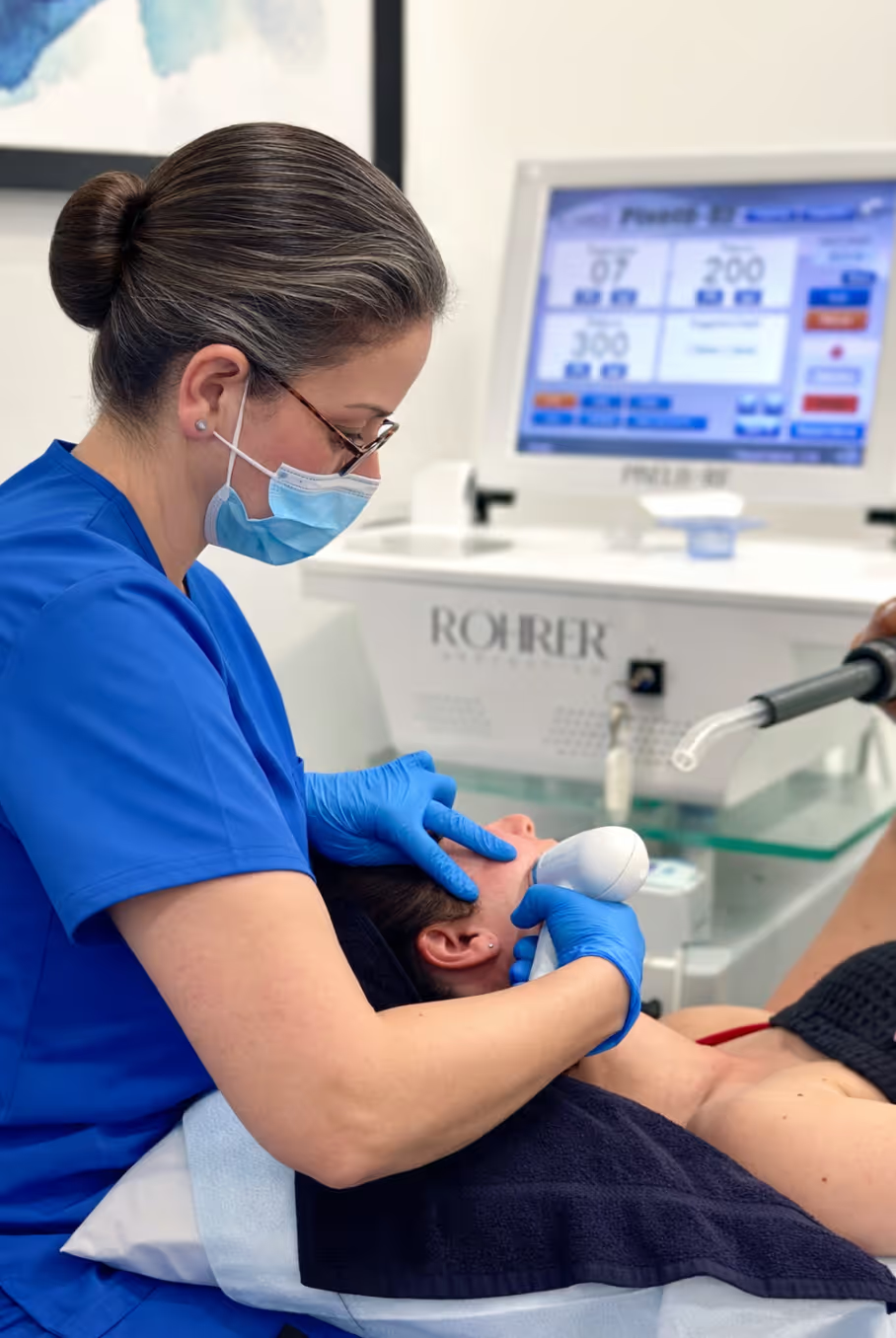
From there, treatment options — if indicated — are selected based on what's actually happening. For confirmed vascular rosacea with telangiectasia, IPL is often highly effective when performed correctly. For papulopustular rosacea, a combination of prescription-level topicals, anti-inflammatory approaches, and appropriate skin barrier support tends to produce the best outcomes. For compromised barrier skin being misread as rosacea, the answer is usually rest, repair, and a simplified routine before any energy device or active ingredient is introduced. For rosacea-related inflammation, certain Anti-Inflammatory IV therapy protocols support the skin systemically while topical and device-based treatments work locally.
If you've been living with redness you can't fully explain, or you've tried products and treatments that haven't helped, the most useful next step isn't a new product — it's a clinical evaluation that starts with the right questions. Our team at Tysons Elite Esthetics has spent decades working with the full spectrum of redness presentations, from early-stage rosacea to chronic flushing disorders to post-procedure sensitivity. We'd rather take the time to understand what's actually happening than move quickly toward a treatment that won't serve you. For a fuller picture of what we offer specifically for confirmed rosacea, our dedicated page on rosacea treatment in Tysons Corner covers the clinical options in detail.
Start your transformation
Schedule your consultation with our knowledgeable and friendly team.