Sunscreen Ingredients That Actually Harm Sensitive Skin
Sunscreen is non-negotiable. That part everyone agrees on. But if you have sensitive skin — or you're managing rosacea, recovering from a laser session, or simply noticing that certain SPF formulas leave your skin red and irritated — the type of sunscreen you reach for matters as much as wearing one at all. For a significant number of patients we see in Tysons, the culprit behind unexpected flares and persistent redness isn't the sun. It's what they're putting on to block it.
The conversation about mineral vs chemical sunscreen has become more nuanced in recent years, and for good reason. Not all formulas are created equal, and for skin that's already sensitized — whether from rosacea, post-procedure recovery, or a compromised barrier — the wrong ingredients can undo weeks of careful progress. Understanding what's in your SPF, and why certain actives are more problematic than others, is one of the most practical things you can do for your skin this season.
Chemical Sunscreen Filters: What They Do and Why Sensitive Skin Struggles
Chemical sunscreens work by absorbing UV radiation and converting it to heat, which is then released from the skin. That conversion process is precisely where the problem begins for reactive skin types. Common chemical filters — oxybenzone, avobenzone, octinoxate, octisalate, homosalate, and octocrylene — are absorbed into the skin and can trigger contact dermatitis, hormonal disruption concerns, and, most critically for rosacea patients, heat-induced flushing. The warming mechanism that makes these filters effective is exactly what can destabilize a reactive vascular condition like rosacea.
Oxybenzone, in particular, has been flagged repeatedly in dermatology literature for its relatively high rate of allergic contact sensitivity. If you've ever applied sunscreen and developed a burning sensation, noticeable redness, or small breakouts within 20 to 30 minutes — and assumed it was just your skin being "difficult" — there's a reasonable chance you were reacting to one of these filters rather than to sun exposure itself. Octocrylene has similarly been associated with photoallergic reactions, particularly when combined with avobenzone, which it's frequently paired with for stability. Homosalate and octisalate, while generally considered lower-risk, absorb into the bloodstream at concentrations that the FDA has flagged as requiring further safety data — not a reassuring detail for patients who are already cautious about what they expose sensitized skin to.
For patients actively managing rosacea, the heat-generating mechanism of chemical filters is a clinical concern worth taking seriously. If you're using medical treatments to reduce redness and flushing — and then applying a product every morning that generates subtle skin warming — you may be working against your own results. Our post on rosacea treatment options in Tysons Corner goes deeper into how external triggers accumulate, and why the details of your daily routine matter as much as the in-office work.
Fragrance, Alcohol, and Preservatives: The Hidden Irritants in SPF Formulas
The active filter is only part of the story. Plenty of sunscreens that use mineral actives still irritate sensitive skin because of what's in the inactive ingredient list. Fragrance — listed simply as "fragrance" or "parfum" on the label — is one of the most common causes of cosmetic contact dermatitis and is entirely unnecessary in a functional sunscreen. It serves no protective purpose. Its only job is to make the product smell more appealing, and for patients with reactive skin, it can cause low-grade inflammation that's easy to mistake for a general sensitivity rather than a specific ingredient response.
Alcohol (listed as SD alcohol, denatured alcohol, or alcohol denat.) is another frequent offender in lightweight SPF formulas — particularly those marketed as mattifying or non-greasy. While alcohol helps a formula dry quickly and feel less heavy on the skin, it disrupts the skin barrier, strips lipids, and can worsen dryness and sensitivity over time. If you're already dealing with a compromised barrier, this is the last thing your skin needs in a product you're applying every single morning.
Certain preservatives — methylisothiazolinone (MI) and methylchloroisothiazolinone (MCI) in particular — have been associated with a meaningful rise in allergic contact reactions and are worth looking for on your label. Parabens, while less commonly flagged for skin sensitivity specifically, remain controversial enough that many patients prefer to avoid them in daily-use products. The cumulative effect of fragrance, alcohol, and these preservatives in a product used 365 days a year is not trivial, particularly when the skin underneath is already under stress from a reactive condition, seasonal changes, or recovery from a procedure.
Mineral vs Chemical Sunscreen: The Case for Mineral Filters in Sensitive and Rosacea-Prone Skin
When comparing chemical vs mineral sunscreen for reactive skin, the fundamental difference comes down to mechanism. Zinc oxide and titanium dioxide — the two FDA-recognized mineral filters — sit on top of the skin and physically reflect UV rays rather than absorbing them. They don't generate heat. They don't absorb into the bloodstream in measurable quantities. And they have a long, well-documented safety profile that makes them the standard recommendation for sensitive skin, post-procedure skin, pregnant patients, and children.
Zinc oxide, in particular, has inherent anti-inflammatory and soothing properties that make it especially well-suited for rosacea-prone skin. It's not just that zinc is less likely to cause a reaction — it may actively calm the skin it's protecting. For patients who've recently undergone IPL photofacial treatments for redness reduction, or who are mid-course in a rosacea management protocol, a zinc-dominant mineral SPF is the responsible daily choice.
The practical complaint about mineral sunscreens — that they leave a white cast, feel thick, or don't blend easily — is a fair one, particularly for medium and deeper skin tones. But formulation has improved substantially. Micronized and nano-zinc formulas offer significantly better cosmetic elegance, and tinted mineral SPF options provide coverage that neutralizes the residual white tone while adding a layer of iron oxide protection against visible light — a meaningful benefit for melasma patients. Our piece on tinted SPF vs. clear sunscreen covers that tradeoff in detail if you're weighing your options.
Finding the Best SPF for Rosacea: What to Look For and What to Avoid
When patients ask us about the best SPF for rosacea, the answer isn't a single product recommendation — it's a framework for evaluating any formula. Look for sunscreens that meet all of the following criteria: mineral-only actives (zinc oxide, titanium dioxide, or both); no fragrance or parfum; no alcohol high on the ingredient list; no MI or MCI preservatives; and ideally, soothing additions like niacinamide, ceramides, or centella asiatica that actively support barrier integrity while you're protected.
Avoid anything marketed primarily as a sport sunscreen, a "water-resistant for 80 minutes" formula designed for active outdoor use, or a formula promising ultra-lightweight, invisible finish — these are almost always chemical-filter-heavy and optimized for performance at the expense of gentleness. Similarly, SPF-infused makeup primers and setting sprays are rarely formulated with sensitive skin as the priority; their SPF claims are often insufficient as standalone protection, and their ingredient profiles reflect cosmetic priorities rather than clinical ones.
One nuance worth noting: SPF 50 is not inherently better than SPF 30 for rosacea-prone skin if the formula itself is more irritating. A mineral SPF 30 that your skin tolerates daily is meaningfully more protective than a chemical SPF 50 you can't wear consistently because it causes flushing. Consistency of application matters more than the number on the label.
If you're managing hyperpigmentation alongside rosacea — a combination that's more common than many patients realize, particularly in Fitzpatrick types III and IV — the choice of SPF formula becomes even more consequential. Chemical filters that trigger inflammation can worsen post-inflammatory pigmentation, while iron oxide-containing tinted mineral formulas can actively reduce visible light-induced melasma triggers. Our detailed breakdown of melasma vs. sun spots vs. post-inflammatory hyperpigmentation is a useful companion read if you're navigating that overlap.
Post-Treatment Skin: When SPF Choice Becomes Even More Critical
If you've recently had microneedling, a chemical peel, laser resurfacing, or an IPL session, your skin's barrier is temporarily compromised — intentionally so, in service of the healing process. During that window, the stakes around SPF choice are higher than at any other point in your routine. Chemical filters applied to actively sensitized, post-procedure skin have a meaningfully greater likelihood of triggering irritation, barrier disruption, and inflammatory responses that can interfere with results.
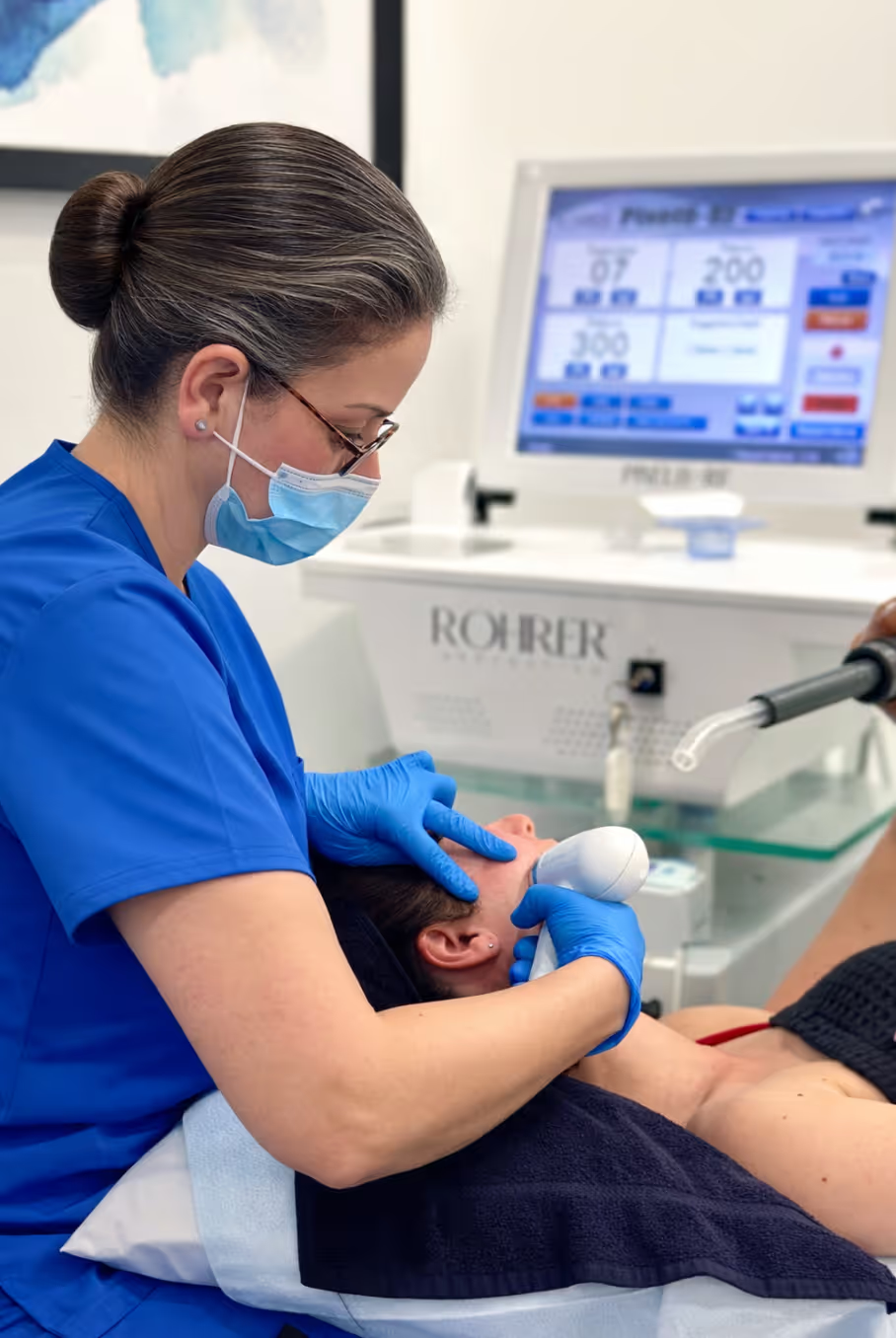
At Tysons Elite Esthetics, post-procedure SPF guidance is part of every aftercare conversation — not an afterthought. The team's 70+ years of combined experience in medical aesthetics means that what you're told to put on your skin after a treatment has been thought through with the same precision as the treatment itself. A patient who's just completed a Pixel8-RF radiofrequency microneedling session doesn't need to navigate the mineral vs. chemical question alone — they leave with specific, personalized guidance on exactly what to apply and when.
For anyone whose skincare routine has evolved alongside in-office treatments — or who is thinking about beginning a professional aesthetic plan for the first time — the choice of daily SPF is one of the most impactful decisions in that routine. If you're uncertain where to start, our post on where Tysons patients should begin with a med spa outlines how a consultation can clarify not just which treatments make sense, but which daily habits are supporting or undermining your results.
Sunscreen is a daily commitment. The least it can do is not make things worse.
Start your transformation
Schedule your consultation with our knowledgeable and friendly team.